
Business 203
Jeep Weighs Modern Willys Revival for Europe
In this issue
Business 203
Jeep Weighs Modern Willys Revival for Europe
Culture 241
Rare BMW M3 Lime Rock Park Edition Heads to Auction
Economy 39
Countries Where Petrol Sells for Under $2 a Gallon
News 149
Weekly Exercise Linked to Slower Memory and Movement Decline in Parkinson's Patie…
Politics 112
Ulle Madise becomes Estonia's new president
Sports 268
Jaguar XJ220 Named Favourite British Supercar in Reader Poll
Technology 276
Tesla Renames Full Self-Driving to Assisted Driving Across Europe
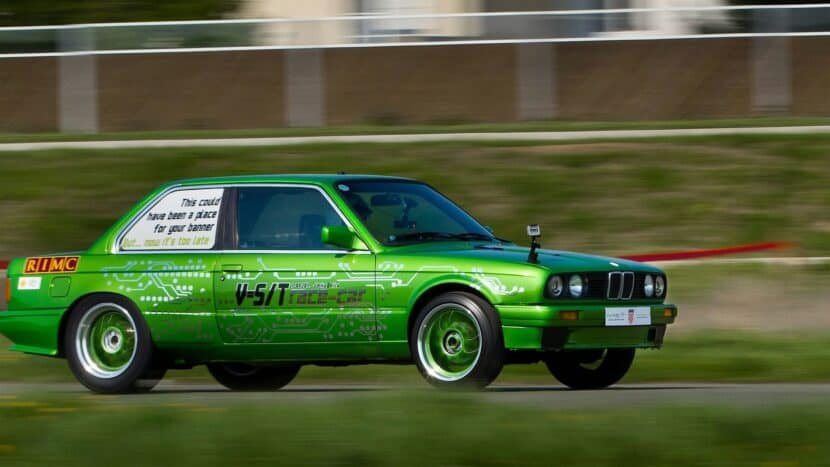
Mate Rimac, CEO of Bugatti and Rimac Automobili, says the hypercar segment will stay with combustion engines for a long time, comparing them to luxury watches, while mainstream cars go electric.
By Charlotte Redford · 4 min read
Mate Rimac, the man who built his name proving electric motors could outperform petrol engines, now says the top end of the car market will stay combustion-powered for years to come. In an interview with CNBC, the CEO of both Bugatti and his own hypercar company drew a sharp line between the future of mass-market vehicles and the ultra-exclusive machines that carry seven-figure price tags.
“The upper segment, like sports cars and upwards, are going to stay combustion for a very long time, exactly like watches,” Rimac said. His reasoning is simple: for ordinary buyers, electric cars will dominate, but the wealthiest customers are not shopping for efficiency or outright performance. They are buying emotion, craftsmanship, and the sense of occasion that only a large, unapologetic engine can deliver.
Rimac’s factory in Croatia currently builds the Nevera, widely regarded as the most powerful production electric car on the planet, on the same assembly line as an 8.3-litre V16 engine that ranks among the largest combustion units in production anywhere. The contrast is not lost on him. “You have the crazy situation now at our facility in Croatia,” he said. “On the same production line, you have the world’s most powerful electric car being built right next to the world’s biggest combustion engine. Life is strange sometimes.”
The watch analogy is central to his argument. Only a fraction of the world’s timepieces are made in Switzerland, yet that is where nearly all the industry’s profit sits. A smartwatch can outperform a mechanical Patek Philippe in every measurable way, but as Rimac put it, “no one will pay $200,000 for it.” He is betting hypercar buyers will follow the same logic that has kept Geneva watchmakers wealthy for generations: past a certain price point, function stops mattering and feeling takes over.
Running Bugatti puts Rimac in an unusual position given how he built his reputation. “It’s kind of ironic that I’m now making the world’s biggest combustion engine,” he admitted. The Tourbillon, Bugatti’s new flagship, pairs that naturally aspirated V16 with electric motors for a combined output of around 1,800 horsepower. It is a hybrid rather than a pure EV, a choice that reflects his belief that the hypercar tier needs mechanical drama, not just a battery specification sheet.
His career began with a BMW. As a teenager racing a BMW 325i, he blew the engine and replaced the entire petrol powertrain with an electric drivetrain. That project, nicknamed the “green monster,” set world records for electric acceleration before he turned 21 and led directly to the founding of what became Rimac Automobili. Despite that origin story, his personal garage leans heavily toward German petrol-powered machines. He calls his BMW E30 M3 his “true love,” a rare Sport Evolution model, one of only 600 built, running the 2.5-litre S14 engine. His collection has also included a pair of M3 CSLs, a Z4 M, and an E39 M5, and he has spoken about building a V10-swapped restomod of the E30, though he says that project will likely wait until retirement.
Rimac’s comments are not nostalgia. His companies continue to push electric technology hard in every segment except the hypercar tier, with robotaxi development, high-voltage systems for other automakers, and battery technology for everyday EVs. The combustion argument is narrow and specific: at the very top of the market, where a car functions as a status object as much as transportation, buyers want noise, complexity, and a sense of occasion. Whether that bet holds up remains to be seen, but Rimac is not guessing from the outside. He is the one signing off on both ends of that Croatian production line, and for now, he is putting his money on pistons at the top and batteries everywhere else.
63