
Business 203
Seven Cars With Lease Deals Under £300 a Month
In this issue
Business 203
Seven Cars With Lease Deals Under £300 a Month
Culture 235
Golden Era Honda Collection Heads to Auction
Economy 38
Diesel at Nearly £11 a Gallon Prompts Calls for VAT Cut at the Pumps
News 149
Weekly Exercise Linked to Slower Memory and Movement Decline in Parkinson's Patie…
Politics 111
Trump Names Katie Zacharia as White House Press Secretary
Sports 266
Arsenal to Host Leeds United in Premier League Clash
Technology 267
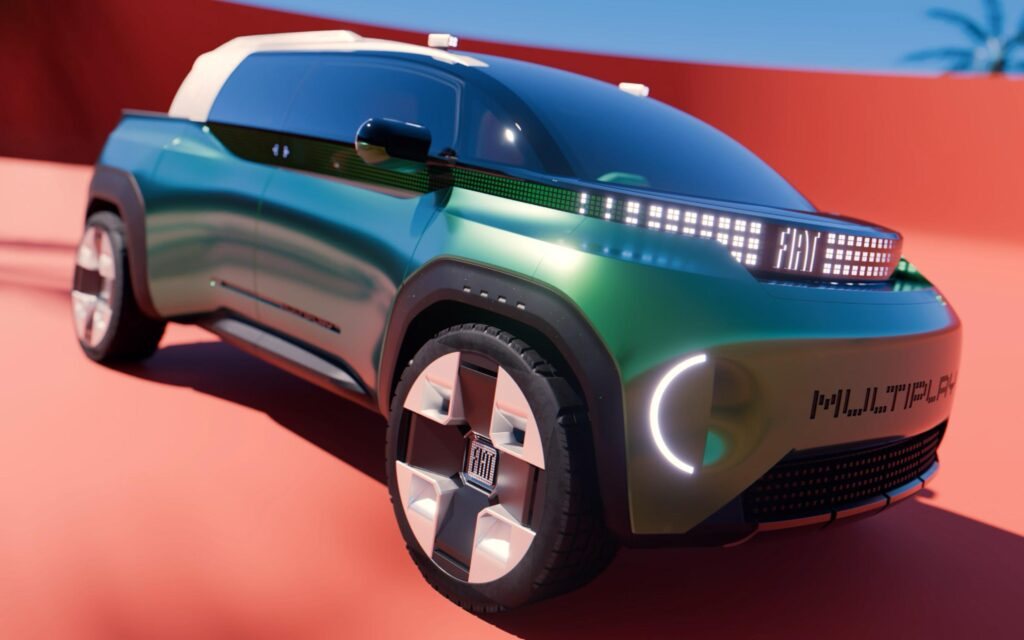
Fiat Multiplay Concept Turns Into Pickup, SUV And Minivan
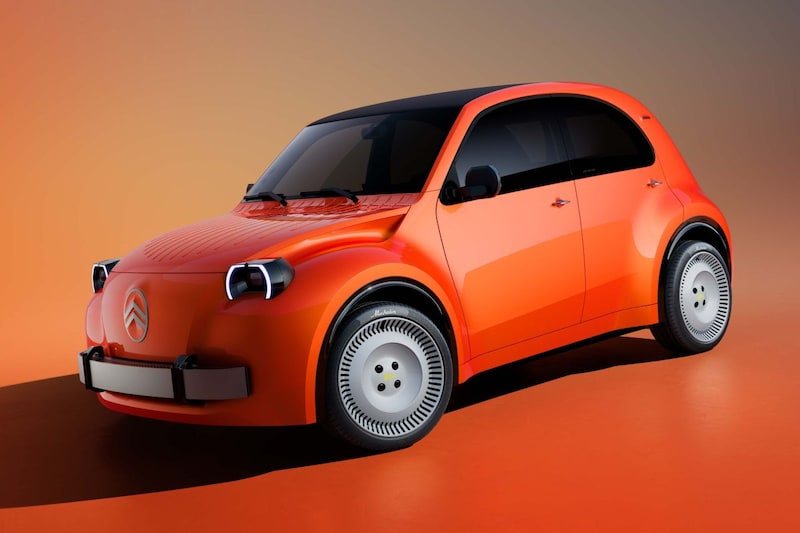
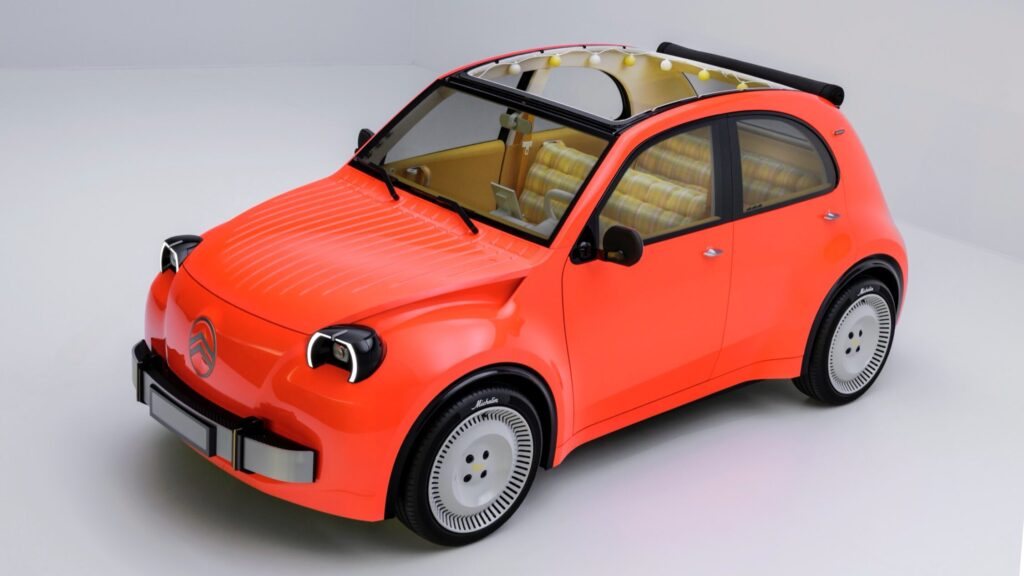
Citroën has unveiled a concept version of the iconic 2CV at the Paris Motor Show, confirming a production electric model for 2028 with an expected starting price of around €15,000.
By Eleanor Ellington · 5 min read
Citroën has taken the wraps off a concept version of the 2CV at the Paris Motor Show, signalling the return of one of motoring's most recognisable shapes as a fully electric car. The French manufacturer has confirmed that a production version is planned for 2028, with an expected starting price of around €15,000.
The new Eend, as the model is affectionately known in the Netherlands, is 3.76 metres long — some 10 centimetres shorter than the original 2CV. Citroën aims to keep the weight down to just 1,000 kilograms, which is heavier than the original but remarkably light for a modern electric vehicle. The design team has clearly revelled in retro details, and the result is unmistakably a 2CV.
AutoWeek was given a close look at the concept and saw several design ideas that were discarded. Citroën experimented with more modern-looking 2CVs, including aggressive LED lighting, sharper creases and wider wheel arches. In every sketch the basic 2CV forms remained, but none captured the spirit as well as the final design, which stays deliberately close to the original.
The retro touches are extensive. At the front, a bumper protrudes partly from the body, just like the original. Behind it sits a rounded nose in the familiar shape, but the electric powertrain means there is no grille. A large retro Citroën logo gives it a familiar face. Citroën has drawn mainly on the first generation of the 2CV, evident in the ribs on the 'bonnet', although the cut-outs in the flanks of the nose reference later models. Below the windscreen are 'flaps' that can be opened to direct air into the cabin, just as before.
The silhouette is immediately recognisable, and again the original 2CV is the reference. The third side window of later models is absent; instead, there is an indicator on the C-pillar, though it remains to be seen whether that makes production. The same uncertainty applies to details such as the retro door handles. The wheels look suitably classic thanks to distinctive hubcaps on 19-inch steel wheels.
At the rear, the new 2CV is slightly harder to identify. The designers allowed themselves more creative freedom, particularly with the lighting, which features two vertical LED strips along the sides. The rear window looks more familiar, and the contrasting black paint that runs to the bottom references the full-length canvas of the original. The new Eend has a tailgate, but the window does not lift with it, so it is still not a hatchback.
Inside, Citroën has gone for a very classic look, in contrast to retro rivals such as the Renault 5, which has a modern interior. The minimalism of the old 2CV matches the clean cockpits of many modern electric cars. There is no traditional dashboard; instead, a cylindrical section extends from the steering column to the right, holding an 8-inch infotainment screen. Below it is the drive selector, with a ball on top as a direct nod to the original's distinctive gear lever. The new Eend also has a single-spoke steering wheel. Doors are pulled shut with a loop, and small levers at the corners of the dashboard open the air flaps for a refreshing breeze.
Less is more inside, so there is no centre tunnel. Instead, a removable picnic basket sits on the flat floor. The idea is that, as before, the 2CV is an ideal picnic companion, and the front bench can also be removed. For entertainment there is the 'Radioën', a Bluetooth speaker you can take with you. A hidden detail: at the bottom of the doors is a compartment with recesses for six eggs, a reference to one of Citroën's original development requirements — the car had to carry a basket of eggs across a ploughed field without breaking them.
Unfortunately, we were not allowed to sit in the study model, so it is difficult to say how comfortable it is. The rear bench looks somewhat cramped, though that is partly due to the car's compact dimensions. More details on the production version are expected closer to its 2028 launch.
5