
Business 150
Ford Confirms Next-Generation Ranger Under Development in Australia
In this issue
Business 150
Ford Confirms Next-Generation Ranger Under Development in Australia
Culture 159
Rare 2021 BMW M2 Competition with Special Content Package Listed for Sale
Economy 33
Bitcoin and Ethereum Surge to Levels Last Seen in January
News 132
Sarandon and Einbinder arrested at anti-Netanyahu protest in New York
Politics 108
US Lawmakers Move to Permanently Ban Chinese Cars
Sports 247
England face Spain at Wembley as Nations League campaign begins
Technology 173
Chevrolet's New V8 Engines Drop the Oil Dipstick as GM Bets on Sensors
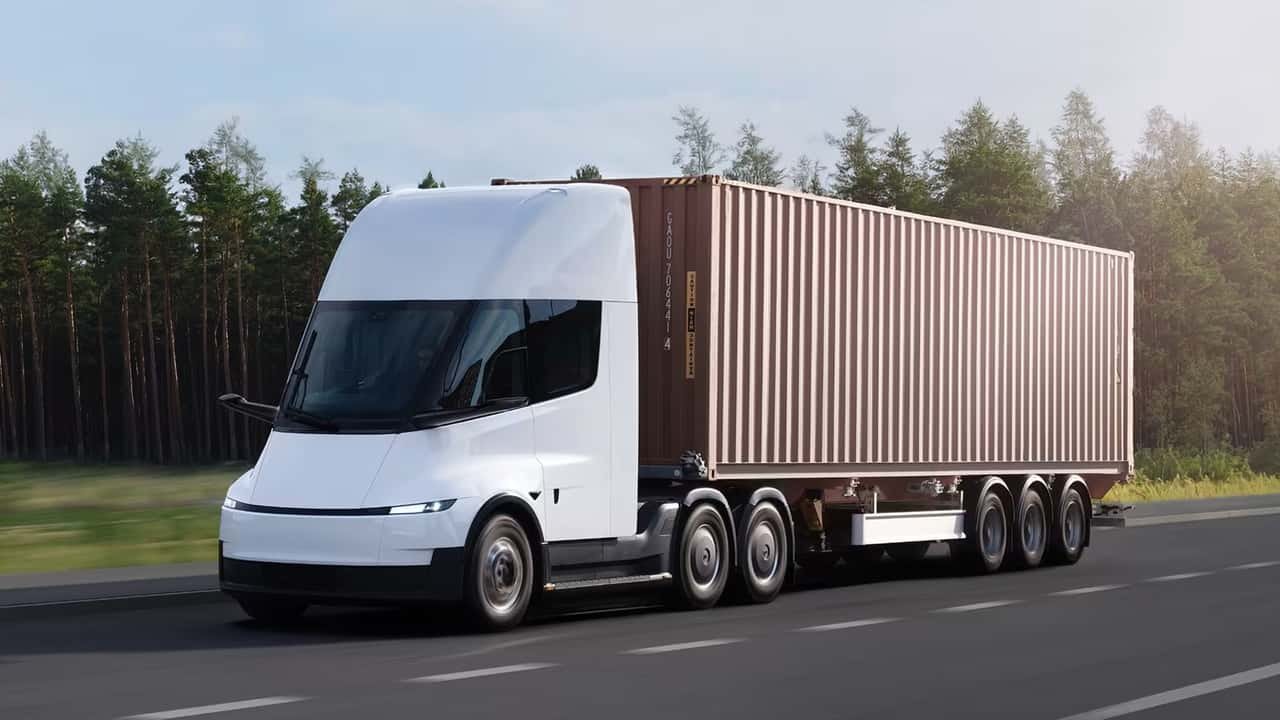
Tesla has started high-volume production of its Class 8 electric Semi at a new Nevada factory, with deliveries beginning after years of delays and rising diesel prices improving the business case for electric haulage.
By George Kensington · 5 min read
Tesla has begun volume production of its long-awaited Semi, the company's Class 8 electric truck, at a new dedicated factory in Nevada. The plant, which Tesla says can build up to 50,000 electric trucks per year, marks the start of deliveries more than seven years after the vehicle was first unveiled.
The Semi was originally revealed in 2017, with production promised for 2019. That timeline slipped repeatedly, and Tesla has now confirmed that deliveries «start now». The company detailed a heavily redesigned truck in a 13-post thread on X, indicating significant changes from the prototype shown years ago.
The launch comes as diesel prices have skyrocketed, a shift that strengthens the economic case for electric haulage. For fleet operators, the cost of diesel is a major operating expense, and high pump prices make the potential savings from electric drivetrains more attractive. Tesla's timing, after years of delay, may therefore prove fortuitous.
The Semi is a Class 8 truck, the heaviest category of highway freight vehicle in North America. Tesla's Nevada factory is dedicated to the model, and the stated capacity of 50,000 units per year signals an ambition to compete at scale in a segment long dominated by diesel. Volume production is a critical step from prototype and low-volume builds to meaningful commercial deliveries.
Tesla has not disclosed which customers are receiving the first trucks or the exact specifications of the redesigned model. The company's social media thread provided some details but did not include a full pricing or range announcement. The original 2017 prototype promised a range of up to 500 miles, but it is not clear whether those figures still apply to the production version.
The Semi's arrival comes amid broader momentum in electric commercial vehicles, though adoption in long-haul trucking has been slower than in passenger cars. Challenges include the need for high-power charging infrastructure, battery weight, and the demanding duty cycles of freight operations. Tesla has previously discussed plans for a Megacharger network to support the Semi, but the rollout of that infrastructure has not been detailed recently.
For Tesla, the Semi represents a diversification beyond its consumer vehicle lineup, which includes the Model 3, Model Y, Model S, and Model X, as well as the Cybertruck. The company has faced increasing competition in the electric car market, and commercial trucks offer a new avenue for growth. The Nevada factory adds to Tesla's manufacturing footprint, which also includes facilities in California, Texas, Berlin, and Shanghai.
Diesel prices have been volatile in recent years, influenced by global oil markets, refining capacity, and geopolitical events. When diesel is expensive, the total cost of ownership for electric trucks can improve, even if the upfront purchase price is higher. Fleet operators typically evaluate trucks on a cost-per-mile basis, and fuel savings are a key component of that calculation.
However, electric trucks also face higher upfront costs and infrastructure requirements. The availability of reliable, high-speed charging at depots and along freight corridors is essential for long-haul routes. Without adequate charging, electric trucks may be limited to shorter regional routes, where they can return to a base for charging.
Tesla's announcement did not include a detailed timeline for ramping up production or delivering trucks to customers beyond the initial batch. The company said deliveries «start now», but the pace of the rollout remains unclear. Production at the Nevada plant will need to scale gradually, and Tesla has a history of production challenges with new models.
The Semi's launch also comes as other manufacturers, including established truck makers and startups, are developing electric Class 8 vehicles. Competition in the segment is increasing, and Tesla will need to demonstrate that its truck can meet the reliability and durability demands of freight operators. Those operators are typically conservative and require proven performance before committing to a new technology.
For now, the start of volume production is a milestone for Tesla after years of delays. The company has not announced a formal launch event beyond the social media thread, and further details on specifications, pricing, and customer deliveries are expected in the coming months. The success of the Semi will depend on whether Tesla can deliver trucks at scale and support them with adequate charging and service networks.
19