Business 223
Fiat Ready to Reveal Koala Electric Car as Panda-Inspired 2CV Twin
In this issue
Business 223
Fiat Ready to Reveal Koala Electric Car as Panda-Inspired 2CV Twin
Culture 267
Kaege Retro's Backdated 1997 Porsche 911 Turbo Heads to Auction
Economy 40
US Petrol Prices Set Record for Longest Stretch Above $4 a Gallon
News 153
Forecasters Issue Winter Snow Verdict for the UK
Politics 114
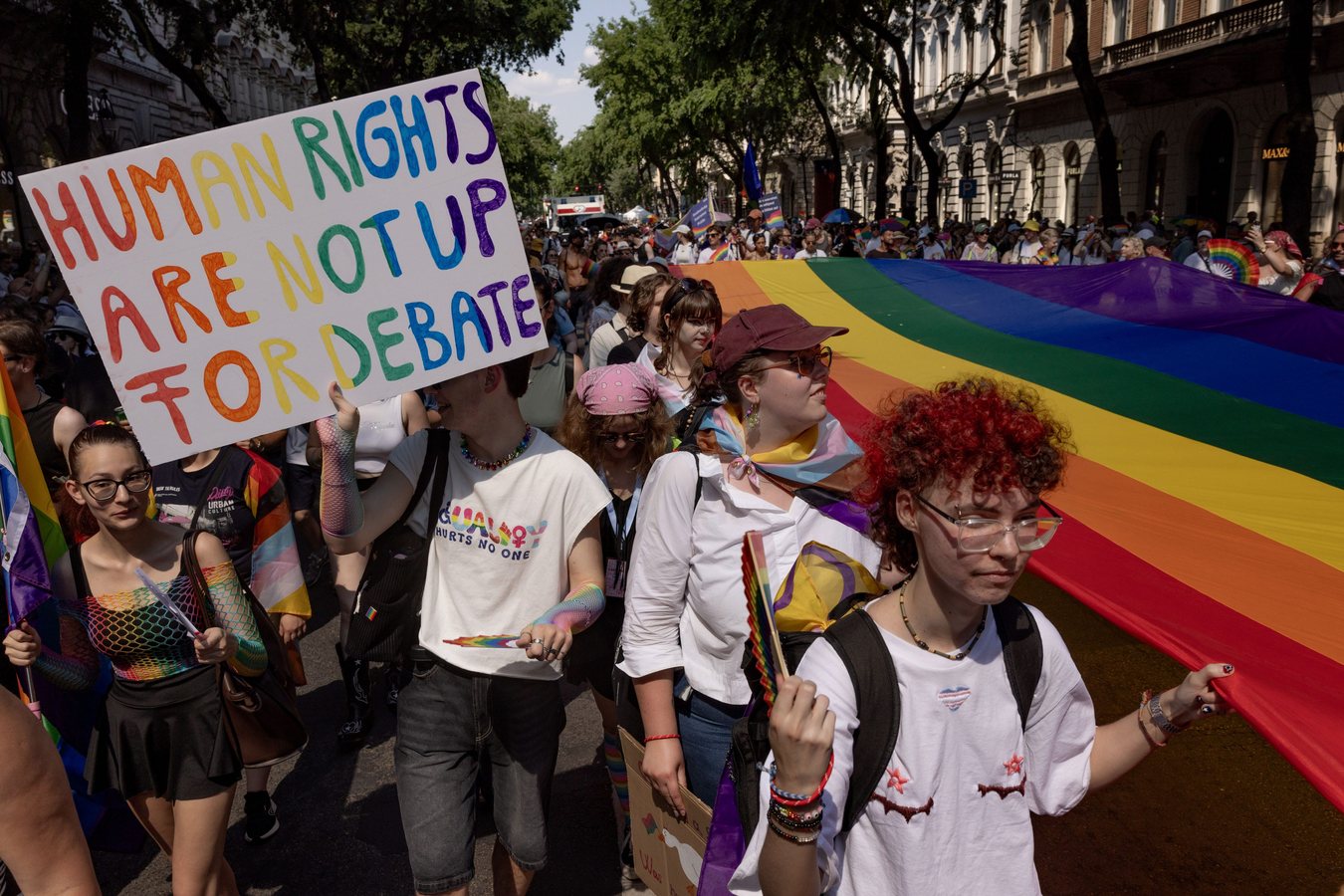
Hungary Moves to Repeal Anti-LGBT Laws in Push for EU Closer Ties
Sports 279
Leeds United to Host Manchester United in Premier League Clash
Technology 313
Musk Claims New Tesla Roadster Will Set Unprecedented Top Speed Record

The prime minister has announced a campaign against nuisance behaviour on buses and trains, with new guidance allowing local transport authorities to fine passengers up to £100 for playing music out loud.
By Edward Beaumont · 3 min read
Andy Burnham has launched a campaign against passengers who play loud music on public transport, promising voters more «breathing space» inside train carriages and on buses. The prime minister unveiled the drive against nuisance behaviour on Monday, alongside guidance that will allow local transport authorities to levy fines of up to £100 for non-compliance.
The campaign urges passengers to «share the carriage, not the noise», framing loudspeaker use as a shared-space issue rather than a minor irritation. Under the guidance, transport authorities outside London will be able to introduce their own penalty regimes, with the £100 ceiling setting a common benchmark for enforcement across the country.
The announcement extends Burnham's broader pitch to give voters «breathing space» — a phrase he has used to describe everyday relief from pressures in public life — into the confined environment of public transport. By targeting «headphone dodgers», the government is addressing one of the most frequently cited frustrations of commuters, who often have little practical recourse when fellow passengers play music, videos or calls aloud.
The guidance stops short of a blanket national ban. Instead, it hands local transport authorities the power to decide whether to adopt fines and how to apply them, leaving the detail of enforcement to regional bodies. That approach mirrors the devolved structure of much transport policy in England, where mayoral combined authorities and councils already set many of the rules governing buses and local rail services.
Commuters have long complained about loudspeaker use on buses and trains, particularly during peak hours when carriages are crowded and passengers cannot easily move away. The issue has become a fixture of public debate about antisocial behaviour, alongside concerns about litter, vaping and feet on seats. The new guidance places loud music in that same category of low-level nuisance that shapes daily experience of public services.
The campaign is likely to be welcomed by operators and staff, who often find themselves caught between annoyed passengers and those unwilling to turn down their devices. Enforcement, however, will depend on the willingness of transport authorities to fund patrols and on the practical difficulty of identifying and fining offenders in a moving carriage. The £100 penalty is intended as a deterrent as much as a punishment.
For Burnham, the initiative fits a pattern of attention to the texture of everyday life — the small frictions that shape how people experience work, travel and public space. By casting the campaign in the language of shared courtesy, the prime minister is seeking to appeal to commuters without imposing a heavy-handed national rule. The guidance will now be watched closely by local authorities to see whether fines are actually introduced and whether they change behaviour on the network.
5