Business 203
Seven Cars With Lease Deals Under £300 a Month
In this issue
Business 203
Seven Cars With Lease Deals Under £300 a Month
Culture 240
140 MINIs Gather at Czech Castle for Record Owners' Meet
Economy 39
Countries Where Petrol Sells for Under $2 a Gallon
News 149
Weekly Exercise Linked to Slower Memory and Movement Decline in Parkinson's Patie…
Politics 112
Ulle Madise becomes Estonia's new president
Sports 267
Southampton and Portsmouth Set for Renewed South Coast Meeting
Technology 274
BYD Atto 8 Debuts in Paris with Nine-Minute Charging
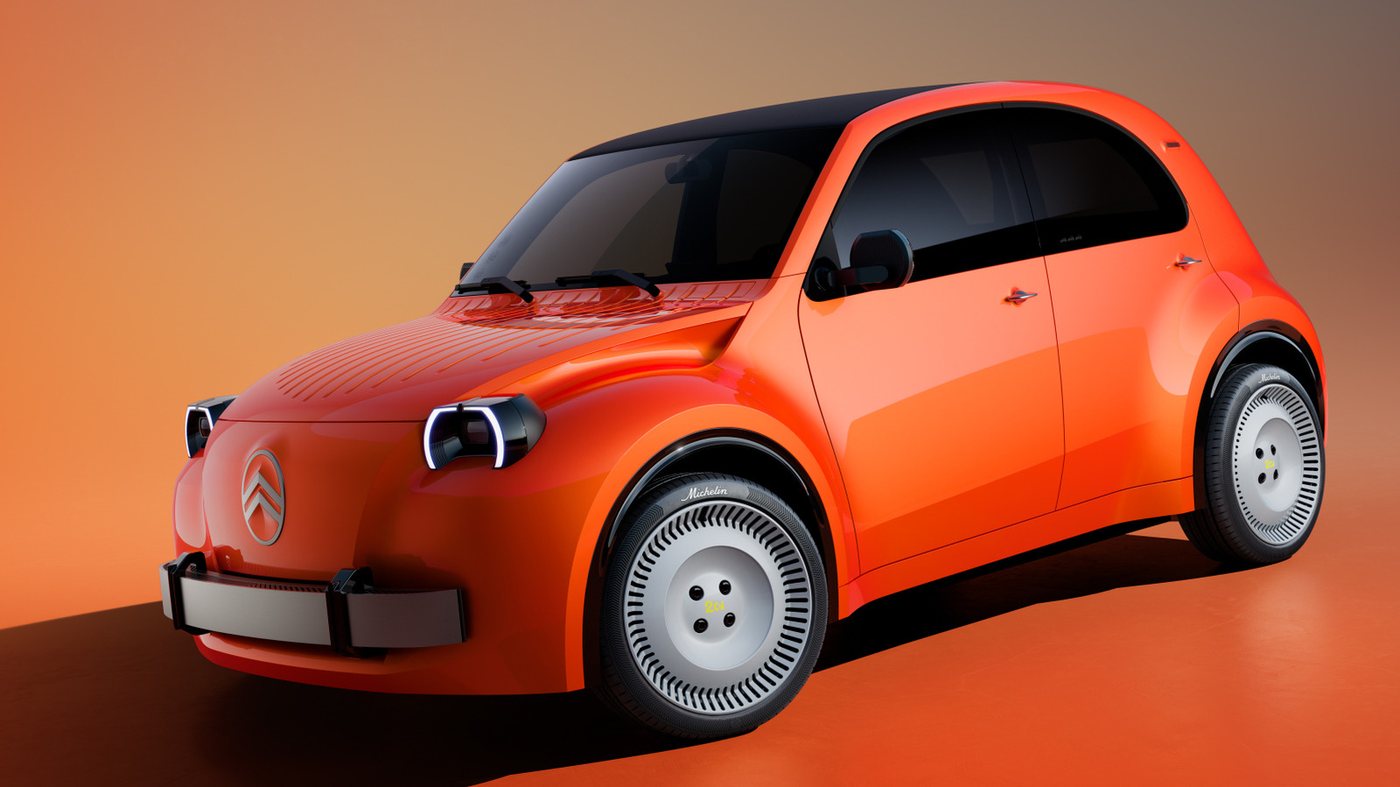
Citroën will put an electric reinterpretation of the 2CV into production in 2028, targeting a starting price of around €15,000, as the brand bets on affordable retro design to stand out in the small EV segment.
By Charlotte Redford · 4 min read
Citroën has confirmed that a production version of its electric 2CV concept will reach showrooms in 2028, with a targeted starting price of approximately €15,000. The announcement positions the French marque at the affordable end of the electric vehicle market, where few European manufacturers currently compete.
The concept revives the silhouette and spirit of the original 2CV, the utilitarian people's car that sold in huge numbers across Europe for decades. Citroën's decision to put the design into production signals a deliberate strategy: use heritage styling and a low price point to attract buyers who have so far resisted the switch to electric motoring.
At €15,000, the new model would undercut most electric cars on sale in the UK and continental Europe, where entry-level EVs typically start well above €20,000. That pricing matters because cost remains the single biggest barrier to EV adoption for households on modest budgets. If Citroën can deliver the car at or near its target, it would give the brand a distinctive position in a crowded market.
The 2CV was originally engineered as a cheap, simple, durable vehicle for rural France, and its rounded bodywork and roll-back fabric roof made it an enduring cultural icon. Reinterpreting those cues for the electric age allows Citroën to trade on nostalgia while meeting modern emissions rules. The concept's cheerful appearance, noted by observers, is central to that appeal.
Stellantis, Citroën's parent company, has been pushing to make electric cars more accessible across its brands, and the 2CV project fits that effort. A production model at this price would depend on battery costs continuing to fall and on manufacturing efficiencies within the group. The 2028 timeline gives Citroën several years to refine both the technology and the business case.
For British buyers, the significance is straightforward. The UK market has seen strong demand for small, affordable cars, but electric options in that bracket remain limited. A competitively priced electric 2CV could appeal to city drivers, second-car households and anyone seeking low running costs without a premium outlay. It would also give Citroën a fresh talking point in a sector where many rivals are focused on larger, more expensive models.
The original 2CV was famous for doing without unnecessary complexity, and that philosophy translates naturally to electric propulsion. A light car needs a smaller battery, which reduces cost and weight. Citroën has not yet confirmed technical details such as range, battery size or charging speed, and those figures will determine whether the car succeeds beyond its styling.
Rivals are watching the affordable EV space closely. Several manufacturers have promised cheaper electric models, but few have committed to a price as low as €15,000. If Citroën meets its target, the new 2CV could pressure competitors to follow suit and help accelerate the shift away from petrol and diesel in Europe.
The production model is expected to arrive in 2028. Until then, Citroën will need to balance the retro charm that makes the concept distinctive against the practical demands of range, safety and everyday usability that modern buyers expect.
7