Business 203
Seven Cars With Lease Deals Under £300 a Month
In this issue
Business 203
Seven Cars With Lease Deals Under £300 a Month
Culture 239
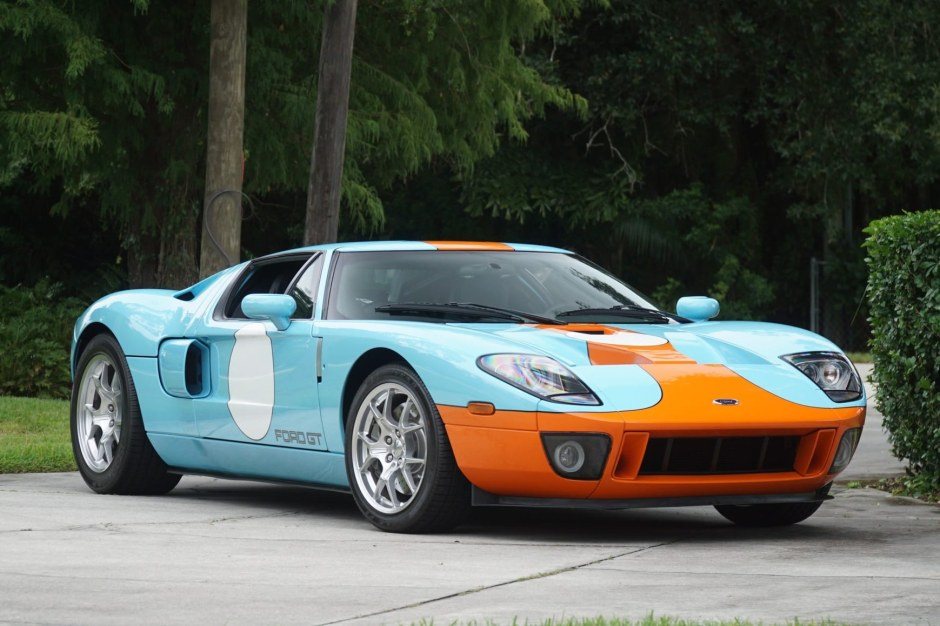
554-Mile 2006 Ford GT Heritage Edition Heads to Auction in Florida
Economy 39
Countries Where Petrol Sells for Under $2 a Gallon
News 149
Weekly Exercise Linked to Slower Memory and Movement Decline in Parkinson's Patie…
Politics 111
Trump Names Katie Zacharia as White House Press Secretary
Sports 267
Southampton and Portsmouth Set for Renewed South Coast Meeting
Technology 271
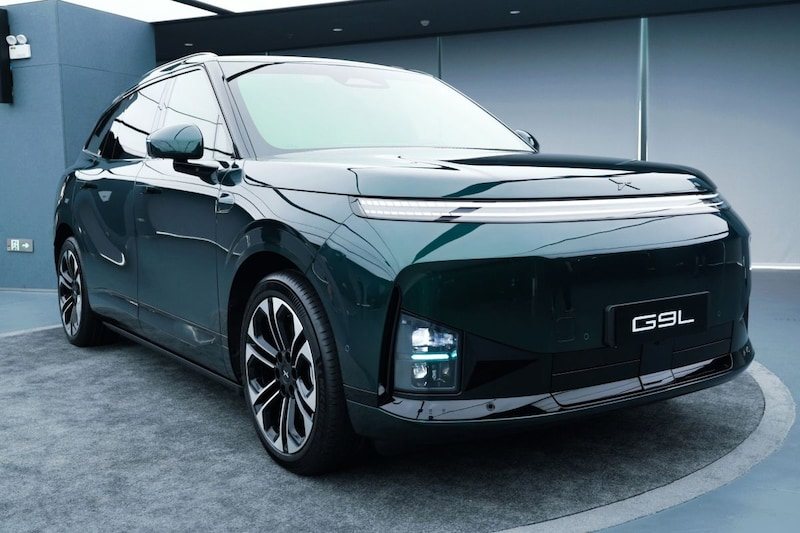
Xpeng G9L: A 5.12-Metre Electric SUV With 591 km Range and 540 kW Charging
Hyundai has redesigned the Bayon as a more distinct compact SUV, with a longer wheelbase, hybrid power and a roomier interior, as it seeks to separate the model from the i20 hatchback.
By Charlotte Redford · 4 min read
Hyundai has repositioned the Bayon as a compact SUV for its second generation, making the car longer, taller and wider in a deliberate move to distance it from the i20 hatchback with which it shares its underpinnings. The new model adopts Hyundai's «Art of Steel» design language, producing a boxier silhouette with hard edges that gives it a more robust, SUV-like character despite its small footprint.
The change addresses a long-standing concern inside the company that the first-generation Bayon was too close in appearance and positioning to the five-door i20. «Today's Bayon is too similar to the five-door i20,» Eduardo Ramírez, Hyundai's European design chief, said. «That was something we understood: we recognised that we needed to really separate these two products, and it started by defining the Bayon more clearly as a compact SUV with its very distinctive, more robust character, while the i20 remains an i20.»
Christopher McKinnon, Hyundai Europe's head of product, said making the Bayon «more SUV» was central to fielding a stronger competitor in one of the most hotly contested segments of the European market. The redesign is intended to give the model a clearer identity at a time when small crossovers are competing for buyers against both conventional hatchbacks and larger SUVs.
Practicality has improved alongside the styling. The wheelbase is now 20mm longer than before, at 2.6m, which benefits rear-seat passengers in particular. The rear bench offers two positions — one upright and one with a slight recline — and the middle seat can be folded out to provide an armrest and cupholders for the outer passengers. Boot space stands at 440 litres.
Inside, the Bayon borrows its screens from the larger Ioniq 5, but it does not adopt the Pleos operating system used by newer stablemates such as the Ioniq 3 and Tucson. As a result, over-the-air updates and the ability to install additional apps are not available. Wireless Apple CarPlay and Android Auto smartphone mirroring are fitted as standard.
At launch, the Bayon will be offered only with a turbocharged 1.0-litre three-cylinder petrol engine, producing either 89bhp or 113bhp. Both versions can be specified with a six-speed manual or a seven-speed dual-clutch automatic gearbox. A first hybrid powertrain, delivering 136bhp, will follow shortly afterwards.
The hybrid was a decisive factor in the car's growth. «The only reason it grew in size overall was because we wanted to get the hybrid in there, so we had to add to the front overhang in order to fit the powertrain,» McKinnon said. The engineering requirement shaped both the proportions and the packaging of the new model.
The first examples of the new Bayon are due in the UK next spring. Pricing has not been announced, but it is likely to remain around £25,000, while the range-topping N Line version could nudge £30,000. That trim now accounts for one in three Hyundai sales in Europe, according to McKinnon, underlining the growing importance of the N performance brand to the company's European line-up.
4