
Business 156
BMW and MINI to Make Greek Debuts at AUTO ATHINA 2026
In this issue
Business 156
BMW and MINI to Make Greek Debuts at AUTO ATHINA 2026
Culture 176
2008 Lamborghini Gallardo Spyder with 14k Miles Heads to Auction
Economy 34
Poland's Rising Abstinence Hits Alcohol Tax Revenues
News 135
Trump Administration Revises Fuel Economy Rules, Cutting 2031 Target by a Third
Politics 109
Mahmood Opens New Legal Refugee Routes in Labour Conference Speech
Sports 249
Fantasy Football Leagues Embrace Creative Last-Place Punishments
Technology 185
Tesla Roadster Debut Delayed Again as Texas Weather Forces Two-Week Postponement
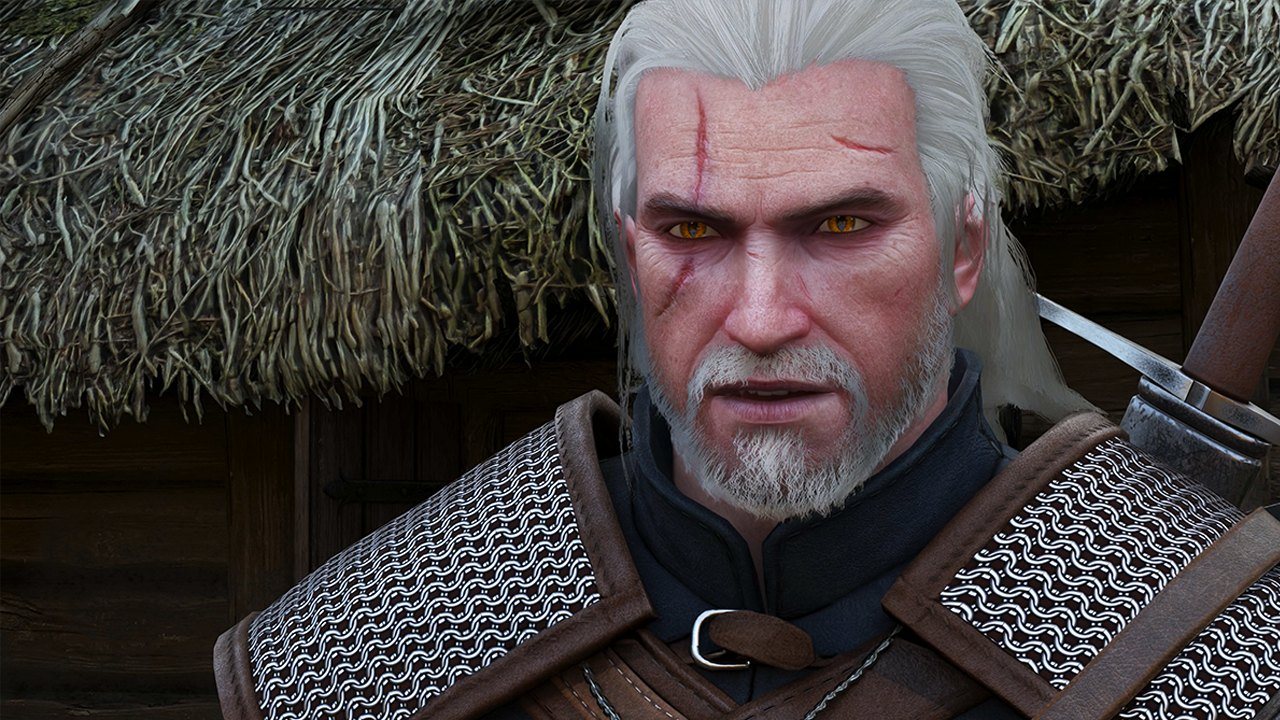
CD Projekt Red's free remaster arrives on 29 September with path tracing that pushes even Nvidia's RTX 5080 to its limits, managing just 30 fps at 4K with DLSS Performance and frame generation disabled.
By George Kensington · 4 min read
CD Projekt Red has confirmed that The Witcher 3: Wild Hunt – Remastered will launch as a free update on 29 September for PC, PlayStation 5, Xbox Series X|S and Nintendo Switch 2, bringing a suite of visual upgrades to the eleven-year-old role-playing game. Chief among them is full path tracing, a rendering technique that simulates the behaviour of light far more accurately than conventional ray tracing. The catch, according to the studio's updated system requirements, is that players hoping to enable path tracing at 4K will need an Nvidia GeForce RTX 5080 — a graphics card currently selling for around $1,650 at the low end.
Even with that hardware, the published requirements suggest that both DLSS upscaling and frame generation must be active to reach 60 frames per second. Testing conducted in Novigrad, the game's most densely detailed city and a notorious performance bottleneck since its original 2015 release, bears this out. At 4K with path tracing, hairworks and DLSS set to Performance, an RTX 5080 averaged 30 fps. Enabling frame generation lifted that figure to 59 fps, but the low base frame rate introduced visible artefacts, particularly in ground textures.
Hairworks, the fur simulation technology that has punished frame rates since launch, remains a significant drain. Disabling it while keeping path tracing and DLSS Performance at 4K raised the average to 44 fps, which climbed to 80 fps with frame generation switched on. Turning off path tracing entirely produced the most practical result: 55 fps on the RTX 5080, a figure that becomes more comfortable still once other ray tracing effects are disabled. Short of upgrading to an RTX 5090, that remains the most reliable route to smooth performance.
The situation has prompted some frustration among PC enthusiasts, who note that maxing out an eleven-year-old title at a stable frame rate should not require one of the most expensive consumer graphics cards on the market. CD Projekt Red's revised requirements do indicate that the remaster scales down effectively to older hardware, meaning the experience will largely depend on which settings players are willing to sacrifice.
The remaster bundles the base game with its Hearts of Stone and Blood and Wine expansions, and arrives alongside a round of improvements aimed at bringing the title in line with current-generation expectations. Global release times have been published, and the update will be available at no cost to existing owners across all supported platforms.
For newcomers, the release offers a natural entry point into Geralt of Rivia's monster-hunting career, with guides covering gear locations, Places of Power and Gwent card positions available to ease the learning curve. The remastered edition also includes all major quests and choices from the base game and expansions, giving players the full breadth of the story in a single package.
The broader question for CD Projekt Red is whether path tracing's visual gains justify the hardware demands. The technology delivers markedly more realistic lighting, reflections and shadows, but the performance cost is steep enough that many players will likely leave it disabled. The studio's decision to ship the remaster as a free update softens the blow, ensuring that existing owners can sample the improvements without paying again — and choose for themselves whether the pursuit of maximum fidelity is worth the frame rate.
8