

Business 152
Stellantis Adds Budget Trims and Mobile Office to Citroen Berlingo and Opel Combo…
In this issue
Business 152
Stellantis Adds Budget Trims and Mobile Office to Citroen Berlingo and Opel Combo…
Culture 169
1996 Porsche 911 Carrera Coupe in Grand Prix White Heads to Auction
Economy 33
Bitcoin and Ethereum Surge to Levels Last Seen in January
News 132
Sarandon and Einbinder arrested at anti-Netanyahu protest in New York
Politics 108
US Lawmakers Move to Permanently Ban Chinese Cars
Sports 248
Dumont and Perez settle bitter rivalry at UFC Vegas 121
Technology 175
Family Sues Tesla Over Model X Sudden Acceleration Claim
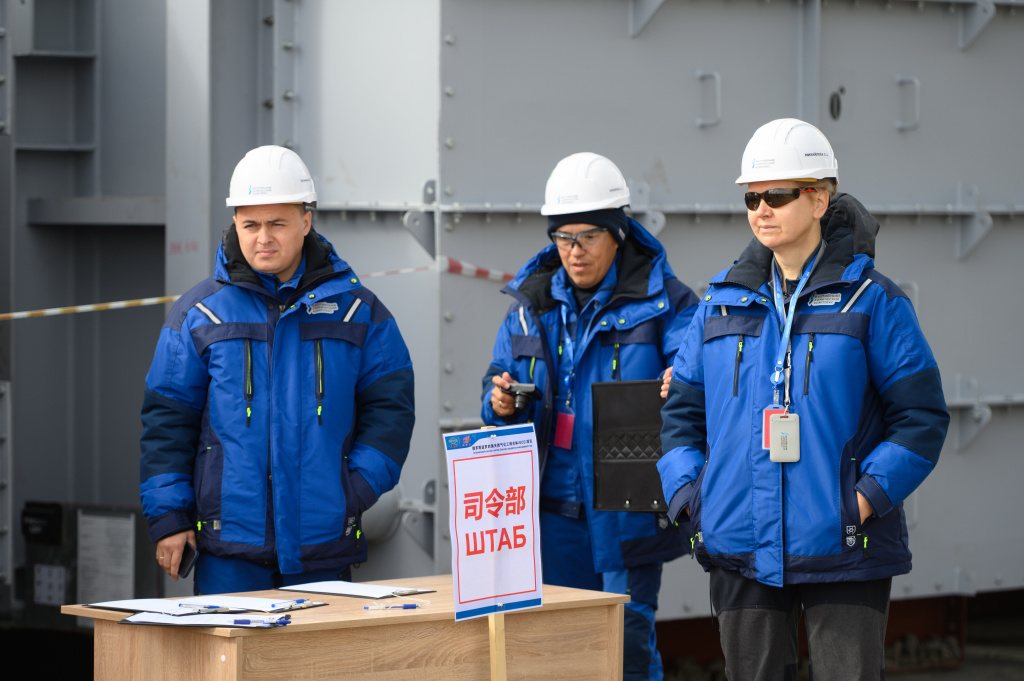
Chinese workers say months of wages went unpaid at a Russian petrochemical project led by CC7. For a contractor associated with one of China’s largest overseas engineering deals, payroll has become a leadership test.
By George Kensington · 5 min read
There is a useful management lesson in the labour unrest at Russia’s Baltic Chemical Complex: scale does not protect a project from basic failures. Hundreds of Chinese workers have gone on strike over wages they say were unpaid for months, challenging a contractor attached to one of China’s most prestigious overseas engineering deals.
China Labor Watch says the strike began on 26 June 2026. On 30 June, hundreds of workers walked out again and marched to the offices of China National Chemical Engineering & Construction Corporation Seven, known as CC7. Some workers said their pay was as much as five months in arrears.
They reportedly turned dormitory bedsheets into protest banners. It was an improvised gesture, but the demand was not symbolic: money owed for completed work.
The Baltic Chemical Complex’s official website identifies CC7 as the EPC contractor. The plant is being built in the Kingisepp district of Leningrad region and is designed to produce up to 3 million tonnes of polyethylene annually. China’s state asset regulator previously promoted the contract as one of the largest overseas engineering agreements secured by a Chinese enterprise.
That prestige changes the meaning of a payroll dispute. On a small job, late wages may be treated as a local subcontractor failure. On a flagship project, the same problem becomes a measure of whether management systems can control thousands of workers, multiple subcontractors and cash flows across borders.
China Labor Watch says workers at BCC also complained that they did not receive copies of their signed employment contracts. In a broader review of incidents affecting Chinese workers in Russia in 2025 and 2026, the organisation reported recurring allegations of three to eight months of wage arrears, confiscated passports, restrictions on leaving worksites and opaque subcontracting relationships.
A Chinese-language labour account, “海外家园,” wrote in July that some workers who had bought tickets home were still trying to recover wages and passports. Another post said police arrived during one protest over pay and accommodation costs.
Online, that episode has been transformed into a larger confrontation. A Reddit live thread repeated a claim that thousands of workers surrounded police cars, freed a colleague and forced officers away. The detailed China Labor Watch account confirms a walkout by hundreds on 30 June, but not the full viral sequence.
The leadership issue exists regardless. Paying people on time is the first layer of operational credibility. If a company cannot guarantee that through its subcontracting chain, every other promise — schedule, quality, safety and delivery — becomes harder to trust.
There is a financial temptation behind wage arrears. Cash not paid today remains available somewhere in the system. But it is not free capital. It comes with accumulating obligations and a rising probability of disruption. A strike can cost more than the liquidity gained by delaying payroll, especially on a project where work packages are interdependent.
There is also a human cost. Migrant workers who are owed several months of pay may feel they cannot walk away without sacrificing money already earned. If passports or contracts are also outside their control, their bargaining position weakens further.
The strongest response from project leadership would therefore be practical rather than rhetorical: settle verified wage claims, ensure workers control their personal documents, clarify who is responsible at each subcontracting tier and prevent the same arrears from recurring.
Ust-Luga will continue to be judged by engineering milestones. But this episode adds another benchmark. A genuinely well-run megaproject is not only one that can move steel, equipment and capital across borders; it is one that can reliably pay the people who make those systems work.
67