Business 192
Jaguar Type 01 Debuts as Brand Bets on Electric Luxury
In this issue
Business 192
Jaguar Type 01 Debuts as Brand Bets on Electric Luxury
Culture 212
Léa Seydoux Says Next James Bond Must Be 'Layered'
Economy 36
G7 Agrees to Release 100 Million Barrels of Diesel and Crude Oil to Ease Price Su…
News 146
French School Protests Escalate as Tens of Thousands Demand Better Education
Politics 110
Trump Urges Republicans to Vote by Mail After Years of Criticising the Practice
Sports 260
Falcons thrash Saints 45-24 as New Orleans marks 20 years since Katrina return
Technology 234
Nissan Pixo Takes On Renault Twingo In Europe's Affordable EV Race
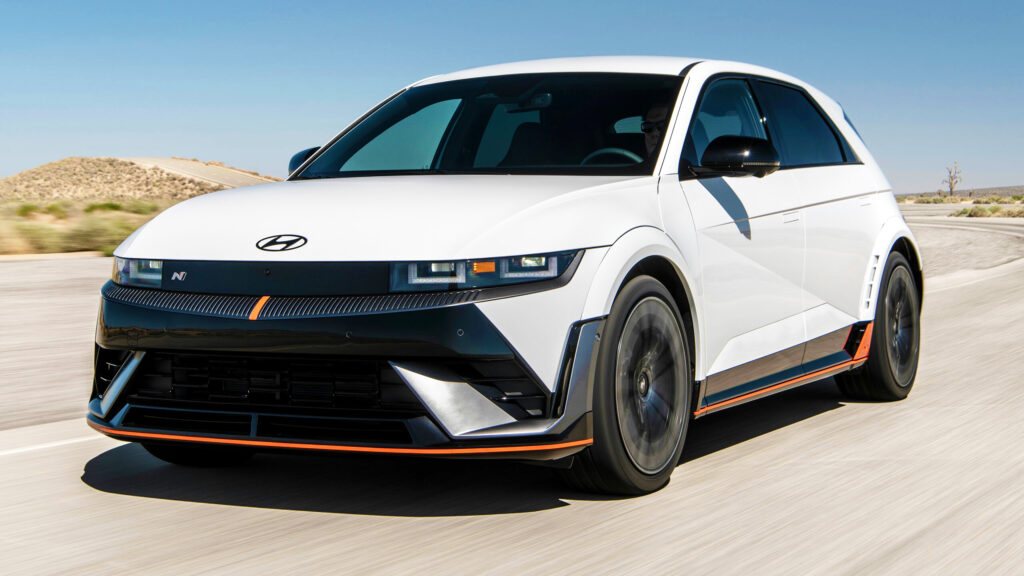
Rivian and Tesla beat quarterly delivery estimates as analysts point to rising fuel costs and the war in Iran for a modest recovery in American electric vehicle demand, even as GM and Hyundai continue to report steep declines.
By Charlotte Redford · 5 min read
Electric vehicle demand in the United States is showing tentative signs of recovery, with Rivian and Tesla both reporting quarterly sales figures that exceeded analyst expectations. The improvement comes as high petrol prices, linked in part to the ongoing war in Iran, push some buyers back towards battery-powered models after a prolonged slump.
The downturn began in September last year, when the Trump administration scrapped the $7,500 federal EV tax credit. Demand fell sharply almost overnight, and few in the industry expected a rapid return to previous levels. The latest figures suggest that assessment may have been too pessimistic, though the recovery remains fragile and uneven across manufacturers.
Rivian delivered 19,248 vehicles in the third quarter, a result driven largely by the arrival of the more affordable R2 model. Analysts believe some R2 buyers may have chosen the electric SUV over a similarly priced combustion-engined alternative because of the running-cost advantage created by expensive fuel.
Tesla also outperformed expectations, delivering 486,532 vehicles against forecasts of around 464,000. The two companies' results offer the clearest evidence yet that price pressure at the pump is influencing purchasing decisions in a market that had appeared to be turning decisively away from electric power.
Itay Michaeli, an analyst at TD Cowen, told Bloomberg that the shift could mark the beginning of a broader trend. «We are still in the early stages of this looming EV comeback,» he said. «EV market coverage, by our estimation, will grow substantially in the next couple of years by existing players.» Michaeli added that demand for more advanced electric models is likely to rise as autonomous driving systems become more widely available, giving manufacturers a further reason to invest in the segment.
Dealer sentiment appears to be moving in the same direction. Randy Parker, who heads Hyundai's North American operations, said a growing number of dealerships are requesting more electric vehicles because of high petrol prices. That pressure from the showroom floor is a notable shift after months of weak demand and heavy discounting.
Even so, the recovery is far from universal. Hyundai's own electric sales remain well below their previous highs. In September the carmaker sold just 2,928 Ioniq 5s in the United States, down 65 per cent from the 8,408 sold in the same month a year earlier. Year-to-date sales have fallen 53 per cent to 31,112 units. Sales of the Ioniq 9 were also down 65 per cent in September, to 374 vehicles.
General Motors is suffering even more acutely. In the third quarter, every electric model sold by Cadillac, Chevrolet, GMC and Buick recorded a decline. The Cadillac Lyriq fell 50.2 per cent, the Chevrolet Blazer EV dropped 84.4 per cent and the Equinox EV plunged 92.4 per cent compared with the prior year.
The divergence between the two camps reflects a market in which affordable, well-positioned models can still find buyers, while more expensive or less distinctive electric vehicles struggle without the support of federal incentives. The removal of the tax credit reshaped the economics of EV ownership overnight, and manufacturers have since been forced to compete on price, range and charging convenience rather than subsidy.
Whether the current uptick develops into a sustained recovery remains uncertain. Petrol prices are volatile and closely tied to geopolitical events, including the conflict in Iran, which has kept energy markets on edge. Analysts caution that demand is unlikely to return to the levels seen before the tax credit was withdrawn, even if the direction of travel has improved.
For now, the third-quarter results offer the clearest signal that high fuel costs can still move American consumers towards electric vehicles. The question for Rivian, Tesla and their rivals is whether that momentum can survive a fall in oil prices, or whether it depends on a geopolitical premium that few expect to last.
9