Business 193
Jaguar Type 01 Debuts as Brand Bets on Electric Luxury
In this issue
Business 193
Jaguar Type 01 Debuts as Brand Bets on Electric Luxury
Culture 212
Léa Seydoux Says Next James Bond Must Be 'Layered'
Economy 36
G7 Agrees to Release 100 Million Barrels of Diesel and Crude Oil to Ease Price Su…
News 145
NSW Police Trials BMW 540d as Highway Patrol Car
Politics 110
Trump Urges Republicans to Vote by Mail After Years of Criticising the Practice
Sports 260
Falcons thrash Saints 45-24 as New Orleans marks 20 years since Katrina return
Technology 235
Porsche 718 Boxster EV to launch in 2028 as pure electric sports car
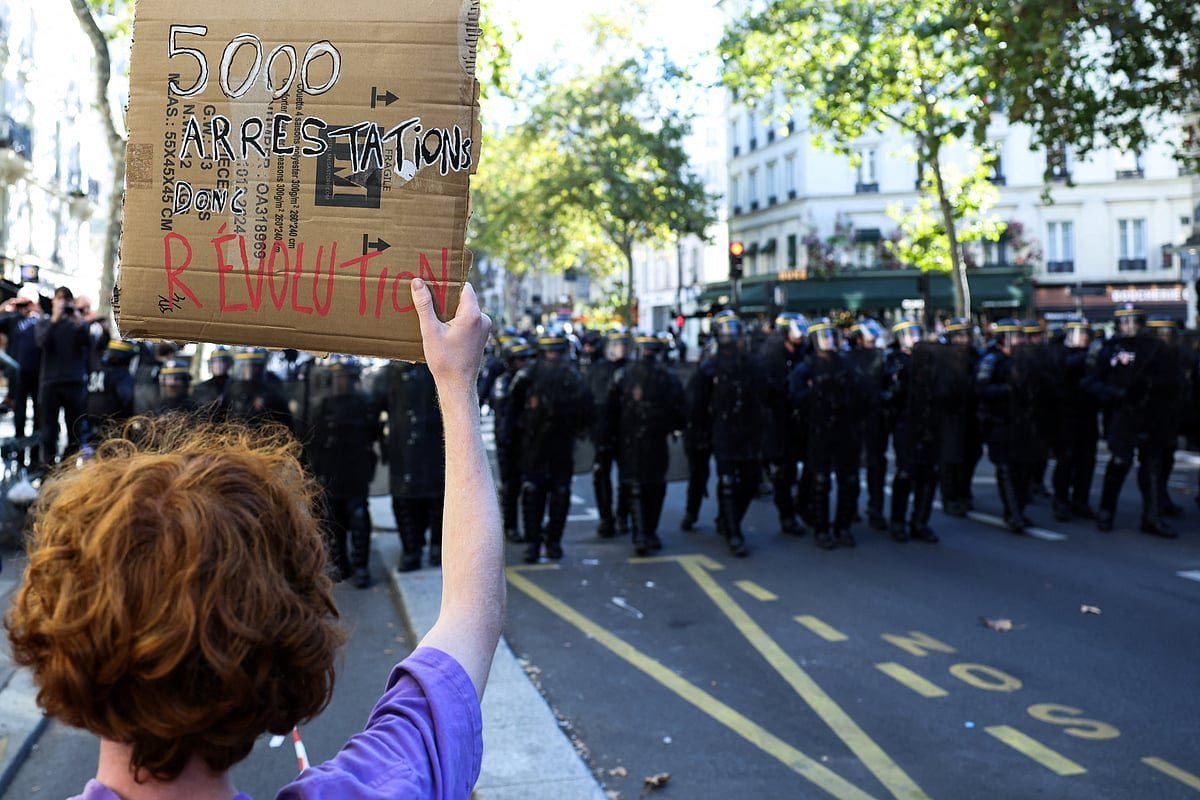
Tens of thousands of students, teachers and union members have taken to the streets across France, demanding improved learning conditions as protests over teacher shortages, overcrowded timetables and dilapidated buildings turn increasingly violent.
By George Kensington · 5 min read
Tens of thousands of demonstrators have taken to the streets across France in a growing wave of protests over the state of the country's education system, with high school students, teachers and trade unions joining forces to demand better learning conditions. The unrest, which began in late September when students blocked the entrances to hundreds of secondary schools, has now escalated into a national movement punctuated by violent confrontations between protesters and riot police.
The protests have been driven by long-standing grievances: missing teachers who are never replaced, overloaded timetables, dilapidated classrooms and buildings that cannot cope with rising temperatures. Students have complained that when replacements are sent, they are often inadequate. «We just want to save our education and be educated,» said Oceanne, 18, at a demonstration in the southern port city of Marseille, describing how she had suffered from absent teachers who were either not replaced or replaced by «pointless substitutes».
The scale of the movement has been significant. The interior ministry said 86,000 people had joined demonstrations across the country by early Tuesday afternoon, while the CGT union put the figure at 260,000. A major march was set to depart from central Paris later in the day. In Rennes, in western France, teacher Romain Dubourg said he and about thirty colleagues were present outside the Chateaubriand high school to show support. «We talked about the police brutality we've witnessed and decided to be there for our students if they need us,» he told AFP.
While many protests have remained peaceful, some demonstrators have started fires, destroyed bus shelters and clashed with riot police. Police have responded with batons, tear gas and riot-control rounds. The government says 215 students and 715 police officers have been injured since the start of the movement. A 15-year-old lost a hand to a sting-ball grenade fired by riot officers in the northern town of Lens on Monday. «It's scary,» said Mike Ryan, 16, who decided against joining protests in Lens after seeing the images on social media. «A hand cut off like that, it feels like we're at war.»
The unrest has erupted with just months to go before the 2027 election to choose a successor to centrist President Emmanuel Macron, with far-right veteran candidate Marine Le Pen riding high in the polls despite a graft conviction. Another student held up a sign complaining of long hours at school. «Timetables as packed as Le Pen's criminal record,» it read, in a jab at the far-right presidential hopeful. The government has sought to address the grievances, while accusing the hard-left France Unbowed (LFI) party of being behind the movement. Veteran LFI presidential candidate Jean-Luc Melenchon has strongly supported the protests, while calling for non-violent methods.
Amnesty International late Monday said the French authorities should «put an end to the disproportionate police repression seen in recent days during student protests». «The images and testimonies widely circulated over the past week raise alarming concerns about the dangerous use of tear gas, batons and policing techniques by the police,» said Amnesty's Anne Savinel-Barras. The police have launched 10 internal investigations into allegations of brutality since the protests started, Interior Minister Laurent Nunez said late Monday. The prosecutor's office in the northeastern town of Metz meanwhile said it had called for a police inquiry over a possible sexual assault on a minor younger than 15, after video footage circulated of what appeared to be a plainclothes policeman groping a female pupil he had detained.
Since the start of the movement, 24 schools have been burned or ransacked, according to the education ministry. More than 5,000 people, 87 percent of them minors, have been arrested. Prime Minister Sebastien Lecornu's office said 85 teaching staff have also been injured. The government is also pushing legislation to make those responsible for damaging public property pay for repairs themselves, instead of using public funds. The head of the CGT labour union, Sophie Binet, has said its members would be there to «protect high school students». Greens leader Marine Tondelier has urged local officials and parents to wear white and «go and protect our children during demonstrations».
6