Business 280
Autumn Budget tax rises hit plug-in hybrid and electric company cars
In this issue
Business 280
Autumn Budget tax rises hit plug-in hybrid and electric company cars
Culture 314
Audi’s new A6 Allroad makes more sense than ever but may not win over SUV buyers
Economy 47
US Federal Reserve holds interest rates steady ahead of Bank of England decision
News 161
Private parking firms face pressure as UK motorists call for fairer rules
Politics 120
Burnham and Farage clash as UK and EU officials open freedom of movement talks
Sports 287
Alexia Putellas wins third Ballon d'Or four years after her last
Technology 345
BMW M350 gets Drift Moment mode sending all power to rear wheels
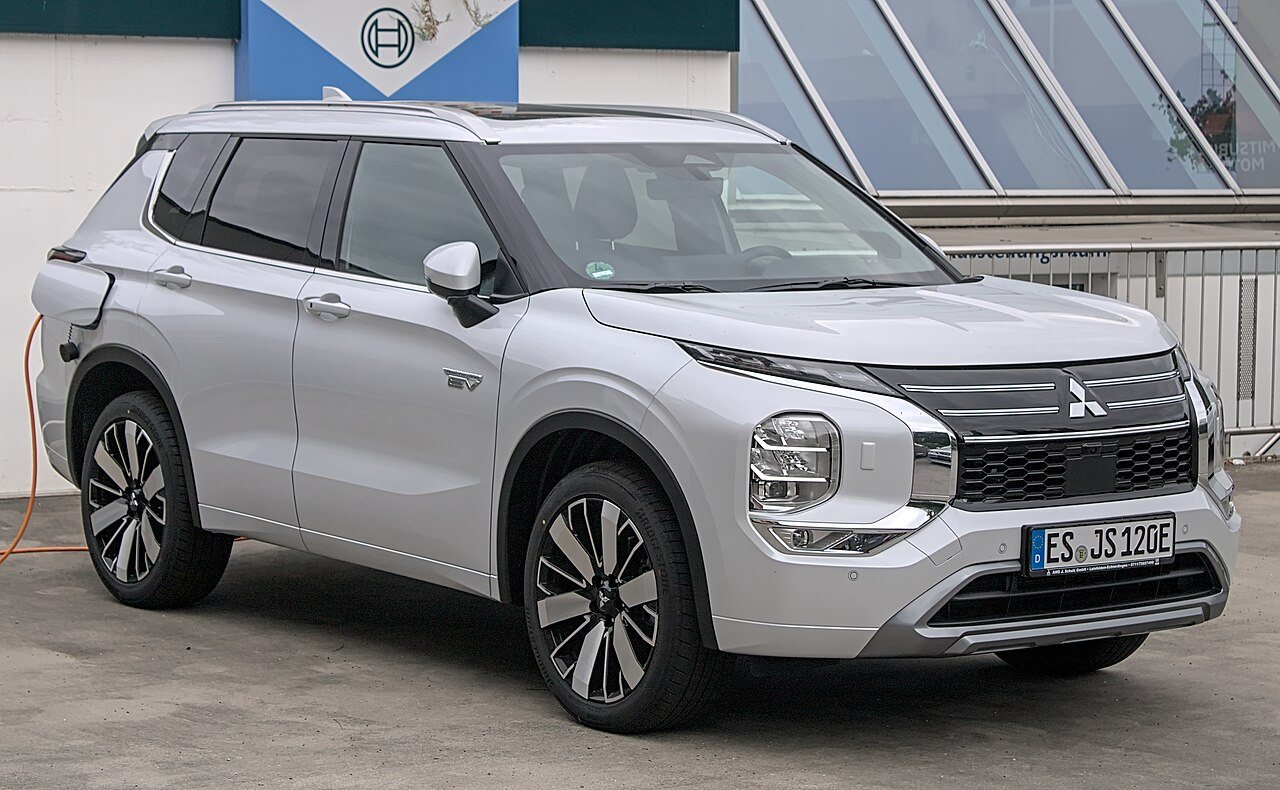
Mitsubishi is back in Britain after a five-year absence, led by a large plug-in hybrid SUV, the new Outlander, which takes on the Skoda Kodiaq and Toyota RAV4.
By Eleanor Ellington · 3 min read
Mitsubishi has returned to the British market after a five-year absence, launching a small but deliberately authentic range headed by a large plug-in hybrid SUV, the Outlander. The Japanese brand's UK line-up now consists of two models: the L200 pick-up and the Outlander, which is pitched directly against the Skoda Kodiaq, the Toyota RAV4 and a raft of other options in the mid-size family SUV segment.
The approach marks a clear departure from the strategy Mitsubishi pursues in continental Europe, where its showrooms are largely populated by rebadged Renault models. Mitsubishi UK has not confirmed whether any of those cars will follow to Britain. Even so, the Outlander is the more interesting proposition. Although it shares a platform and some switchgear with vehicles from Alliance partners Renault and Nissan, it is fundamentally an in-house development, with a bespoke drivetrain that sets it apart from its partners' products.
The plug-in hybrid powertrain is central to the brand's comeback. When Mitsubishi left the UK in 2021, the previous third-generation Outlander was outdated and had lost most of its tax benefits. Plug-in hybrids have since enjoyed a renewed wave of popularity, and the new fourth-generation Outlander is positioned to capitalise on that demand. The timing of the return reflects a shift in buyer interest back towards hybrid technology, which has grown as fleet and private buyers weigh running costs against the limitations of fully electric cars.
The model is new to British buyers but is not new to the wider market. It has been on sale in Japan, the United States and other territories since 2021, which means it is not expected to push technological boundaries. Its task is instead to make a convincing case for itself against two very different groups of rivals. The first is the increasingly sophisticated plug-in hybrids from European and Japanese manufacturers, which have been refined over several model generations. The second is the aggressively priced plug-in models arriving from China, which have put pressure on established competitors on value. Against that backdrop, Mitsubishi must show that the Outlander offers enough practicality, equipment and driving appeal to justify its place on a crowded forecourt.
For a brand that has been absent from the British market for half a decade, the launch is a test of whether a focused, low-volume line-up can rebuild recognition among buyers who may have forgotten the company's presence. The decision to lead with a substantial family SUV rather than a small car signals an intention to compete where buyers spend most on new vehicles, and where the plug-in hybrid format has found its strongest foothold.
8