

Business 152
Stellantis Adds Budget Trims and Mobile Office to Citroen Berlingo and Opel Combo…
In this issue
Business 152
Stellantis Adds Budget Trims and Mobile Office to Citroen Berlingo and Opel Combo…
Culture 169
1996 Porsche 911 Carrera Coupe in Grand Prix White Heads to Auction
Economy 33
Bitcoin and Ethereum Surge to Levels Last Seen in January
News 132
Sarandon and Einbinder arrested at anti-Netanyahu protest in New York
Politics 108
US Lawmakers Move to Permanently Ban Chinese Cars
Sports 248
Dumont and Perez settle bitter rivalry at UFC Vegas 121
Technology 175
Family Sues Tesla Over Model X Sudden Acceleration Claim
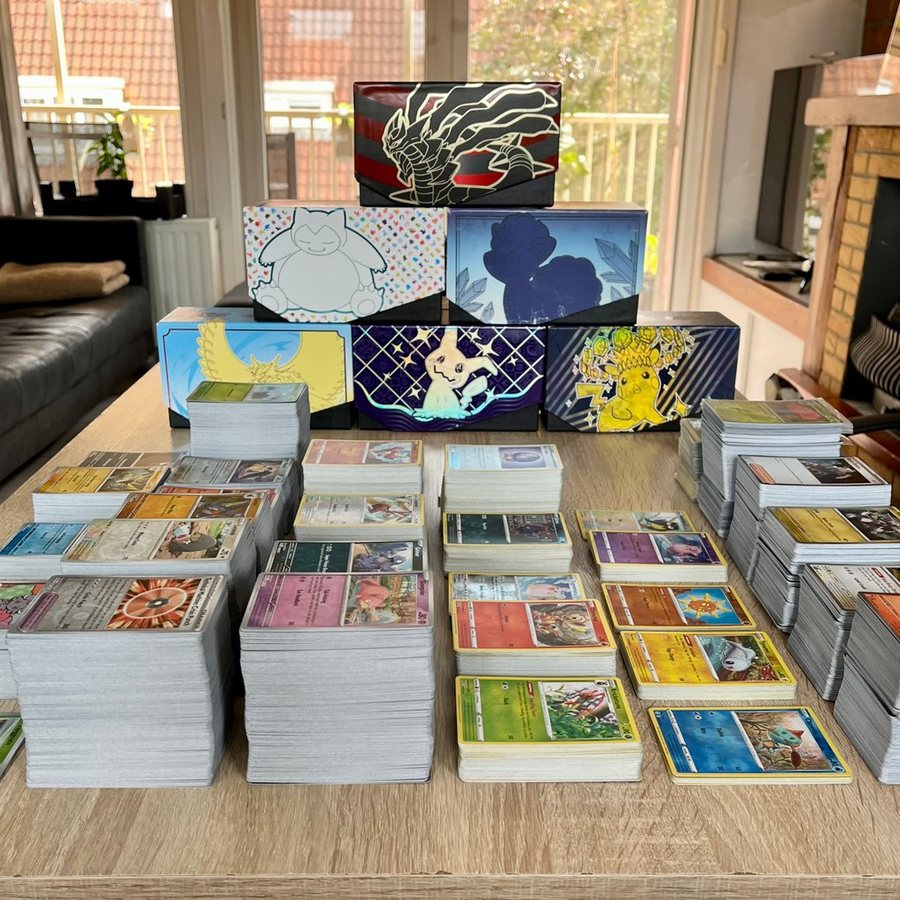
A 27.9% rise in the PV100 and a surge in tokenised marketplaces show how collecting, technology and alternative investing are converging.
By George Kensington · 4 min read
The idea of a Pokémon card as an asset no longer sounds like a joke told by someone who kept a childhood binder. In 2026, the premium end of the market is being tracked with investment-style indices, stored in institutional-looking vaults and traded through blockchain rails.
PokéViews’ PV100 is up 27.9% since the start of the year. The reference index follows 100 valuable and actively traded English ungraded cards. By comparison, the S&P 500 was up 13.9% through 13 August, while Bitcoin remained far below its January level.
That performance deserves context. PV100 cannot be bought like an ETF. It is equal-weighted and rebalanced monthly, and it excludes graded cards, sealed products and non-English issues. A collector assembling the same exposure would face spreads, authentication fees, storage and the simple problem of finding willing buyers for individual cards.
The market’s next move is to make the physical object behave more like a digital instrument. Tokenisation platforms vault authenticated cards and issue a digital representation tied to each item. The token can change hands quickly; the card only moves when an owner decides to redeem it.
This arrangement is appealing for high-value collectibles because movement itself is a cost. Each shipment can require insurance, creates a risk of damage and delays settlement. A trusted vault lets multiple trades occur without repeatedly touching the asset.
The model is already producing significant revenue. The Block reported roughly $7.4m in weekly revenue across tokenised Pokémon marketplaces in the first week of May, 337% higher than a year earlier. Blockworks Research then recorded $324.6m of onchain spending across collectible-card gacha platforms in June.
Much of the growth is not traditional brokerage. Randomised digital packs are central to the experience. On Collector Crypt, a $2,500 Pokémon pack helped drive June activity. Buyers can reveal a card and then hold, trade or sell it back. That is a potent mixture of collecting, entertainment and speculation.
The underlying industry is large. Mordor Intelligence puts the global trading card game market at $15.11bn this year and expects $24.36bn by 2031. That estimate covers a broader category than rare Pokémon singles, but it shows why companies want a share of the infrastructure around collecting.
A serious buyer still needs to ask old-fashioned questions. Who owns the vault? Is the card insured? What legal right does the token holder have to the physical object? How quickly can it be redeemed? What happens if the platform disappears? A blockchain transfer can be instant while the underlying claim remains dependent on a company.
There is also a question of taste and time. Collectibles derive value from cultural relevance as much as scarcity. Pokémon has a powerful advantage in 2026 because the franchise is celebrating its 30th anniversary. The official 30th Celebration TCG expansion launches on 16 September, bringing new product and a fresh wave of nostalgia.
The investment case therefore rests on more than a chart. It depends on whether a generation that grew up with Pokémon continues to assign status and value to the cards, and whether the new digital infrastructure can make that demand easier to trade without turning the hobby into nothing more than a high-speed betting interface.
57