

Business 168
Mercedes-Benz Safe From US Chinese Car Ban, Senator Says
In this issue
Business 168
Mercedes-Benz Safe From US Chinese Car Ban, Senator Says
Culture 191
Venuum Unveils Voltoro V1 Body Kit for Lamborghini Revuelto
Economy 35
US Weighs Wider Red-Dyed Diesel Sales to Cut Record Fuel Prices
News 142
Captain Thanks Rescuers After 17 Crew Winched From Grounded Fishing Vessel Off Or…
Politics 109
Mahmood Opens New Legal Refugee Routes in Labour Conference Speech
Sports 254
Ford returns to World Rally Championship in 2028 with M-Sport
Technology 211
Stellantis Patents EV Battery That Can Be Jettisoned in an Emergency
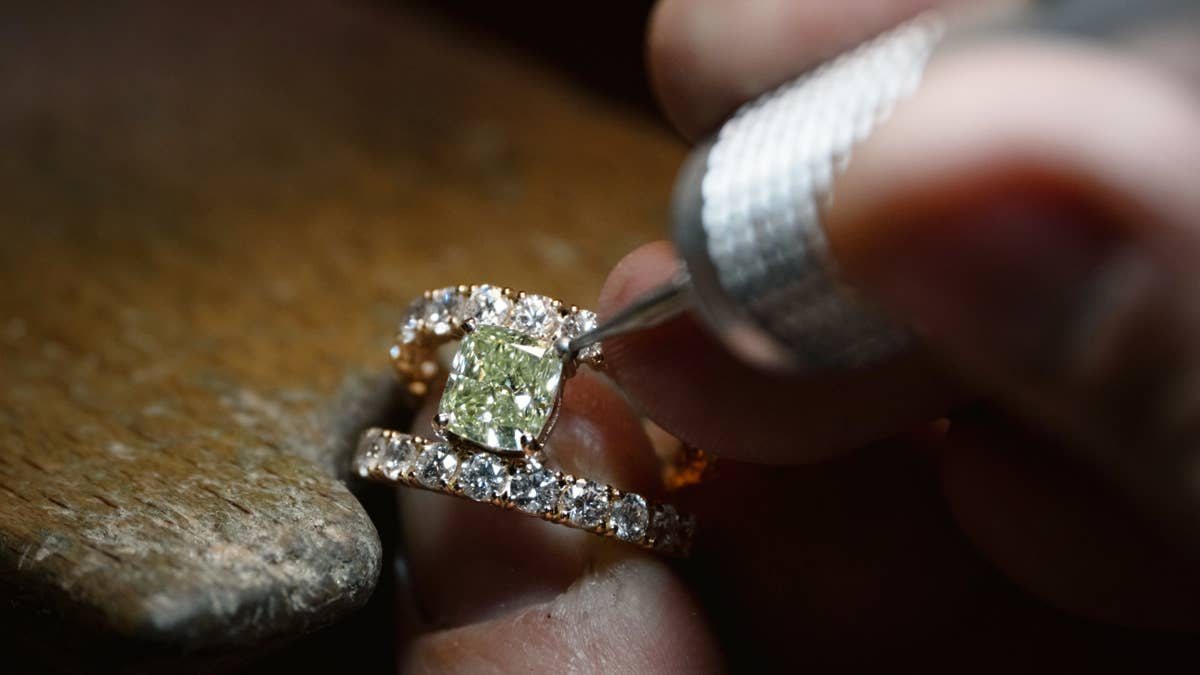
Italian high jewelry house Garatti, founded in 2018 by Milena Bernocco and her son Nicolas, controls 60% of the world's known green diamonds and operates an invitation-only atelier concealed behind an unmarked gemstone-shaped door in Milan.
By Eleanor Ellington · 5 min read
An unmarked, gemstone-shaped door set into an otherwise ordinary wall just off a busy Milan street, steps from the Castello Sforzesco, is the only entrance to Garatti's high jewelry atelier. The Italian house, founded in 2018 by gemologist Milena Bernocco and her son Nicolas Garatti, has deliberately kept itself off Google Maps and out of casual reach, operating on an invitation-only basis that places ethical alignment above financial standing.
Garatti specialises in green diamonds, the second rarest diamond colour in the world after red. The stones acquire their greenish hue through natural exposure to radiation over millennia, producing varying levels of saturation and clarity. According to the Gemological Institute of America, only one out of every 10,000 carats of fashioned diamonds displays a fancy colour at all, which makes green diamonds a particularly narrow niche. Garatti now owns 60% of the world's known green diamonds and more than 90% of those currently available on the market, according to the maison.
Bernocco, a career gemologist, said two factors drove her decision to commit the house entirely to the green stones. The first was the beauty of their colour, which she described as a magnetic green born from a long, natural process of formation. The second was a desire to secure the recognition she believes the gems deserve for their rarity and allure. Her route into the industry was not straightforward. While climbing the ranks of a field still largely run by men, she eventually hit a wall, and chose to go out on her own. She brought in her eldest son Nicolas, now president of Garatti, along with her younger son Luca, to help open doors. She has described the journey as far from easy, driven by her determination to open the world of high jewelry to true connoisseurs, and has argued that this kind of art is even more beautiful with a feminine vision behind it.
Inside the Milan atelier, artisans combine traditional Italian craftsmanship with contemporary design to produce custom pieces. Bernocco leads the design process for each capsule, including the Settecento collection, a multi-strand necklace that references eighteenth-century high jewelry, and the Venezia collection, whose statement earrings and necklace draw on Venetian chandeliers. Unlike front-facing industry players such as Cartier, Van Cleef & Arpels and Tiffany & Co., Garatti has committed firmly to a made-to-order model. Bernocco says the house crafts exclusively one-of-a-kind pieces tailored ad hoc for each client, alongside museum-grade collections that appear on international red carpets.
The house's most prominent placement to date came at the 98th Academy Awards in 2026, when Kate Hudson wore more than 42 carats of Garatti green diamonds valued at $35 million. Angelina Jolie, Emma Stone, Gwyneth Paltrow, Penélope Cruz and Lupita Nyong'o have also worn the label's jewels. Access to the atelier remains controlled by its concealed entrance and a second layer of security, ensuring that not just anyone can walk in and buy a multimillion-dollar necklace. Bernocco has said the selection of clientele extends beyond financial standing and is rooted primarily in moral and ethical values that align with the brand's identity. The ideal client, in her description, is a person of refined culture, a passionate patron of the arts and someone actively engaged in social and humanitarian causes.
That emphasis on ethics extends to sourcing. Garatti uses the Kimberley Process, the international initiative established in 2000 to eradicate conflict diamonds from the legitimate trade, and each of its diamonds is guaranteed and certified by the GIA. The positioning carries particular weight at a moment when lab-grown diamonds are gaining ground in the jewelry market. Garatti's answer is to stress the exclusivity, permanence and exceptional rarity of stones formed over geological time, a pitch aimed squarely at collectors who value provenance as much as sparkle.
4