
Business 158
Dacia to Build Hipster EV in China as Budget Brand Expands
In this issue
Business 158
Dacia to Build Hipster EV in China as Budget Brand Expands
Culture 181
1973 Ferrari Dino 246 GTS with 11k Miles Heads to Auction After $73k Restoration
Economy 34
Poland's Rising Abstinence Hits Alcohol Tax Revenues
News 135
Trump Administration Revises Fuel Economy Rules, Cutting 2031 Target by a Third
Politics 109
Mahmood Opens New Legal Refugee Routes in Labour Conference Speech
Sports 251
Toyota GR Celica Rally Prototype Spotted Testing in Spain
Technology 198
BMW Adds Cheaper i3 40 xDrive With Smaller Battery And 441-Mile Range
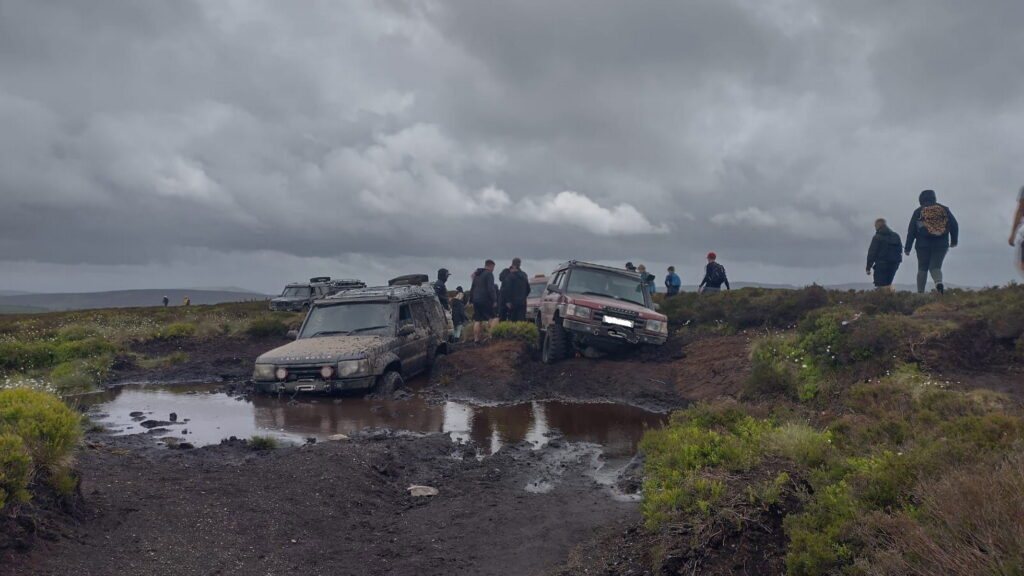
A change in UK law over the summer allows police to seize vehicles used antisocially on and off-road without issuing a prior warning, as authorities in North Wales report rising damage to protected countryside.
By George Kensington · 4 min read
Police in England and Wales can now seize vehicles used for antisocial off-roading without first issuing a warning, under a legal change introduced over the summer. The power applies to antisocial vehicle use both on and off-road, and officers in North Wales say it is already proving a useful tool against a growing problem.
Authorities in the region say unauthorised off-roading and other antisocial vehicle use is increasingly damaging protected countryside. The change means officers no longer have to give owners a warning before taking a vehicle, removing what police describe as a significant obstacle to enforcement.
«It's a long walk home,» PC Eryl Lloyd of North Wales Police's rural crime team told the BBC, summing up the practical consequence for offenders whose vehicles are seized far from public roads.
Officers already have a prominent example of why the new power matters. Last year, a convoy of seven 4x4s travelled from Liverpool to the Berwyn Site of Special Scientific Interest in Wales. According to Natural Resources Wales, the group broke a gate lock with bolt cutters, tore down signs prohibiting private vehicles and drove more than 3km (1.9 miles) across privately owned land towards Moel Fferna.
The group also documented part of the trip on TikTok. Authorities say the videos showed the vehicles ploughing through protected peat and blanket bog habitat and leaving deep tracks behind. Two of the 4x4s became stuck and had to be pulled free by other members of the convoy, causing further damage.
NRW traced the vehicles to their registered keepers, while the social media posts helped place the defendants and their vehicles at the scene. Three men were ultimately convicted. John Robinson and Michael Williams were each ordered to pay roughly £2,000 and lost their driving privileges for two months. Joseph Hodgson was later ordered to pay more than £2,000 and received a three-year Criminal Behaviour Order banning him from the entire 254-square-kilometre (98-square-mile) Berwyn protected area.
Despite that case, North Wales Police and NRW say reports of illegal off-roading have been increasing. Lloyd pointed not only to 4x4s and motorcycles but also to e-bikes, suggesting the problem extends beyond traditional off-road vehicles.
The new deterrent is straightforward. Ignore the signs, tear up the countryside, and the vehicle that brought you there may not be available for the ride home. For police, the change removes the warning stage that previously gave offenders an opportunity to leave before enforcement action could be taken.
The measure reflects wider concern about the cumulative impact of vehicle use on sensitive landscapes. Protected peat and blanket bog habitats are slow to recover, and authorities argue that repeated incursions cause damage that is difficult and costly to reverse.
For rural crime teams, the ability to seize vehicles immediately is intended to make enforcement more effective and to signal that antisocial off-roading carries immediate consequences. The Berwyn case remains the clearest illustration so far of what those consequences can look like.
5