
Business 118
2027 BMW 4 Series Arrives With Minimal Changes and Higher Prices
In this issue
Business 118
2027 BMW 4 Series Arrives With Minimal Changes and Higher Prices
Culture 107
2008 Porsche 911 Turbo Coupe with 38k Miles Listed for Sale
Economy 30
HMRC is writing to low earners about pension top-ups averaging about £70
News 126
Newsom Signs Jay Leno's Law Easing Smog Checks for Classic Cars
Politics 104
Reform UK's Welsh Leader Dan Thomas Resigns After Arrest on Suspicion of Assault
Sports 237
Cardiff City to Host Charlton Athletic in September 2026 Clash
Technology 133
BMW iX3 Deliveries Begin Early in the United States
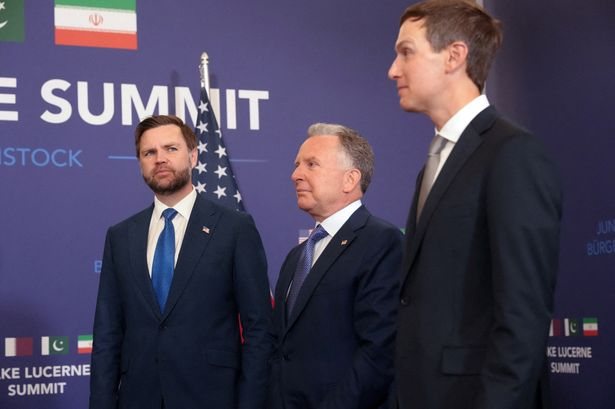
Iran has accused Donald Trump and his officials of a £6.7 billion insider trading operation linked to oil market volatility, just as the US president rejects Tehran's denial that peace talks are under way.
By Eleanor Ellington · 4 min read
Tehran has accused Donald Trump and members of his administration of running a £6.7 billion «insider trading operation», as Iran denies that peace talks with Washington are under way. The accusation adds a new dimension to a crisis already marked by military strikes, retaliation and volatile energy markets.
The claim, directed at the US president and some administration officials, centres on the turbulence in oil markets that followed joint American-Israeli strikes on key Iranian sites earlier this year. Iran retaliated by striking targets across the Middle East and closing the Strait of Hormuz, a vital channel for global crude shipments. Tehran argues that officials with advance knowledge of those events used the resulting price swings to profit unfairly, putting the alleged windfall at roughly $9 billion.
The timing of the accusation has intensified the stand-off. Although Trump has insisted that talks are imminent, Iran's leaders have continued to describe suggestions of US negotiations as false, leaving the two sides publicly at odds at a moment when the Strait of Hormuz remains closed.
Trump has rejected Iran's insistence that negotiations are not taking place, branding the Iranian stance «duplicitous». The exchange follows the emergence of a leaked email that, according to reports, showed senior administration figures in a state of alarm, adding a further layer of tension to an already volatile standoff.
Speaking on Monday, Trump described fresh talks between Washington and Tehran as the «last chance» for Iran to forge a deal and avoid an escalation of US strikes. He said he expected negotiations to begin in the next day or two, with the aim of reopening the Strait of Hormuz and creating a pathway for Iran to address American concerns about its nuclear programme.
Iran, however, says it is not reviving talks with Washington. Tehran has indicated that discussions with Oman over the shipping route are continuing, but its officials maintain that no new dialogue with the United States is under way. That directly contradicts the public expectation stated by Trump that negotiations could begin within days.
The diplomatic deadlock has left oil markets on edge. Prices have been volatile since the initial US-Israeli strikes and the retaliatory attacks by Iran across the region, and the closure of the Strait of Hormuz has heightened fears of supply disruption. The insider trading claim has given the crisis an additional financial dimension, with Tehran alleging that Trump officials used their positions to benefit from the market movements.
For now, the two sides are offering starkly different versions of events. Trump presents negotiations as imminent and necessary to prevent further military escalation, while Tehran denies any resumption of talks and says no such process exists. The next few days are likely to test which account holds, as the world watches for signs of movement on the Strait of Hormuz and the nuclear programme.