Business 256
Experts explain how to negotiate a fair deal on a used car
In this issue
Business 256
Experts explain how to negotiate a fair deal on a used car
Culture 294
Ein 18.000 Meilen alter Mercedes-Benz SL65 AMG aus 2005 steht zum Verkauf
Economy 42
Electric driving is cheaper, but the savings depend on one factor
News 159
Orionid meteor shower set to peak with fast, bright fireballs
Politics 117
Britt McHenry straciła pracę w Departamencie Stanu tego samego dnia, gdy otrzymał…
Sports 286
Aston Villa and Manchester City meet in Premier League fixture
Technology 328
Peugeot E-408 GT Premium gets a long-term test in Auto Express photos
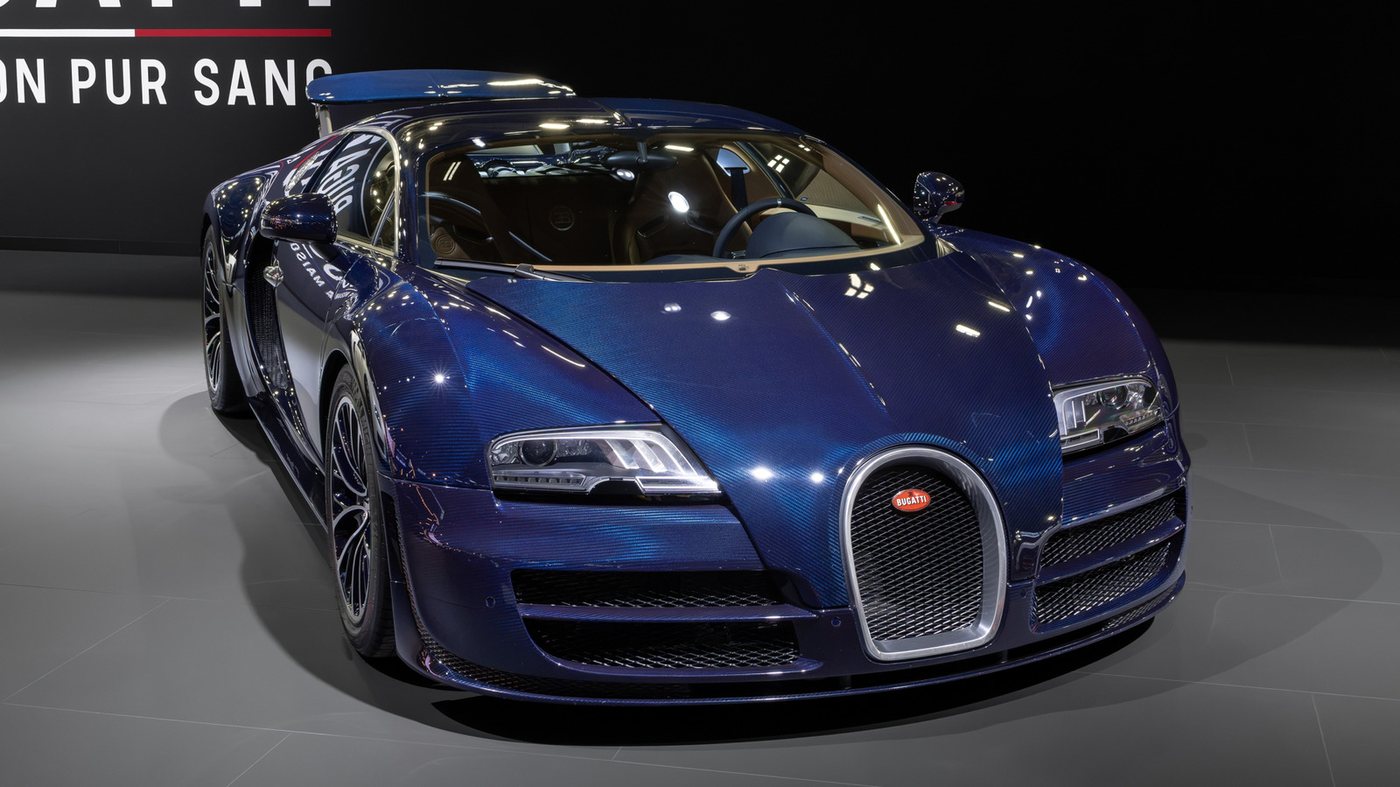
Bugatti’s engineers raised the Veyron’s output to create the Super Sport, but the extra power ended up destroying the prototype’s air-conditioning compressor.
By George Kensington · 3 min read
Bugatti’s engineers turned the Veyron into the Super Sport through an ambitious set of changes, but the extra power they unlocked ended up destroying the air-conditioning compressor on a prototype.
The episode shows how far the engineering team pushed the car in pursuit of more performance. Raising output on a vehicle built around the Veyron’s W16 engine meant that components not designed for the new demands came under strain, and the climate-control system was among those that failed. For a manufacturer known for pushing the limits of road-going performance, the failure is a reminder that gains in one area often expose weaknesses in another.
The Veyron Super Sport was developed as the most powerful and fastest expression of the Veyron platform. Bugatti’s approach relied on boosting the engine’s output, and the prototype’s air-conditioning compressor could not cope with the heat and loads generated by the upgraded powertrain. The problem sits at the centre of the trade-offs involved in extracting maximum performance from a hypercar, where secondary systems can become the limiting factor long before the engine itself does.
The source material does not set out the precise sequence of the failure or the full scope of the repairs. What it makes clear is that the power increase, which was central to turning the Veyron into the Super Sport, had consequences reaching well beyond the engine bay. A climate-control system is not usually the focus of a performance programme, yet it is one of the systems that must keep working when a car is driven hard in demanding conditions.
Prototype development of this kind is iterative by design. Problems discovered on test cars are used to refine the final specification, and a failed component on a prototype is information rather than a verdict on the project as a whole. In this case, the compressor failure points engineers towards the thermal and mechanical demands placed on ancillary parts once the powertrain is pushed beyond its standard calibration.
The episode also underlines why hypercar development is as much about integration as about headline figures. Horsepower and top speed are the numbers that attract attention, but they depend on whether every surrounding system can withstand the same stresses. The Super Sport story is therefore less about a single broken part than about the engineering discipline required to make a more powerful car behave reliably in everyday use.
4