
Business 150
Tata Launches £4,300 Aeris Sedan With 20-Tonne Gravel Stunt
In this issue
Business 150
Tata Launches £4,300 Aeris Sedan With 20-Tonne Gravel Stunt
Culture 158
First Left-Hand-Drive Jaguar XK120 Drophead Coupe Offered in France
Economy 33
Bitcoin and Ethereum Surge to Levels Last Seen in January
News 132
Sarandon and Einbinder arrested at anti-Netanyahu protest in New York
Politics 108
US Lawmakers Move to Permanently Ban Chinese Cars
Sports 247
England face Spain at Wembley as Nations League campaign begins
Technology 172
EV Buying Intent Reveals Generational Divide, Not Partisan One
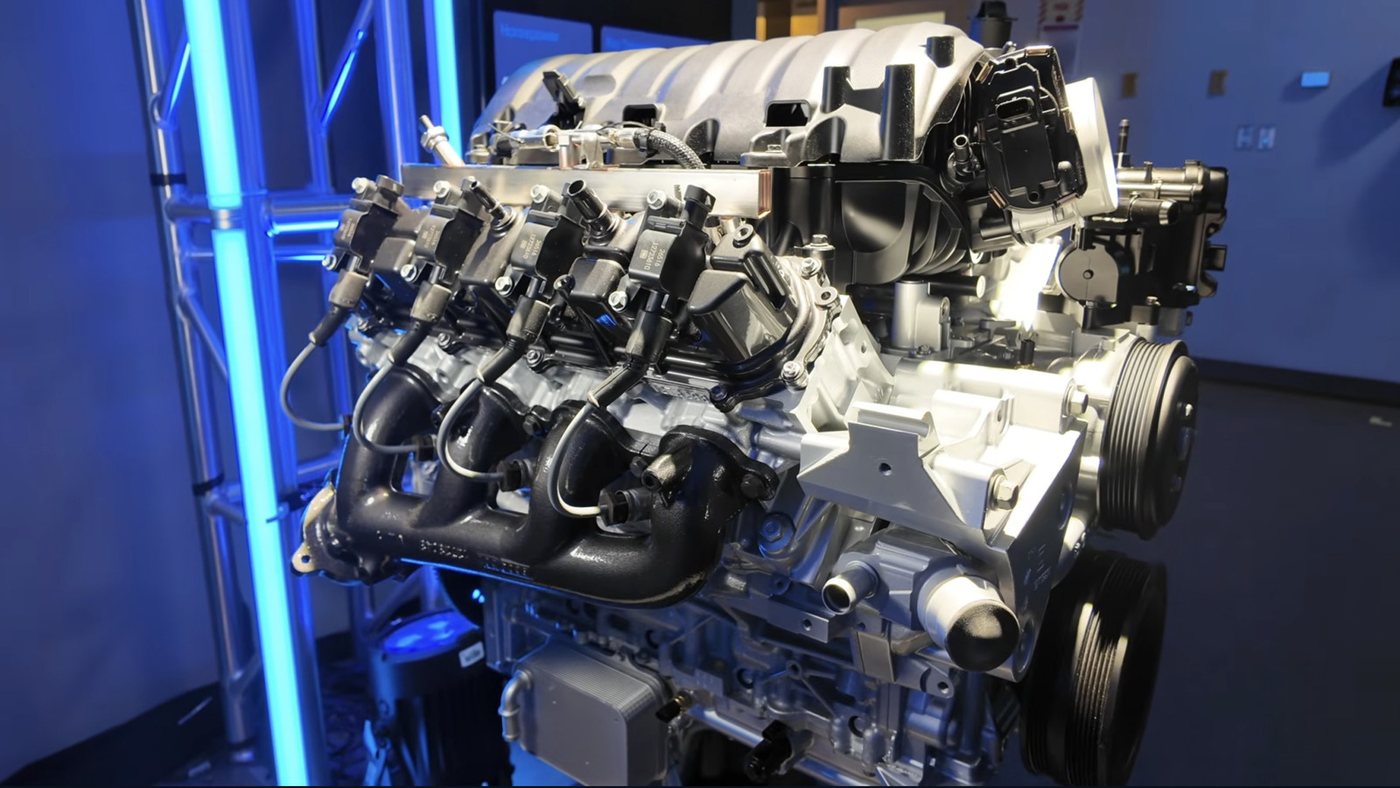
General Motors has confirmed that its latest production V8 engines will ship without a traditional oil dipstick, relying instead on electronic oil-level monitoring. The decision has split opinion among drivers and mechanics.
By George Kensington · 4 min read
Chevrolet's newest production V8 engines will leave the factory without a traditional engine oil dipstick, a decision General Motors executives insist will cause owners no trouble at all. The change affects the latest batch of production V8s and marks another step in the gradual disappearance of the humble dipstick from the modern engine bay.
The dipstick has been a fixture of car maintenance for generations. A thin metal blade, marked with high and low levels, it allowed a driver to check the oil in seconds. On the new Chevrolet V8s, that job falls instead to electronic monitoring, with the engine's management system tracking oil condition and level and alerting the driver through the dashboard when attention is required.
GM's position is that the electronic system is more accurate and more convenient than a manual check. Sensors can detect a low level before it becomes damaging, and they can warn a driver while the car is in motion rather than waiting for a weekly inspection under the bonnet. For a manufacturer building engines to tight tolerances and long service intervals, the argument runs, the dipstick is a redundant part that adds cost, weight and a potential sealing point for leaks.
The decision has not gone unchallenged. Enthusiasts and independent mechanics have long argued that a dipstick offers something no sensor can: a direct, physical reading that cannot be fooled by a faulty sender, a software glitch or a dead battery. When an electronic system fails, the driver may have no way of knowing the true oil level until damage is already done. A dipstick, by contrast, works whether the car is running or not.
There is also the question of servicing. Independent garages and owners who carry out their own maintenance rely on the dipstick as a simple diagnostic tool. Removing it from the engine makes routine checks more dependent on dealer equipment and on the car's own electronics, a shift that critics say pushes owners further towards authorised service networks.
The change is not universal across the range. The distinction between cars and trucks matters here. The new V8s destined for passenger cars will keep a dipstick, while the versions fitted to trucks will not. That split reflects the different ways the two kinds of vehicle are used. Passenger cars tend to cover shorter, more predictable journeys, where electronic monitoring is easier to manage. Trucks, by contrast, are often worked harder, towing loads and covering long distances, and their owners have traditionally been the most hands-on when it comes to checking fluids.
For GM, the move is part of a broader trend across the industry. Manufacturers have spent years removing items that once seemed essential: spare wheels, physical keys, and now the dipstick. Each removal is justified by weight savings, cost reduction and the assumption that electronic systems are more reliable than the parts they replace. Whether buyers accept that assumption is another matter.
The new Chevrolet V8s will reach customers with the electronic monitoring system as standard, and GM maintains that owners will not miss the dipstick. For a generation of drivers raised on a weekly oil check, however, the absence of that small metal blade under the bonnet may take some getting used to.
8