
Business 109
Dacia CEO Urges EU to Freeze Small Car Rules to Cut Prices
In this issue
Business 109
Dacia CEO Urges EU to Freeze Small Car Rules to Cut Prices
Culture 89
1988 Porsche 911 Carrera Targa G50 with Rebuilt Engine Heads to Auction
Economy 30
HMRC is writing to low earners about pension top-ups averaging about £70
News 124
Aftermarket Trackers Recover 99% of Stolen Cars as Factory Systems Fail
Politics 104
Met police open inquiry into alleged foreign donations to Reform UK
Sports 231
AMG GT Black Series Spied With Radical Aero Ahead of Nürburgring Record Attempt
Technology 116
Waymo Expands Driverless Ride-Hailing to Las Vegas
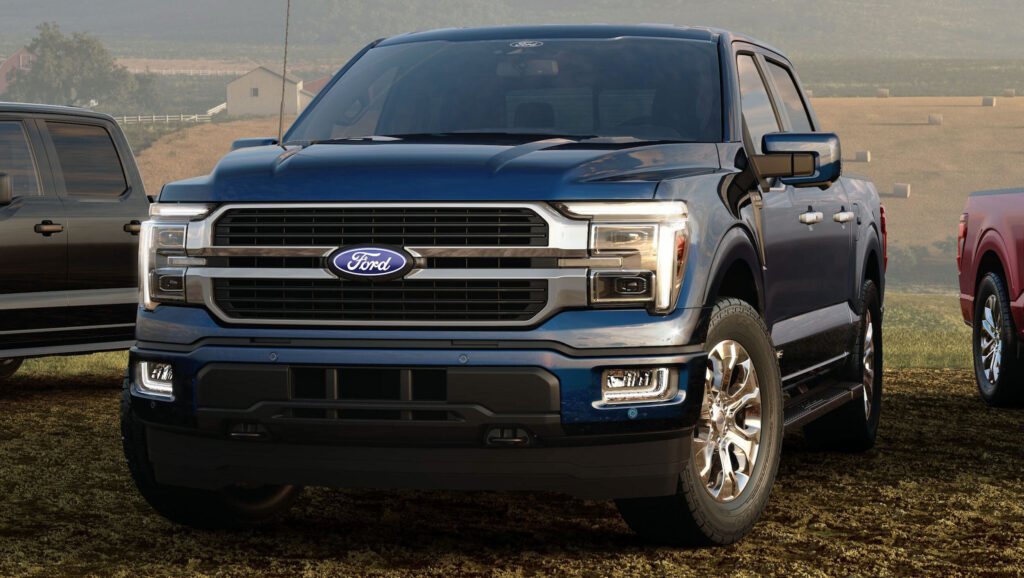
Ford has issued four new recalls, three involving the F-150, with the largest covering 223,472 pickups whose fuel tanks may not be properly secured and could leak or detach while driving.
By George Kensington · 4 min read
Ford has announced four new recalls covering more than 225,000 vehicles, with the largest campaign affecting 223,472 F-150 pickups from the 2023 to 2027 model years. The trucks may have fuel tanks that are not properly secured, creating a risk that the tanks could leak or detach from the vehicle while it is being driven.
The problem has been traced to front fuel tank strap T-slots that were not correctly inserted into the vehicle's frame rail during assembly. Ford became aware of the issue in July and has since received 16 warranty claims related to the defect. Dealers will inspect the fuel tank straps and replace them where necessary. Owner notifications are expected to be sent later this month.
The recall adds to an unusually heavy year of safety campaigns for the manufacturer. Ford has announced 71 recall campaigns so far this year, eight more than the combined total of General Motors, Toyota and Hyundai. The company has been promoting its ranking for initial quality at the same time as the recalls continue to accumulate.
A second recall covers 1,945 Transit vans from the 2026 and 2027 model years. The vehicles are equipped with a wireless seat belt reminder system that may fail to show properly when rear passengers are unbuckled. The issue surfaced in July and was linked to a Magna end-of-line test device whose status check command overlapped with the wireless seat belt reminder's pre-activated polling signal, causing what was described as a permanent error state.
Ford is aware of two field reports concerning the Transit problem. Dealers will inspect the rear seat belts and replace the seat belt buckles as needed. A fix is not yet available, so a delivery hold has been placed on the affected vehicles.
A third recall affects 37 F-150 trucks from the 2026 model year that were fitted with incorrect rear axle tail bearings. The error means the rear wheels can lock up or the driveshaft can separate. According to the National Highway Traffic Safety Administration, the tail bearings may seize after extended time in service. The problem appears to be limited to a small number of vehicles equipped with the max tow package, which is supposed to include a 9.75-inch tail bearing. Ford discovered a rear axle with an 8.8-inch bearing in May. Dealers will replace the smaller component with the correct 9.75-inch bearing, and notifications are scheduled to go out on 21 September.
The fourth recall involves 17 examples of the 2026 F-150 Raptor. The trucks have Panhard rod fasteners that may not have been properly tightened, which can cause the rod to shift out of position and potentially lead to a loss of control. Ford has blamed the oversight on an error-proofing device that was in bypass mode during production, meaning torque data is missing for some vehicles.
The company was alerted after a warranty claim in February over a rattle that was traced to a loose rear Panhard rod. A second warranty claim followed in March. Notifications will be sent shortly, and dealers will replace the Panhard rod fasteners with new ones, correctly torqued to specification.
Taken together, the four campaigns underline the scale of the safety and quality challenges facing Ford as it manages a complex model range. The fuel tank strap issue is by far the most serious in volume terms, affecting more than 223,000 pickups, while the remaining recalls involve smaller batches of vans and trucks. The manufacturer has not said whether the defects are connected, and each campaign will be handled separately through its dealer network.