
Business 129
GM Confirms 8.3-Litre Duramax Mongoose Diesel for 2027 Silverado HD and Sierra HD
In this issue
Business 129
GM Confirms 8.3-Litre Duramax Mongoose Diesel for 2027 Silverado HD and Sierra HD
Culture 137
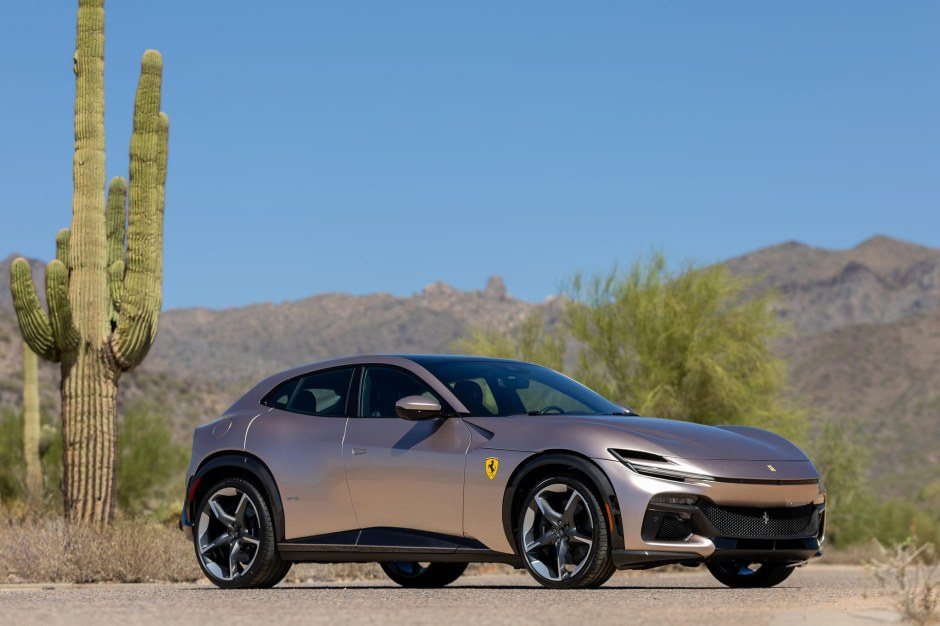
Tailor Made Ferrari Purosangue with $884,646 Sticker Heads to No-Reserve Auction
Economy 32
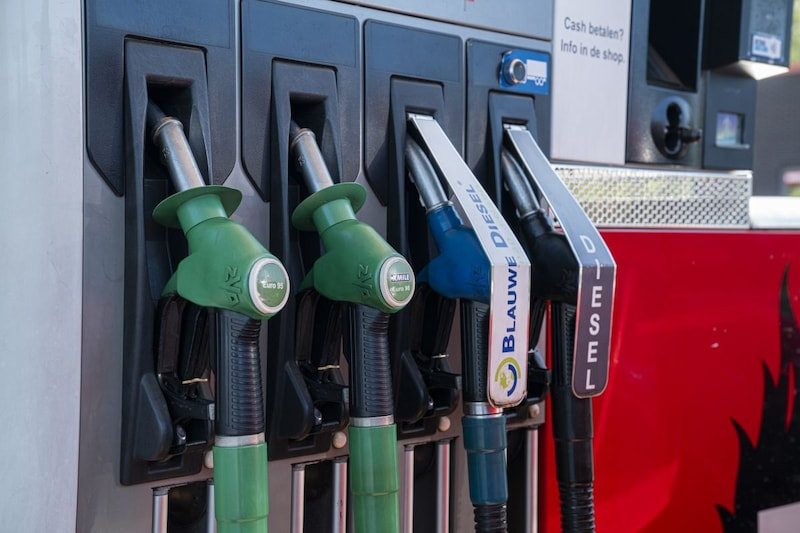
Oil Prices Fall Again but Stay at High Levels
News 129
Oil Conflicts Disrupt Global Supply as Electric Cars Remain Unaffected
Politics 106
Canada Moves Closer to EU as First Associate Member
Sports 242
Yu Zidi, 13, Sets Asian Games 200m Butterfly Record
Technology 146
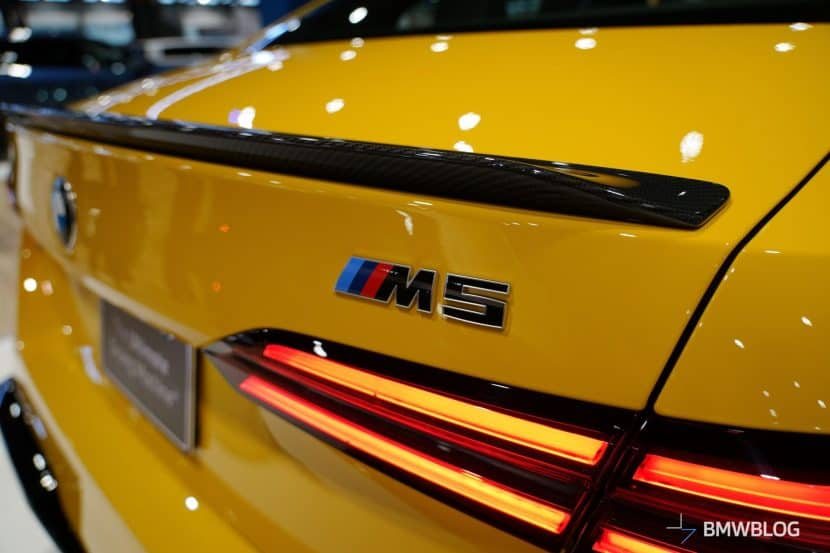
BMW Tests Facelifted M5 at the Nürburgring Ahead of 2027 Production
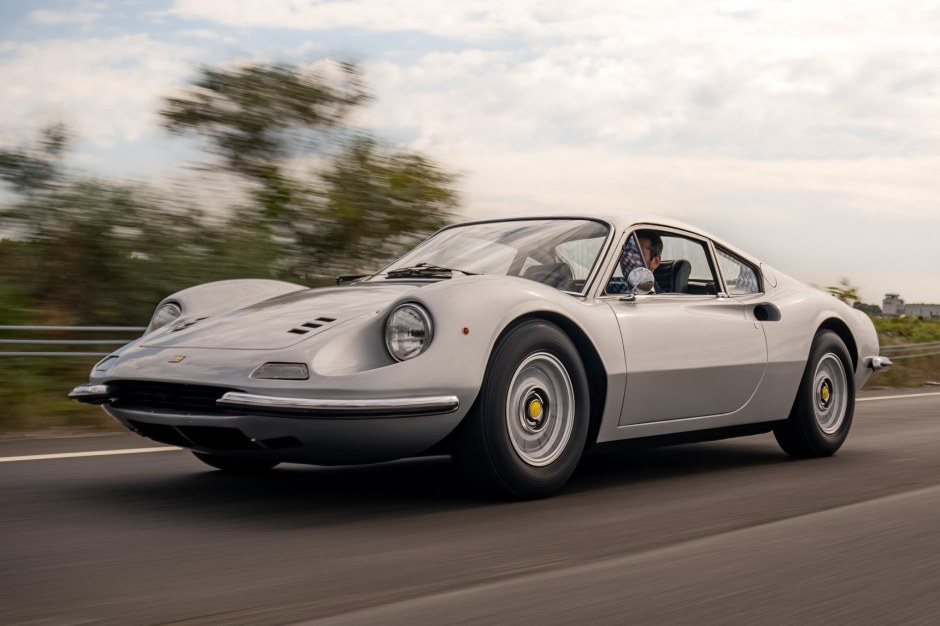
A 1972 Ferrari Dino 246 GT, one of approximately 2,900 E-series examples, is offered on dealer consignment with a rebuilt V6 and transaxle, a Marcel Massini report, and a documented history spanning the US, UK, and a former NHL player's collection.
By George Kensington · 6 min read
A 1972 Ferrari Dino 246 GT, one of approximately 2,900 E-series examples produced through July 1974, is being offered for sale on dealer consignment by Automotive Restorations, a BaT Local Partner. The car, chassis 02938, was built on 19 November 1971 and originally delivered through Luigi Chinetti Motors in Greenwich, Connecticut, before being exported to the UK in 1980.
Finished from the factory in Marrone Colorado Metallizzato over Beige leather, the car underwent a colour change to its current silver-over-black as part of a refurbishment completed around 2008, before being returned to the United States. It later spent time in the collection of former NHL player Pavel Kubina prior to being acquired in 2020 by the current owner, who commissioned rebuilds of the car's 2.4-litre V6 and five-speed manual transaxle along with additional cosmetic and mechanical work.
The Dino lineage began with the 206 GT prototype, which first appeared at the 1965 Paris Auto Salon with bodywork designed by Aldo Brovarone and Leonardo Fioravanti at Pininfarina. Revised concepts followed at the 1966 and 1967 Turin Motor Shows. The 2.0-litre-powered 206 entered production in early 1968 before being superseded by the 2.4-litre 246, offered in GT coupe and GTS targa-top variants from 1969 and 1971 respectively.
This example's Scaglietti-built bodywork left the factory in Marrone Colorado Metallizzato and was repainted silver at some point under previous ownership. European-market flush front turn signal lenses and small round signal repeaters are fitted in place of the factory US-market components up front, while the rear side markers and reflectors have been removed out back. Further details include a driver-side mirror, a power antenna, chrome bumpers, and quad ANSA-branded exhaust finishers. Body and paint work was performed around the rear window, the windshield was resealed, and the horn and taillights were rewired under current ownership.
The car rides on 14-inch Cromodora five-lug alloy wheels with Dino-branded centre caps, mounted with 205/70 Michelin XWX tyres, and a matching spare wheel is stored in the front trunk. The suspension incorporates unequal-length A-arms, coilover shock absorbers, and anti-roll bars at front and rear, while braking is handled by power-assisted ventilated discs at all four corners.
Trimmed from the factory in Beige leather, the interior underwent a re-trim in black leather at some point under previous ownership. Grey «mouse-fur» trim covers the dash, while red carpets line the floors. The fixed-back bucket seats feature headrests mounted to the seatbacks, and further appointments include a Sparkomatic AM/FM cassette stereo, a heater, and power windows. The air conditioning system was removed in the late 1970s. The dash was refitted and the headliner and sun visors were replaced in September 2022. The leather-trimmed steering wheel features a Dino horn button and is paired with a dogleg-pattern gated shifter. Dino-branded Veglia Borletti instrumentation consists of a retrofitted 270-km/h speedometer as well as a tachometer with a 7,750-rpm redline, an analogue clock, and auxiliary gauges. The five-digit odometer shows 11,000 kilometres, approximately 1,000 of which were added under current ownership. The ammeter was converted to display voltage, though it retains its +40/-40 graphic.
The mid-mounted 2.4-litre Tipo 135CS V6 features a 65-degree angle between cylinder banks, dual overhead camshafts on each bank, Magneti Marelli ignition, and a trio of two-barrel Weber carburettors. The rebuild completed under current ownership between October 2021 and September 2022 involved boring and honing the block, installing oversized pistons and connecting rods, machining the flywheel, and balancing the rotating assembly, as well as machining the cylinder heads, fitting upgraded camshafts and valve springs, performing a valve job, and replacing the timing chain set. Further updates have included replacing the throttle cable, water pump, alternator, rear exhaust manifold, and exhaust headers, as well as installing a battery cutoff switch. Power is sent to the rear wheels via a five-speed manual transaxle, which was disassembled and rebuilt from February 2022 to September 2022.
The car is accompanied by a Marcel Massini report listing factory colours, component numbers, and equipment as well as the factory completion date and ownership history. It is being sold on its Connecticut registration, which serves as an ownership document for a vehicle of its age in the state. The document lists the car as a 1971 model using the sequence DINO246GT02938 as the VIN and carries an «Antique» designation under the Registered Usage heading.
5