Business 182
Corvette ZR1X Auction Bids Top $400,000 as Factory Warranty Fuels Demand
In this issue
Business 182
Corvette ZR1X Auction Bids Top $400,000 as Factory Warranty Fuels Demand
Culture 206
MINI Takes The States Marks 20 Years With Three Regional Rallies
Economy 36
G7 Agrees to Release 100 Million Barrels of Diesel and Crude Oil to Ease Price Su…
News 145
NSW Police Trials BMW 540d as Highway Patrol Car
Politics 110
Trump Urges Republicans to Vote by Mail After Years of Criticising the Practice
Sports 259
Chiefs, 49ers and Vikings stay unbeaten as NFL Week 4 delivers 14-game slate
Technology 229
LiveWire S4 Honcho Street Approved for Rider Training Programmes
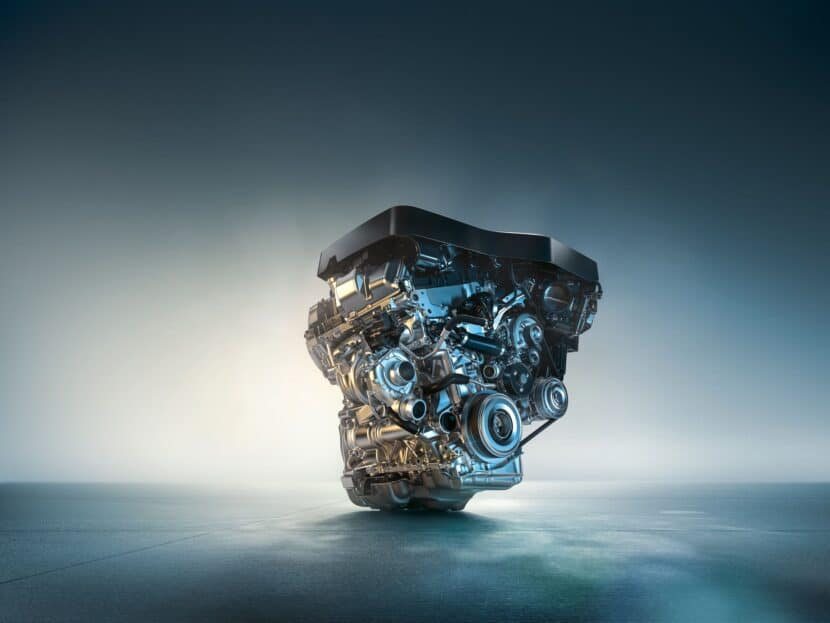
BMW’s turbocharged 2.0-liter B48 engine has found its way into the Toyota GR Supra 2.0, the Morgan Plus Four, and several MINI John Cooper Works models, showcasing its versatility beyond the Bavarian brand’s own lineup.
By George Kensington · 5 min read
BMW’s turbocharged 2.0-liter B48 engine, a mainstay across the company’s modern range, has quietly powered a handful of vehicles that do not wear the Bavarian roundel. While the engine has appeared in everything from sedans and coupes to SUVs and plug-in hybrids under BMW’s own badges, its use outside the group has been rare. Yet the Toyota GR Supra 2.0, the Morgan Plus Four, and several MINI John Cooper Works models demonstrate how adaptable the B48 can be when other manufacturers choose to adopt it.
The Toyota GR Supra 2.0 is perhaps the most accessible example. In U.S. specification, the four-cylinder engine produces 255 horsepower and 295 pound-feet of torque, sent exclusively to the rear wheels through an eight-speed automatic. Toyota claimed a 0-60 mph time of five seconds, helped by a weight reduction of roughly 200 pounds compared with the six-cylinder Supra, much of it over the front axle. That lighter nose gives the 2.0-liter model a more approachable character, even if buyers sacrifice some outright acceleration and standard performance equipment. The two-seat layout, compact dimensions, and easily modified turbocharged engine kept the basic recipe compelling. Toyota never offered a manual transmission in the United States, reportedly to avoid cannibalising GR86 sales, and dropped the four-cylinder model from its American lineup after 2024. That leaves the used market as the only route, where the smaller engine can make the already unusual Supra considerably more affordable.
The Morgan Plus Four is arguably the most intriguing application of the B48. Beneath its traditional, timeless bodywork sits Morgan’s CX-Generation bonded-aluminium platform, giving the car far more sophisticated underpinnings than its appearance suggests. The current Plus Four produces 255 horsepower and can be ordered with either a six-speed manual or an eight-speed automatic. Manual cars receive 258 pound-feet of torque and reach 62 mph in 5.2 seconds, while the automatic unlocks the full 295 pound-feet and lowers that time to 4.8 seconds. More importantly, the Morgan weighs only around 2,300 pounds, giving the B48 far less mass to move than it encounters in almost any contemporary BMW. Its longitudinal engine layout, rear-wheel drive, open cockpit, and available manual transmission make the Plus Four one of the purest ways to experience the engine. It is also the most expensive non-BMW featuring the B48, starting at £69,995.
MINI has used the B48 more extensively than any other non-BMW badge, and the three John Cooper Works models stand tallest. The most extreme is the third-generation MINI John Cooper Works GP, whose 2.0-liter engine produces 301 horsepower and 331 pound-feet of torque, all directed to the front wheels through an eight-speed automatic. MINI equipped the GP with a mechanical limited-slip differential, upgraded cooling, larger brakes, additional chassis bracing, and model-specific suspension tuning. It also removed the rear seats and some sound insulation to reduce weight. The resulting hatchback could reach 62 mph in 5.2 seconds and continue to 165 mph. Only 3,000 examples were produced worldwide, making it one of the rarest factory B48 applications.
The MINI John Cooper Works Clubman ALL4 placed effectively the same powertrain in a considerably more practical body. Following its major 2020 update, the unusual six-door wagon produced 301 horsepower and 331 pound-feet of torque. An eight-speed automatic and standard ALL4 all-wheel drive helped it reach 60 mph in 4.9 seconds, making the JCW Clubman quicker than the GP in a straight line despite offering usable rear seats, a larger cargo area, and its signature split rear doors. Production of the Clubman ended in February 2024, leaving behind one of MINI’s most interesting performance cars. Meanwhile, the John Cooper Works Countryman ALL4 applied the formula to a crossover, offering a practical performance SUV with the same engine.
The B48’s limited use outside BMW Group is somewhat surprising given its adaptability. It works with transverse or longitudinal installations, front- or rear-wheel drive, all-wheel drive, manual gearboxes, and several different automatic transmissions. Depending on the application, it can deliver accessible performance or more than 300 horsepower. Most established automakers already possess their own turbocharged four-cylinder engines, so sourcing an outside powertrain could add cost and engineering complexity. Even so, the B48’s career under Toyota, Morgan, and MINI badges suggests that other manufacturers may have missed an opportunity.
60