

Business 202
Geely Confirms Canadian Launch for 2027
In this issue
Business 202
Geely Confirms Canadian Launch for 2027
Culture 220
1999 Porsche 911 Carrera Coupe with $30k in Recent Work Heads to Auction
Economy 37
Russia's EV Share Overtakes US as Fuel Shortages Bite
News 149
Weekly Exercise Linked to Slower Memory and Movement Decline in Parkinson's Patie…
Politics 110
Trump Urges Republicans to Vote by Mail After Years of Criticising the Practice
Sports 265
Southampton to Host Portsmouth in Scheduled Fixture on 11 October 2026
Technology 259
Ford Mustang GT Manual Matches 2009 Fuel Economy Despite Power Boost
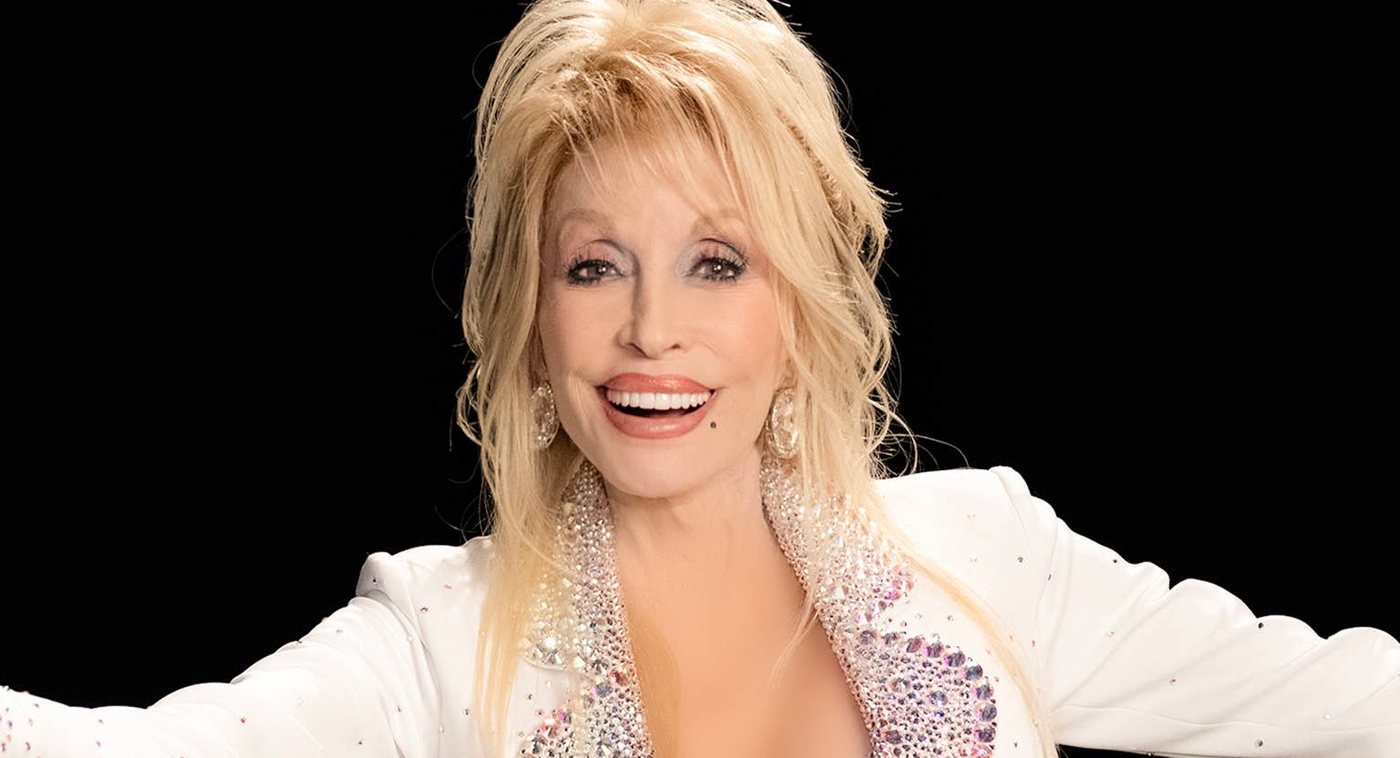
From a poor Tennessee childhood to a global entertainment business, Parton showed how a performer could protect a voice, a brand and a home community.
By Eleanor Ellington · 5 min read
Dolly Parton, who has died at the age of 80, leaves behind more than a catalogue of country standards. Her career is also a study in how an artist can turn authorship, image and commercial instinct into an unusually durable form of independence.
Her family announced her death on 25 August. No cause was immediately disclosed. The tributes will naturally return to “Jolene”, “I Will Always Love You” and “9 to 5”, but Parton’s longevity was not simply the result of having several famous songs. She repeatedly changed the scale of her career without surrendering the qualities that made it hers.
Parton was born in Locust Ridge, Tennessee, in 1946, the fourth of 12 children. Her childhood in Appalachia was materially poor but culturally rich in music. Her mother sang church songs and traditional ballads; relatives encouraged her to perform. By the age of 10 she was appearing on local radio and television in Knoxville, and at 13 she made a guest appearance at the Grand Ole Opry.
Immediately after high school, she moved to Nashville. The decisive early break came in 1967 when she joined “The Porter Wagoner Show”. It gave her a national country audience and a successful duet partnership, yet it also created the problem that would define much of her professional life: how to benefit from a powerful platform without becoming permanently dependent on it. Parton eventually left the show to pursue her own career. Her farewell to Wagoner became “I Will Always Love You”, a song that later reached an audience far beyond the circumstances in which it was written.
That song is a useful example of Parton’s commercial intelligence. She was not merely a singer waiting for material. She was the writer. When Whitney Houston recorded “I Will Always Love You” in 1992, the composition entered another era of global pop culture while remaining part of Parton’s body of work. The Rock & Roll Hall of Fame, which inducted Parton in 2022, has praised her as a formidable businesswoman who set new standards for artistic control.
The same instinct applied to her public image. Parton never pretended that the towering hair, bright colours and rhinestones were accidental. She turned exaggeration into consistency. A look that could have become a joke instead became recognisable intellectual property in the broadest sense: a visual language audiences could identify in a second. Crucially, the theatrical surface sat beside serious craft. Her songs dealt with poverty, jealousy, labour, departure, family pride and female autonomy with a storyteller’s economy.
She then expanded into film. “9 to 5” made her a movie star and gave her a song that crossed the office comedy into popular protest against an exhausting workplace hierarchy. “Steel Magnolias” helped cement a screen persona that could be glamorous, comic and emotionally grounded at once.
Parton also tied business expansion back to Tennessee. Dollywood became a major part of her commercial world and a source of pride precisely because it connected tourism and employment with the Appalachian region that shaped her. It was a different model from leaving a hometown behind after success: Parton made the hometown part of the enterprise.
Her formal honours include membership of the Country Music Hall of Fame and the Rock & Roll Hall of Fame, along with 10 Grammy wins and 55 nominations. She sold more than 100 million records. Yet the most revealing institution in her portfolio may be the Imagination Library. Parton launched it in 1995 after thinking about her father, who could not read or write. By June 2026 it had sent more than 325 million books to children across five countries and was distributing more than 3.5 million books every month.
For anyone interested in leadership rather than celebrity alone, Parton’s career offers a striking lesson. She knew when to use an existing platform, when to leave it, what to own, what to make unmistakably hers and how to convert success into an institution with a life beyond the performer. Her reputation was built in rhinestones, but its foundations were authorship, discipline and control.
61