

Business 203
Seven Cars With Lease Deals Under £300 a Month
In this issue
Business 203
Seven Cars With Lease Deals Under £300 a Month
Culture 234
Golden Era Honda Collection Heads to Auction
Economy 38
Diesel at Nearly £11 a Gallon Prompts Calls for VAT Cut at the Pumps
News 149
Weekly Exercise Linked to Slower Memory and Movement Decline in Parkinson's Patie…
Politics 111
Trump Names Katie Zacharia as White House Press Secretary
Sports 266
Arsenal to Host Leeds United in Premier League Clash
Technology 263
GAC Aion V Review: Odd Looks, Premium Cabin, £24,000 Price
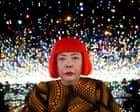
Yayoi Kusama, the Japanese artist known for her polka dots, immersive installations and lifelong struggle with mental illness, has died in Tokyo at the age of 97.
By Eleanor Ellington · 3 min read
Yayoi Kusama, the Japanese artist who rose from an outsider position to become one of the most recognisable figures in contemporary art, has died aged 97. Her studio announced that she died in a Tokyo hospital on 14 August, with the news confirmed in a statement on her website on Thursday.
From the 1950s to the 2020s, Kusama produced vivid paintings, sculptures and vast installations that often drew directly on her experience of hallucinations. Her signature motifs — infinite polka dots, pumpkins and mirror rooms — made her work instantly identifiable and turned her exhibitions into global events that drew record crowds from Tokyo to New York.
Kusama was born in Matsumoto, Japan, in 1929, and moved to the United States in the late 1950s, where she became part of the New York avant-garde scene. She worked alongside figures such as Andy Warhol and Claes Oldenburg, and her happenings and performances in the 1960s attracted significant attention, though critical recognition came slowly. She returned to Japan in the 1970s and has lived voluntarily in a psychiatric hospital since 1977, continuing to work in a nearby studio almost every day.
Her breakthrough into mainstream superstardom came later in life. Retrospectives at major institutions, including the Museum of Modern Art in New York and the Tate Modern in London, introduced her work to a new generation. Her 2012 collaboration with Louis Vuitton brought her polka dots to handbags and storefronts worldwide, and her Infinity Mirror Rooms became among the most photographed artworks of the century, with museums reporting queues lasting hours.
Despite her commercial success, Kusama maintained that her art was a way of coping with the hallucinations that began in childhood. She described her practice as a means of self-preservation, saying that making art helped her survive the visions that overwhelmed her. That personal struggle, made visible in her work, resonated with audiences far beyond the art world and gave her a rare crossover appeal.
Her death marks the end of a career that spanned more than seven decades and transformed the perception of what a contemporary artist could achieve. She was widely regarded as the world's most commercially successful living female artist, with her works regularly selling for millions of pounds at auction. Her influence extended into fashion, design and popular culture, and her exhibitions consistently broke attendance records at institutions across Europe, Asia and the Americas.
Kusama's studio said that a private funeral has been held for family and close friends. Tributes from the art world have begun to appear, with curators and fellow artists praising her relentless creativity and her refusal to compromise her singular vision.
56