
Business 202
Geely Confirms Canadian Launch for 2027
In this issue
Business 202
Geely Confirms Canadian Launch for 2027
Culture 234
European-Market Ferrari 550 Maranello with Fiorano Handling Package Listed for Sa…
Economy 37
Russia's EV Share Overtakes US as Fuel Shortages Bite
News 149
Weekly Exercise Linked to Slower Memory and Movement Decline in Parkinson's Patie…
Politics 111
Trump Names Katie Zacharia as White House Press Secretary
Sports 266
Arsenal to Host Leeds United in Premier League Clash
Technology 263
GAC Aion V Review: Odd Looks, Premium Cabin, £24,000 Price
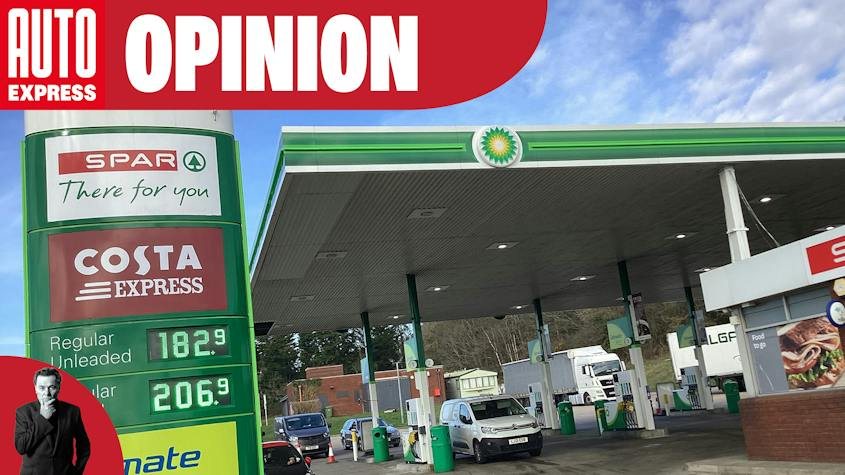
With diesel prices approaching £11 per gallon, motoring commentator Mike Rutherford argues that the Government must reduce the VAT rate on fuel, calling the current tax burden unreasonably high.
By George Kensington · 4 min read
Diesel prices have climbed to almost £11 per gallon, prompting fresh calls for the Government to cut the rate of VAT applied at the pumps. The demand comes as the tax burden on fuel is described as unreasonably high, with motorists and businesses facing mounting costs at a time when household budgets are already stretched.
Writing in a national motoring publication, commentator Mike Rutherford argues that it is time for Downing Street to step in and acknowledge that the taxes it imposes on fuel have reached excessive levels. His intervention reflects growing frustration among drivers and industry figures who say the current duty and VAT regime is adding significantly to the cost of every fill-up.
The call for a VAT reduction at the pumps is aimed squarely at the Treasury, which applies the tax on top of fuel duty. Because VAT is charged as a percentage, it magnifies the impact of any rise in the underlying price of diesel or petrol. When wholesale costs increase, the tax take rises automatically, meaning the Government benefits from higher pump prices even without changing the rate.
For businesses that rely on diesel, from hauliers and delivery firms to farmers and construction companies, the near-£11 gallon price represents a direct hit to operating costs. Those costs are often passed on to consumers, feeding into broader inflationary pressures across the economy. The transport sector has repeatedly warned that sustained high fuel prices threaten margins and could force some operators to cut services or jobs.
For ordinary motorists, particularly those in rural areas where car use is essential, the expense is equally acute. Diesel drivers already pay a premium over petrol at many forecourts, and the gap has widened as demand and supply factors push prices higher. The prospect of pump prices nearing £11 a gallon is likely to intensify scrutiny of the Government’s approach to fuel taxation.
Rutherford’s argument is that the Treasury should reduce the VAT rate specifically at the pumps, rather than relying solely on fuel duty adjustments. A lower VAT rate would deliver an immediate and visible reduction in the price paid by consumers, he suggests, and would signal that ministers recognise the pressure on household and business finances.
The debate over fuel taxation is not new. Fuel duty has been a politically sensitive issue for successive governments, with campaigners long arguing that motoring taxes are disproportionately high compared with other forms of taxation. However, the current spike in diesel prices has given the argument renewed urgency, as the cost of filling a family car or a commercial van approaches levels that many consider unsustainable.
Any move to cut VAT on fuel would carry significant implications for the public finances. Fuel duty and VAT on fuel together raise billions of pounds annually for the Exchequer, and a reduction would leave a hole that would need to be filled elsewhere or absorbed through higher borrowing. That trade-off is likely to be at the heart of any internal government discussion on the matter.
Ministers have not yet responded to the specific call for a VAT cut at the pumps. The Treasury has previously resisted pressure to reduce fuel taxes, citing the need to maintain public services and balance the books. But with diesel prices at almost £11 per gallon, the political pressure to act is mounting.
For now, the intervention adds to a growing chorus of voices urging the Government to reconsider the tax burden on fuel. Whether Downing Street heeds the call remains to be seen, but the issue is unlikely to fade while pump prices remain at or near record highs.
6