
Business 115
Volvo to launch 13 new cars by 2030 in largest product push
In this issue
Business 115
Volvo to launch 13 new cars by 2030 in largest product push
Culture 99
Custom 1955 Cadillac Coupe de Ville with LSA V8 Heads to Auction
Economy 30
HMRC is writing to low earners about pension top-ups averaging about £70
News 124
Ministers Agree to Fully Fund Teachers' Pay Rise in England
Politics 105
Reform UK's Welsh Leader Dan Thomas Resigns After Arrest on Suspicion of Assault
Sports 235
Preproduction Slate Truck Faces $103K Ram TRX in NACTOY Best of 2027 Contenders
Technology 128
Porsche Cayenne Electric Gains Powered Doors and Wireless Charging
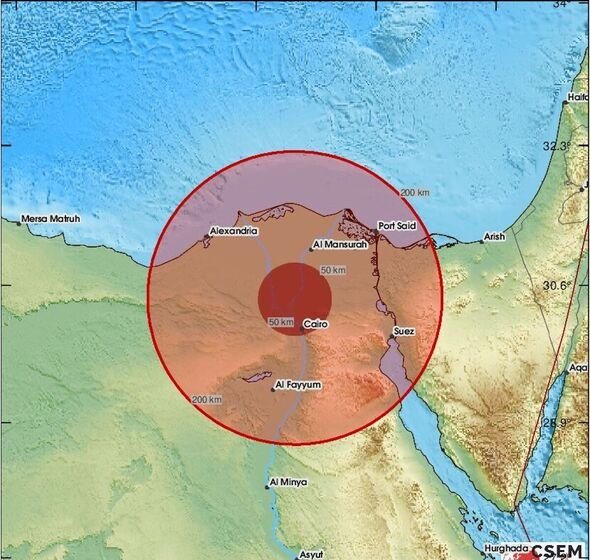
A 5.9-magnitude earthquake centred near Suez in northeastern Egypt has shaken residents from their beds and sent tremors into central and southern Israel.
By Eleanor Ellington · 4 min read
A 5.9-magnitude earthquake has struck near Suez in northeastern Egypt, shaking buildings in Cairo and other cities and throwing frightened residents from their beds. The quake, recorded on 2 August 2026, was centred close to the Suez area and sent tremors across a wide stretch of the eastern Mediterranean, according to initial reports from the region.
People living near the epicentre described being jolted awake as the ground moved, with some residents rushing into the streets and open areas once the shaking stopped. Local accounts spoke of panic in several neighbourhoods, where the strength of the tremor took many by surprise. There was no immediate information about casualties, and early reports did not mention serious damage to buildings or infrastructure.
The earthquake was also felt across the border in Israel, particularly in central and southern parts of the country. Israeli media said the tremors, which originated in Egypt, were noticeable in a number of communities and prompted some residents to leave their homes as a precaution. Reports from Israel did not indicate any significant harm or major disruption.
The Suez region forms part of a fault system linked to the Gulf of Suez and the wider Red Sea rift, an area where the African and Arabian tectonic plates are gradually moving apart. This geological setting produces earthquakes on a regular basis, although strong tremors are uncommon in Egypt itself. Because seismic waves travel well through the crust in this part of the Middle East, a moderate-to-strong earthquake can be felt over long distances, which is why the shaking was registered in Israel as well as in Egypt.
The quake's proximity to the Suez Canal corridor, one of the world's most important maritime routes, added to public concern. The area around the epicentre includes heavy industry, port facilities and a dense network of towns, and any notable tremor inevitably raises questions about the vulnerability of critical infrastructure. Even before damage assessments were complete, the event had become a leading topic of conversation in Egypt, with many residents sharing accounts of the moment their homes began to shake.
Seismological agencies and local authorities began reviewing the event immediately after the main tremor, focusing on the depth of the earthquake and the precise location of its epicentre. Those measurements were still being verified in the hours after the quake, with monitoring centres in several countries comparing their data. The collection of seismic information from Egypt, Israel and the surrounding region was expected to give a fuller picture of the event in the coming days.
For many residents, the earthquake was a rare and unsettling reminder that even regions not normally associated with strong seismic activity can experience tremors. The fact that the quake woke people in Egypt and was felt in another country demonstrated how a single seismic event can affect several nations at once. As assessments continued, attention remained focused on establishing whether the tremor had caused any damage and on understanding what the event could signal for the region's geology.