
Business 110
Dacia CEO Urges EU to Freeze Small Car Rules to Cut Prices
In this issue
Business 110
Dacia CEO Urges EU to Freeze Small Car Rules to Cut Prices
Culture 89
1988 Porsche 911 Carrera Targa G50 with Rebuilt Engine Heads to Auction
Economy 30
HMRC is writing to low earners about pension top-ups averaging about £70
News 123
Aftermarket Trackers Recover 99% of Stolen Cars as Factory Systems Fail
Politics 104
Met police open inquiry into alleged foreign donations to Reform UK
Sports 231
AMG GT Black Series Spied With Radical Aero Ahead of Nürburgring Record Attempt
Technology 117
BMW Confirms Next 3 Series Will Retain Plug-In Hybrid Power
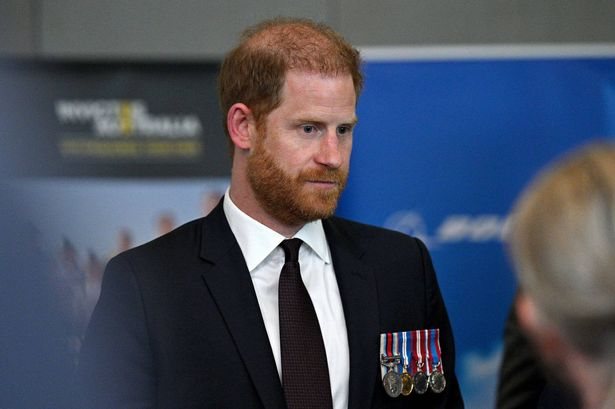
The Duke of Sussex and six other prominent figures have lost their High Court case against Associated Newspapers, the publisher of the Daily Mail, over allegations of unlawful information gathering.
By Eleanor Ellington · 5 min read
The Duke of Sussex and six other prominent figures, including Sir Elton John, have lost their High Court case against Associated Newspapers Limited (ANL), the publisher of the Daily Mail, after a judge ruled that they had failed to prove allegations of unlawful information gathering. The ruling, delivered by Mr Justice Nicklin, brings an end to a lengthy legal battle that had drawn significant public attention and raised questions about press ethics in Britain.
The claimants had alleged that ANL engaged in a range of illicit activities over a period of two decades, including voicemail interception, landline tapping, and obtaining private information through deception. They argued that these methods were used to source stories published in the Daily Mail and its Sunday edition. However, after a trial that concluded three months ago, the court found that the evidence presented did not meet the legal standard required to prove the claims.
In his judgment, Mr Justice Nicklin stated that the Duke of Sussex and the other claimants had not demonstrated that information had been obtained unlawfully by the newspaper group. The ruling was described by ANL as an «overwhelming victory». The publisher welcomed the decision, asserting that it vindicated its journalistic practices and rejected what it termed unfounded accusations.
The case was one of the most high-profile legal actions against a British newspaper publisher in recent years, involving a mix of royalty, music stars, and political figures. Alongside Prince Harry and Sir Elton John, the group included Baroness Doreen Lawrence, the mother of murdered teenager Stephen Lawrence; Sir Simon Hughes, a former Liberal Democrat MP; and others who claimed their privacy had been violated by the Daily Mail's reporting methods.
The legal proceedings had been closely watched as a test of the boundaries of press freedom and the accountability of news organisations. The claimants had sought damages and a public acknowledgment of wrongdoing, but the court's decision effectively closes the door on further litigation related to the phone-hacking scandal for these individuals. Legal experts noted that the ruling may discourage similar lawsuits in the future, as it sets a precedent that claimants must provide concrete evidence of unlawful activity.
Prince Harry, who has been involved in several legal battles against British tabloids over privacy and phone-hacking claims, expressed disappointment with the outcome. His legal team had argued that the Daily Mail had a history of using unethical methods to obtain stories, but the judge found the evidence insufficient to support the allegations. The Duke has previously won cases against other publishers, including Mirror Group Newspapers, but this ruling marks a significant setback in his campaign against press intrusion.
Associated Newspapers Limited, in a statement following the verdict, said it had always maintained that the claims were without merit. The company emphasised that its journalists operate within the law and that the ruling confirms the integrity of its reporting. The publisher also noted that the case had consumed considerable time and resources, and it hoped the decision would bring closure to the matter.
The case had its roots in the broader phone-hacking scandal that erupted in the UK over a decade ago, leading to public inquiries and criminal convictions. While many claims against other publishers have been settled or proven in court, the action against ANL was seen as one of the last major legal challenges. The ruling is likely to be seen as a landmark moment, potentially marking the end of a wave of litigation that has reshaped the British media landscape.
Observers have noted that the decision does not necessarily exonerate the newspaper industry as a whole, but it does underscore the difficulty of proving historical allegations of unlawful information gathering. The judge's detailed reasoning, which has yet to be published in full, is expected to provide further clarity on the legal standards required in such cases. For now, the verdict stands as a definitive rejection of the claims brought by Prince Harry and his co-claimants.