
Business 256
Experts explain how to negotiate a fair deal on a used car
In this issue
Business 256
Experts explain how to negotiate a fair deal on a used car
Culture 295
Gebrauchter Mercedes-Benz SL550 von 2011 wird mit 61.000 Meilen angeboten
Economy 42
Electric driving is cheaper, but the savings depend on one factor
News 159
Orionid meteor shower set to peak with fast, bright fireballs
Politics 117
Britt McHenry straciła pracę w Departamencie Stanu tego samego dnia, gdy otrzymał…
Sports 286
Aston Villa and Manchester City meet in Premier League fixture
Technology 329
Bugatti’s Veyron Super Sport prototype power boost destroyed its air-conditioning…
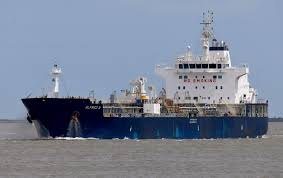
The Myra tanker, sailing from the Russian port of Ust-Luga, reported a distress signal in the North Atlantic west of Ireland, prompting an air response.
By Eleanor Ellington · 3 min read
A tanker linked to Russian oil exports sent a distress signal in the North Atlantic, west of Ireland, according to reports published on Saturday. The vessel, named Myra, had been travelling from the port of Ust-Luga in the Leningrad region, a terminal associated with the shipment of Russian oil that moves outside Western sanctions.
Reports indicate that British air assets were scrambled in response to the alert. The Daily Star said the RAF had been deployed after the signal was received off the UK coast. The Ukrainian-backed outlet UNITED24 Media described the tanker as a sanctioned vessel that had called for help near Ireland. The Myra was reported as Russia-linked in several accounts, and the EADaily report confirmed that the signal was sent while the ship was following its route from Ust-Luga.
The Myra belongs to a group of older tankers that analysts and governments have associated with the so-called shadow fleet, a loose collection of vessels used to transport Russian oil while avoiding sanctions imposed after the invasion of Ukraine. Such ships often change flags, switch off tracking systems at times, and operate under opaque ownership structures. These features have raised concerns among European authorities about safety, insurance and environmental risk in busy and sensitive shipping lanes.
The distress call came in the North Atlantic, a route used by tankers moving between the Baltic and Western markets. Ust-Luga is one of Russia's largest oil export ports on the Baltic Sea, and vessels leaving it pass through the approaches to the British Isles on their way to onward destinations. Coverage so far has not established the precise nature of the distress, the condition of the vessel or its crew, or whether assistance was ultimately required.
The incident adds to a series of episodes in which sanctioned or Russia-linked tankers have raised alarms in European waters. It has also renewed debate over how coastal states should monitor and respond to ageing vessels carrying oil cargoes through the Atlantic and North Sea approaches. Further information from maritime authorities would be needed to confirm the outcome of the alert and any measures taken in response.
2