
Business 120
BYD Plans Three European Assembly Plants and a Battery Factory
In this issue
Business 120
BYD Plans Three European Assembly Plants and a Battery Factory
Culture 113
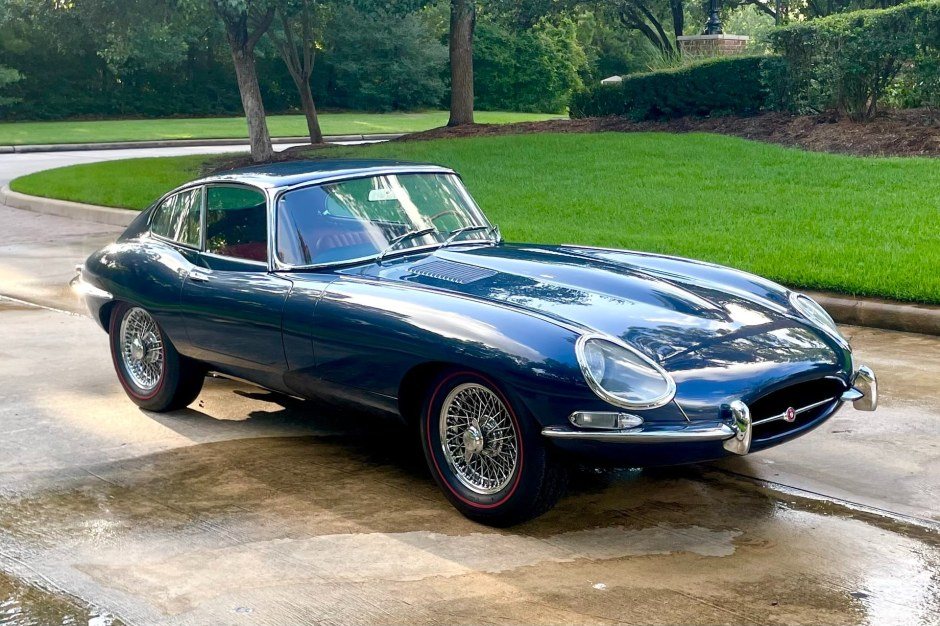
Restored 1967 Jaguar XKE Series I Coupe Heads to Auction in Texas
Economy 30
HMRC is writing to low earners about pension top-ups averaging about £70
News 127
London Mayor Funds Safer Streets for Women and Girls
Politics 105
Reform UK's Welsh Leader Dan Thomas Resigns After Arrest on Suspicion of Assault
Sports 237
Cardiff City to Host Charlton Athletic in September 2026 Clash
Technology 138
BMW M3 EV Prototype Drifts at Nürburgring as Xiaomi SU7 Ultra Closes In
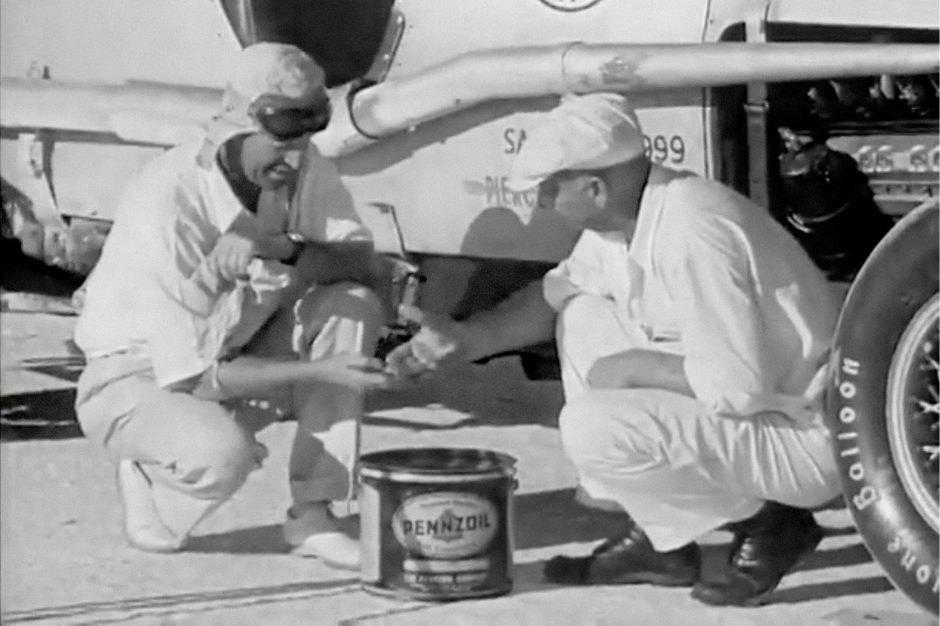
A look back at the career of Ab Jenkins, the father of salt flats racing, whose 24-hour record runs at Bonneville were underwritten by Pennzoil and captured in the documentary Farther, Faster, Safer.
By George Kensington · 5 min read
Ab Jenkins, the pioneering American driver known as the father of salt flats racing, built a career of more than 500 speed records on a stretch of Utah salt that Pennzoil helped him conquer. The oil company, a long-standing partner of the motoring world, underwrote much of his later career and produced a documentary of his most celebrated endurance run, titled Farther, Faster, Safer.
The story of Jenkins is inseparable from the Bonneville salt flats. More than 14,000 years ago, the prehistoric Lake Bonneville overflowed its mountain margins and drained into the Pacific Ocean. The exposed lakebed rebounded and dried, leaving a level crust of salt and minerals roughly 12 miles long, five miles wide and up to five feet thick. For millennia it lay largely untouched, until the mid-1800s, when it became a refuge for Mormons seeking safety after the murder of their founder, Joseph Smith. From that remote community came David Abbot Jenkins, born to Welsh immigrant parents in 1883.
Jenkins came of age alongside the automobile and motorcycle, exploring the flats on an Excelsior motorbike and buying his first car in 1902 or 1903. He was 43 when he set his first record, driving a stock Studebaker Sherriff touring car from New York to San Francisco in 86 hours and 20 minutes, beating the fastest transcontinental trains by six hours. He then worked officially with Studebaker, and when Pierce-Arrow came under Studebaker ownership, he was tasked with improving the performance of its new V12. With factory engineers, the engine was tuned to 175 horsepower, and Jenkins took it to the salt. An unofficial 24-hour record of 112.9 mph followed in 1932, and his 117.77 mph run in 1933 was certified by the AAA. In 1934 he returned with a specially prepared Pierce-Arrow wearing a boattail body hammered from aluminium sheet.
For much of his career, Pennzoil underwrote his efforts, sparing no expense on the documentary of his 24-hour top-speed attempt. A week of preparation saw a 10-mile oval groomed onto the salt, with the American Automobile Association setting up a base camp of tents, communications and timing equipment. On 17 August, Jenkins set off in near-100-degree Fahrenheit heat. Over the next 24 hours he stopped only for fuel, tyres and refreshments, taking no coffee, just a stick of gum and some orange juice and milk. He averaged around 132 mph while underway, with typical pit stops lasting about three minutes. Messages were relayed to him on a chalkboard, and his written replies were crumpled and tossed from the cockpit for workers to retrieve. He completed 3,053 miles at an average speed of 127.208 mph including stops.
Jenkins’s obsession with speed was matched by his commitment to safety. He promoted Bonneville as a safer alternative to the sands of Ormond Beach, where drivers were confined to a thin strip between the ocean and waterfront hotels, occasionally dodging pier supports. By the mid-1930s, outright land speed records were approaching 300 mph, a mark broken in 1935 by Sir Malcolm Campbell in Bluebird. Beach racing had proved lethal in too many instances. The year after the record documented in the film, Jenkins invited John Cobb over from England and hosted him personally as Cobb prepared to break his record in a 24-litre Napier-Lion.
Jenkins’s association with Pennzoil continued as he became a test driver for Auburn and then Duesenberg, helping develop the Auburn 851 Speedster and the Duesenberg SJ. Each Auburn Speedster came with a plaque engraved with his signature certifying the car capable of more than 100 mph. The oil company sponsored his Duesenberg Special, and he kept using its product even as he began fitting aeroplane engines into his racers. The first, built by Duesenberg on an SJ chassis, was nicknamed the Mormon Meteor, a name that stuck and was given to his next two purpose-built streamliners, Mormon Meteors II and III. He continued to drive on the salt, sometimes solo and sometimes with his son Marv, until the end of his life. Two months after a final record attempt in 1956, he collapsed from a heart attack while on a Pontiac promotional tour.