
Business 110
Dacia CEO Urges EU to Freeze Small Car Rules to Cut Prices
In this issue
Business 110
Dacia CEO Urges EU to Freeze Small Car Rules to Cut Prices
Culture 89
1988 Porsche 911 Carrera Targa G50 with Rebuilt Engine Heads to Auction
Economy 30
HMRC is writing to low earners about pension top-ups averaging about £70
News 124
Aftermarket Trackers Recover 99% of Stolen Cars as Factory Systems Fail
Politics 104
Met police open inquiry into alleged foreign donations to Reform UK
Sports 230
AMG GT Black Series Spied With Radical Aero Ahead of Nürburgring Record Attempt
Technology 117
BMW Confirms Next 3 Series Will Retain Plug-In Hybrid Power
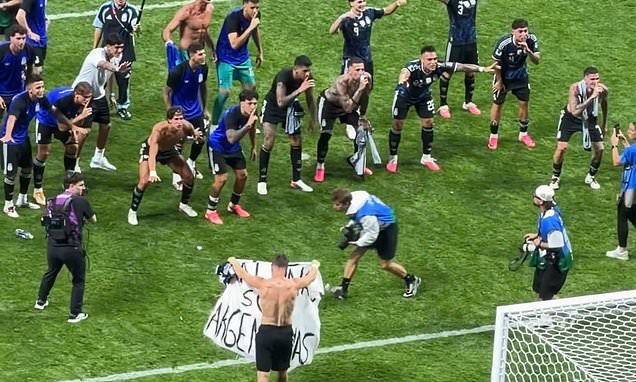
Argentina players held up a banner claiming the Falkland Islands after knocking England out of the World Cup semi-final, sparking political and diplomatic reactions.
By Edward Beaumont · 6 min read
Argentina’s World Cup holders sparked controversy after their dramatic semi-final victory over England on Wednesday night, when players were seen holding up a banner that read «Las Malvinas son Argentinas» — a direct reference to the long-running sovereignty dispute over the Falkland Islands. The incident occurred moments after the final whistle in Atlanta, where Argentina came from a goal down to win 2-1 and book their place in Sunday’s final against Spain.
The banner, which translates to «The Falkland Islands are Argentinian», was passed to the players by fans near the pitch. Several members of the squad, including Lisandro Martínez and Giovani Lo Celso, were photographed holding it aloft as they celebrated with supporters. The gesture quickly drew attention both on social media and in political circles, given the historical sensitivity surrounding the Falklands conflict of 1982.
UK business secretary Jonathan Reynolds was among those to condemn the action, calling for Fifa to investigate the incident. Reynolds described the banner as «unacceptable» and urged football’s governing body to take appropriate disciplinary measures. The Falkland Islands, a British Overseas Territory located in the South Atlantic, have been a source of tension between the UK and Argentina for decades, culminating in a brief but bloody war 44 years ago.
The match itself was a gripping contest. England took the lead with five minutes remaining in normal time, appearing to secure a place in the final. However, Argentina rallied with two quick goals in stoppage time, snatching victory and silencing the English contingent in the stadium. The dramatic turnaround set off wild celebrations among the Argentine players and fans, which included the display of the politically charged banner.
Fifa has not yet commented on whether it will open a disciplinary case. Under its statutes, the organisation prohibits political statements at matches, and previous incidents involving political messaging have resulted in fines or other sanctions. The Independent reported that the governing body could impose penalties ranging from a financial fine to a points deduction, though the latter is considered unlikely for a single incident.
The Argentine squad, managed by Lionel Scaloni, are now preparing to face Spain in the final in New Jersey. The team are seeking to defend the title they won in Qatar in 2022. The controversy over the banner, however, threatens to overshadow their preparations and could lead to a formal complaint from the English Football Association.
The Falklands banner is not the first time the dispute has surfaced in a sporting context. During the 2022 World Cup, Argentine fans were seen displaying similar messages, and the issue has periodically flared during football matches between the two nations. The 1986 World Cup quarter-final, which Argentina won 2-1 thanks to Diego Maradona’s «Hand of God» goal, also took place against the backdrop of lingering post-war tensions.
Political reactions in the UK have been swift. Shadow foreign secretary Alicia Kearns described the banner as «a deliberate provocation» and called on the government to lodge a formal protest with Argentine authorities. The Foreign Office said it was aware of the incident and was «considering the appropriate response». In Argentina, the gesture was celebrated by many fans and some politicians, who view the claim to the islands as a matter of national pride.
The incident also drew attention to the broader context of Argentina’s campaign. The team have faced criticism for their aggressive style of play and for several controversial refereeing decisions that have gone in their favour. However, the Falklands banner has dominated post-match analysis, with commentators noting that it risks inflaming diplomatic relations at a time when both countries have sought to maintain cordial ties.
For England, the defeat was a bitter end to a tournament in which they had shown significant improvement under manager Gareth Southgate. The team had hoped to reach their first World Cup final since 1966, but fell short in dramatic fashion. The loss was compounded by the political undertones of the Argentine celebration, which many English fans and officials found deeply offensive.
As the football world turns its attention to Sunday’s final, the fallout from the banner incident is likely to continue. Fifa’s disciplinary committee may decide to investigate, and the UK government has indicated it will raise the matter diplomatically. For now, Argentina’s players remain focused on their title defence, but the image of them holding the Falklands banner will linger long after the tournament ends.