

Business 110
Dacia CEO Urges EU to Freeze Small Car Rules to Cut Prices
In this issue
Business 110
Dacia CEO Urges EU to Freeze Small Car Rules to Cut Prices
Culture 89
1988 Porsche 911 Carrera Targa G50 with Rebuilt Engine Heads to Auction
Economy 30
HMRC is writing to low earners about pension top-ups averaging about £70
News 124
Aftermarket Trackers Recover 99% of Stolen Cars as Factory Systems Fail
Politics 104
Met police open inquiry into alleged foreign donations to Reform UK
Sports 230
AMG GT Black Series Spied With Radical Aero Ahead of Nürburgring Record Attempt
Technology 117
BMW Confirms Next 3 Series Will Retain Plug-In Hybrid Power
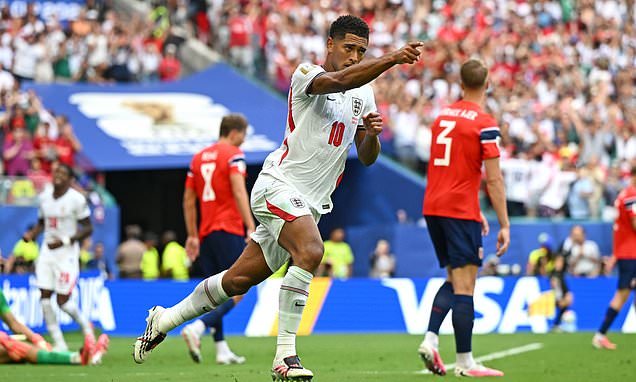
Former referee Mark Clattenburg has argued that Jude Bellingham's equaliser for England against Norway in the World Cup quarter-final should have been disallowed because the ball struck a camera cable before reaching the midfielder, a little-known rule that may have been overlooked.
By George Kensington · 5 min read
Jude Bellingham's equalising goal for England in their World Cup quarter-final against Norway has sparked controversy, with former referee Mark Clattenburg claiming it should not have stood. The incident occurred just before half-time when Bellingham levelled the score at 1-1, but replays suggest the ball may have struck a camera cable suspended above the pitch before reaching the England midfielder.
According to Clattenburg, the Laws of the Game state that play should be stopped if the ball comes into contact with an external object, such as a camera cable, while in play. The former Premier League official argued that the goal should have been disallowed and a drop ball awarded instead. Norway fans have since voiced their frustration on social media, insisting their side was unfairly denied a legitimate advantage.
The controversy adds another layer of drama to what was already a tense and high-stakes encounter. England, trailing after Norway took an early lead, looked to Bellingham to spark a comeback. The 21-year-old Real Madrid star delivered with his fifth goal of the tournament, a powerful strike from the edge of the box that beat the Norwegian goalkeeper. However, the debate over whether the ball had previously hit the camera cable has cast a shadow over the moment.
FIFA has since released a statement addressing the incident, though it did not explicitly confirm whether the ball made contact with the cable. The governing body said that match officials are trained to apply the laws consistently and that any decision on the field is final. The statement did not indicate that a review of the goal was underway, leaving Norway supporters and pundits dissatisfied.
The incident is not the first time a camera cable has interfered with play in a major football match. Similar situations have occurred in domestic leagues and international tournaments, often leading to confusion among players, officials, and fans. The Laws of the Game, maintained by the International Football Association Board (IFAB), specify that if the ball touches a non-player object, including overhead cables or drones, play must be stopped and restarted with a dropped ball.
Norway's frustration was compounded by another controversial moment earlier in the match when they had a second goal ruled out. The Scandinavians thought they had regained the lead, only for the goal to be disallowed after a VAR review. The decision sparked further debate, with some arguing that England striker Harry Kane had been fouled in the build-up, while others maintained the officials made the correct call.
England ultimately went on to win the match, advancing to the semi-finals of the World Cup. Bellingham's goal proved crucial in shifting momentum, and the team's performance in the second half secured their place in the last four. However, the lingering questions over the validity of the equaliser have left a bitter taste for Norway and their supporters.
Mark Clattenburg, who officiated major finals including the Champions League and European Championship, has been vocal in his criticism of the decision. He argued that the referee and VAR team should have spotted the ball's contact with the cable and stopped play before Bellingham's shot. Clattenburg's comments have added weight to the calls for a review of how such incidents are handled, particularly in high-profile matches where the stakes are enormous.
Norway fans have taken to online forums and social media platforms to express their anger, with many sharing video clips that appear to show the ball grazing the cable. Some have called for FIFA to introduce stricter protocols for checking external interference, while others have questioned why the VAR did not intervene. The debate is likely to continue as the tournament progresses, especially if England go on to win the World Cup.
For now, the result stands, and England's focus will be on their semi-final opponent. But the controversy surrounding Bellingham's goal serves as a reminder of the fine margins that can decide knockout football and the importance of strict adherence to the Laws of the Game. Whether FIFA will take any further action or issue additional guidance remains to be seen, but the incident has already become one of the talking points of the tournament.