Business 137
Volkswagen Now Sells More EVs Than Petrol Cars in Germany
In this issue
Business 137
Volkswagen Now Sells More EVs Than Petrol Cars in Germany
Culture 145
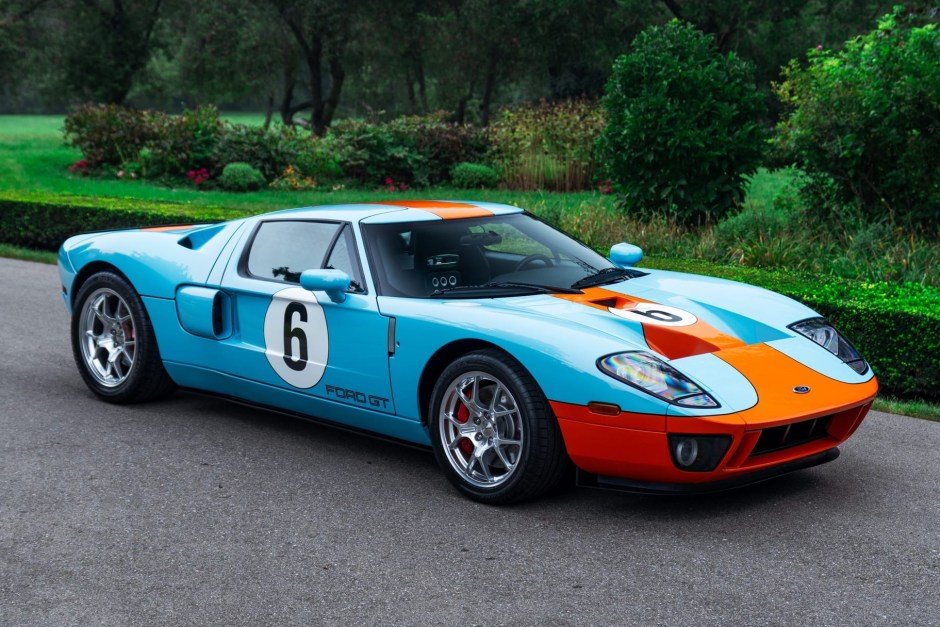
Ford GT Heritage Edition with 3,000 Miles Heads to Auction in New York
Economy 33
Bitcoin and Ethereum Surge to Levels Last Seen in January
News 131
Trump Tells UN Iran Faces Choice Between Deal and Annihilation
Politics 106
Canada Moves Closer to EU as First Associate Member
Sports 244
14 Classic Cars to Drive Route 66 for Parkinson's Charity
Technology 158
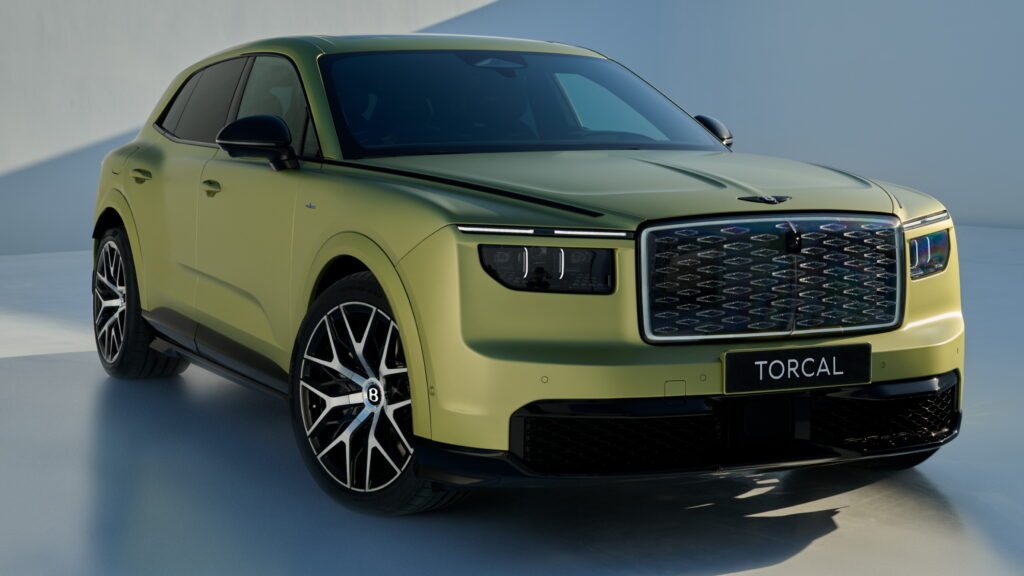
Bentley Unveils Torcal, Its First Electric Car
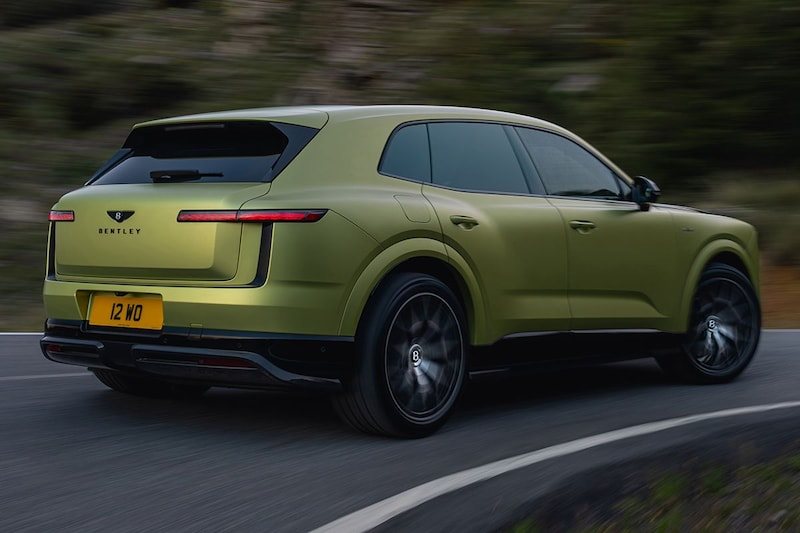
Bentley has unveiled the Torcal, its first fully electric model, offering up to 888 hp and a 113 kWh battery while retaining the brand's traditional craftsmanship and comfort.
By Eleanor Ellington · 5 min read
Bentley has taken the wraps off its first fully electric production car, the Torcal, a high-performance SUV that slots into the range alongside the Bentayga rather than replacing it. The new model, named after the El Torcal de Antequera nature reserve in Andalusia, measures 4.98 metres long, making it 16 centimetres shorter and around 8 centimetres lower than its combustion-engined sibling, yet still a substantial presence on the road.
The Torcal arrives as Bentley's answer to an increasingly electrified luxury market. Rival Ferrari has already revealed its own electric model, the Luce, while Rolls-Royce and Range Rover both offer EVs. Bentley's sister brand Porsche has three electric models — the Taycan, Macan and Cayenne — with the latter two built on the Premium Platform Electric (PPE) architecture. That flexible platform underpins the new Bentley, which was originally slated for introduction last year.
Visually, the Torcal represents a significant departure for Bentley while stopping short of a complete reinvention. The front end features a two-tier lighting arrangement with an immense, optionally illuminated panel filling the space traditionally occupied by a grille. That panel is packed with a vast array of diamond-like elements, a nod to Bentley's heritage of bold front-end metalwork. The long, straight bonnet — unusual for an electric vehicle — conceals a 90-litre front boot, or frunk, large enough to store charging cables away from the 460-litre rear luggage compartment with its high-pile carpet. At the rear, the oval lights of the Bentayga and Continental have given way to flat light units connected by a black U-shaped plastic section wrapping around the tailgate.
Power comes in two guises. The entry-level Torcal produces 821 hp and 1,194 Nm of torque, making it one of the most powerful Bentleys ever built. The range-topping Torcal S raises output to 888 hp and 1,350 Nm, earning the title of the most powerful car in Bentley's history. The S accelerates from 0 to 100 km/h in just 2.9 seconds. Bentley says it has no need for a four-figure power output at present, though the door remains open for a future Speed variant.
Both versions share a 113 kWh battery pack, identical to that of the Porsche Cayenne Electric. Bentley claims a maximum range of 600 kilometres under favourable conditions. Thanks to advanced battery cooling, DC fast charging at up to 400 kW should be sustainable across a broad portion of the charging curve. Practicality has not been overlooked: the Torcal can tow up to 2,700 kilograms, enough for a horsebox or a boat. Bentley describes the driving experience as combining the comfort of its Flying Spur flagship saloon with the dynamism of a Continental GT Speed.
Inside, the Torcal remains unmistakably Bentley, resisting the minimalist, clinical interiors favoured by Tesla and many Chinese manufacturers. A large, curved vertical infotainment screen dominates the dashboard, packed with settings and controlling functions such as airflow — a layout similar to that of the Cayenne Electric, though the screen's angle is slightly less steep and, according to Bentley, ideally suited to wrist comfort. Unlike the Continental GT, there is no rotating Toblerone-style panel hiding the screen behind wood veneer and analogue dials, and the traditional round air vents with their distinctive pins are absent.
Yet physical controls have not disappeared entirely. Beneath the screen sits an island of steel buttons governing volume, temperature and front and rear screen heating, alongside an opulent rotary dial. Bentley has thus avoided the industry-wide retreat from touchscreen-only interfaces, retaining the tactile quality that has long defined its cabins. The Torcal is expected to strengthen Bentley's position in the electric luxury segment, offering a blend of traditional craftsmanship and modern powertrain technology that the marque hopes will appeal to existing customers and attract new ones alike.
3