Business 170
BMW Moves 3 Series Production From Mexico To Germany
In this issue
Business 170
BMW Moves 3 Series Production From Mexico To Germany
Culture 192
Garatti's Hidden Milan Atelier Becomes the World's Green Diamond Authority
Economy 35
US Weighs Wider Red-Dyed Diesel Sales to Cut Record Fuel Prices
News 143
Newcastle University Evacuated as Police Cordon Off Buildings Over Suspicious Item
Politics 109
Mahmood Opens New Legal Refugee Routes in Labour Conference Speech
Sports 254
Ford returns to World Rally Championship in 2028 with M-Sport
Technology 212
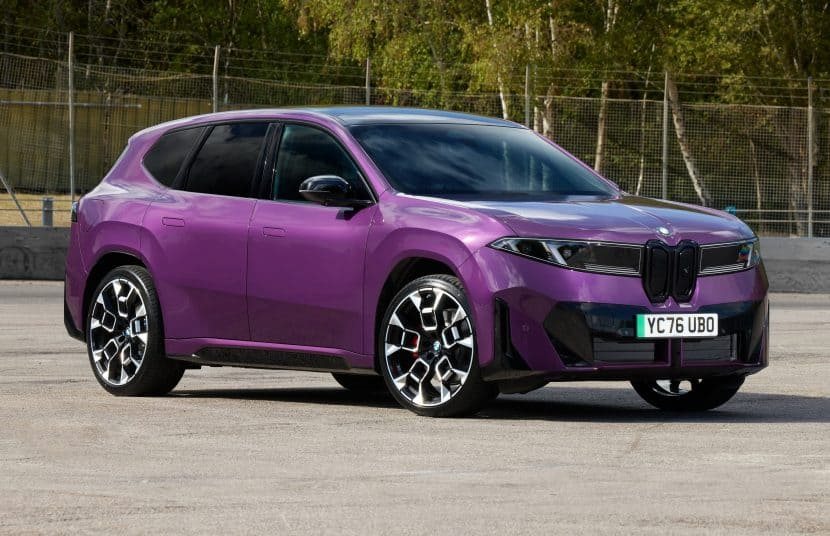
BMW iX3 40 Gets £4,385 Twilight Purple Individual Paint
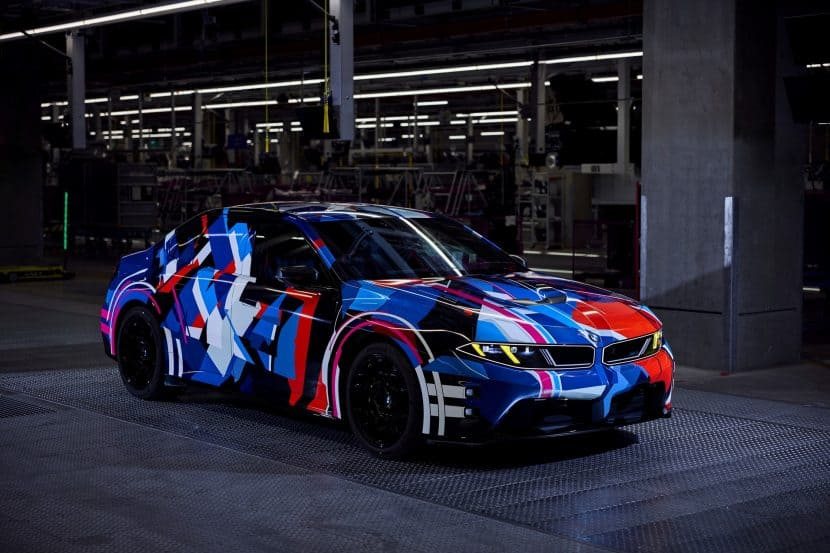
BMW has released new teaser images of its electric M3 prototype, confirming the name and revealing design details ahead of a 2027 launch.
By Eleanor Ellington · 4 min read
BMW has offered its clearest preview yet of the upcoming electric M3, releasing teaser images of a prototype wearing a thinner camouflage wrap in the brand's signature M colours. The vehicle, codenamed ZA0, is set to make its debut in 2027 as the first fully electric M car, and the latest images confirm that BMW will retain the M3 nameplate despite earlier speculation about alternative designations such as i3M or M3i.
The prototype's roof carries a prominent M3 graphic, putting an end to rumours that BMW might separate the electric model from its combustion-engined sibling through a different name. The German manufacturer's position appears to be that an M3 remains an M3, even when four electric motors replace the traditional six-cylinder engine. The thinner camouflage also reveals just how closely the production car will follow the M Concept Neue Klasse, with proportions that include massively flared wheel arches giving the electric M3 a considerably wider stance than the i3 M60.
Several design elements from the concept have carried over to the prototype, most notably the squared-off lighting elements at the outer corners of the bumpers. Known as Track Lights, these stacked cube-like features will appear on all future full-fat M cars, not just the electric M3. BMW has toned down some of the concept's more extreme aerodynamic components, including the enormous diffuser, but the fundamental shape remains remarkably faithful, right down to the central hood vent. The aggressive design is clearly visible through the lighter wrap, suggesting the production version will stay true to the concept's dramatic aesthetic without being impractical for showrooms.
While BMW has not disclosed full technical specifications, it has confirmed that the electric super sedan will feature four motors with a front-axle disconnect, enabling a pure rear-wheel-drive layout. This setup is not solely for driving enjoyment; it also improves efficiency by disengaging the front axle when it is not needed. Each motor drives one wheel, allowing for more precise torque control at each corner. Insiders suggest the combined output could be around 800 horsepower or more, though official figures have yet to be released.
The car will draw power from a dedicated battery pack with a usable energy content exceeding 100 kWh. Given the performance focus, the electric M3 is not expected to match the impressive 567-mile WLTP range of the i3. BMW has also abandoned plans to integrate pre-recorded engine noises, such as inline-six, V8, or V10 sounds, in favour of a different soundscape, with simulated gear changes confirmed as a feature.
BMW's strategy for the M3's next phase will offer buyers a choice between two radically different approaches. Alongside the electric ZA0 arriving in 2027, the company is planning a new combustion-powered M3 for 2028, powered by an inline-six and codenamed G84. A similar dual approach will apply to the Touring variant, with an electric ZA1 likely to be joined later in the decade by a petrol-powered G88. This parallel lineup reflects BMW's commitment to maintaining traditional performance options while embracing electrification.
The latest teaser images follow earlier sightings of the electric M3 testing at the Nürburgring, where footage showed the prototype's tail-happy handling characteristics. BMW has been steadily building anticipation for the model, which represents a significant milestone for its M division. The production version is expected to be revealed in full closer to its 2027 launch, with the combustion variant following a year later.
7