

Business 139
Stellantis Adds Flatbed Opel Vivaro with New 148hp Turbodiesel
In this issue
Business 139
Stellantis Adds Flatbed Opel Vivaro with New 148hp Turbodiesel
Culture 150
Max Mara champions understated elegance at Milan Fashion Week
Economy 33
Bitcoin and Ethereum Surge to Levels Last Seen in January
News 131
Trump Tells UN Iran Faces Choice Between Deal and Annihilation
Politics 107
Republican Judges Defy Supreme Court in Missouri Redistricting Fight
Sports 245
MINI to Debut New Adventure SUV at Rebelle Rally
Technology 162
Chevrolet Builds Two Corvette Generations at Once for the First Time
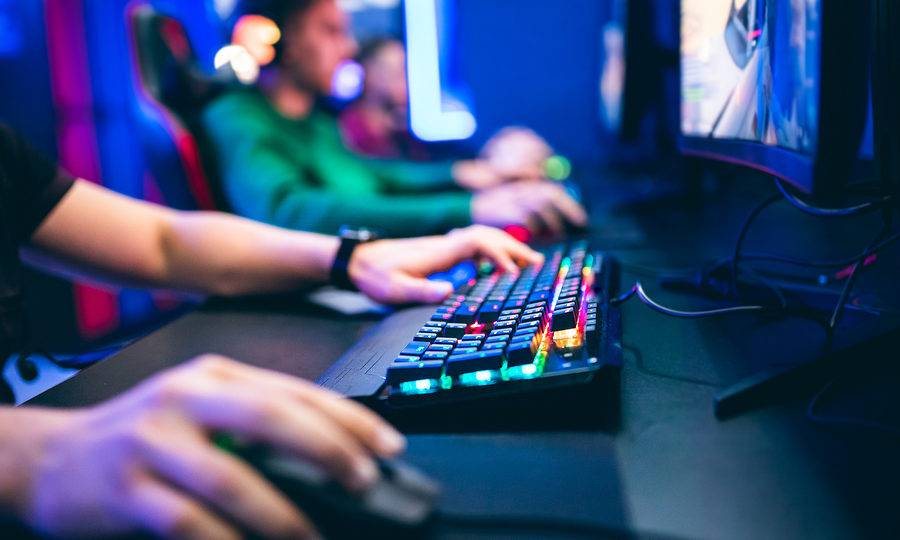
A six-month study paired improved visual-attention scores with EEG changes after 120 hours of action gaming. It is promising evidence, but the experiment cannot prove a game-specific causal effect.
By Eleanor Ellington · 6 min read
Competitive games reward a particular kind of discipline. The player must keep a goal in mind while dozens of signals compete for attention, discard irrelevant movement, anticipate changes at the edge of vision and update a decision before the scene changes again. Those are not abstract demands; they are repeated hundreds of times in a long session.
A 2026 study asks whether months of that kind of practice leave measurable traces outside the game. Published in the International Journal of Psychophysiology, the research followed 49 healthy university students with little substantial prior gaming experience through six months of action-video-game training. The total dose was 120 hours.
The participants were tested before and after the intervention with two measures of attention. The d2 Test of Attention challenges people to identify targets among near-identical distractors under time pressure. An Attention Breadth task assesses how effectively attention can be distributed over visual space. Scores improved on both after the training period.
That is the first part of the story. The second is physiological. Researchers recorded resting-state EEG and analysed both local spectral characteristics and measures describing large-scale functional organisation. Post-training recordings showed changes involving alpha activity and network configuration. Some EEG features were associated with the amount of attention improvement seen in individual participants.
The finding is appealing because it connects performance with a biological signal. Instead of showing only that people got better at a test, the study reports that the improvement coincided with changes in patterns of brain activity linked to information processing and attention. The authors interpret this as evidence compatible with training-related neural plasticity.
For anyone interested in performance, that is the relevant idea: the brain adapts to repeated demands. The useful question is not whether gaming is morally good or bad, but what exactly is being practised, how consistently, and whether the adaptation carries over to tasks that matter outside the original environment.
This study provides a partial answer, not a final one. Its major weakness is the lack of a control group. All 49 participants received the gaming intervention. There was no matched group spending the same six months on another activity or completing the tests without action-game training. That makes it impossible to exclude practice effects, repeated assessment or other time-related changes as contributors. The authors explicitly flag the limitation.
The distinction matters because improvement in a trained or related skill is not the same as broad cognitive enhancement. A player can become exceptionally efficient at searching, tracking and prioritising visual information without necessarily becoming better at every form of memory, reasoning or judgement. The study did not measure a general intelligence boost.
It also does not justify naming specific modern esports titles as proven cognitive tools. The accessible text does not identify Dota 2 or Counter-Strike 2 as the games used during the six-month intervention. It describes a broader action-video-game category and notes first-person shooters as a common example. That is relevant to the demands of games like CS2, but it is not a CS2 trial.
There is some title-specific context. A small 2021 experiment used Counter-Strike: Global Offensive with young adults who were new to FPS games. After three weeks, participants improved on some cognitive measures, with an adaptive training approach producing particularly strong in-game learning. Research using League of Legends has also reported short-term shifts in visual selective attention and EEG. These studies make competitive games plausible laboratories for attention training, but none should be turned into a blanket prescription.
The wider evidence remains mixed. One meta-analysis found small-to-moderate improvements linked to action-game play, especially in top-down attention and spatial cognition. Another concluded that the overall literature did not support a causal boost to broad cognitive ability. That gap between specific gains and general claims is where responsible interpretation belongs.
So the new study is best seen as a performance science result. Six months of repeated high-speed visual decision-making coincided with better attention scores and different resting EEG patterns in novice players. The data strengthen the case that sustained digital practice can shape how attention is allocated.
What they do not show is that more gaming is always better, that Dota 2 or CS2 specifically produced the effect, or that losing a match carries an extra cognitive dividend. The experiment did not isolate victories from defeats. The sharper lesson is more demanding: deliberate exposure to complex attention tasks can change performance, but proving why — and how broadly the gains transfer — still requires tighter controlled trials.
56