
Business 139
Stellantis Adds Flatbed Opel Vivaro with New 148hp Turbodiesel
In this issue
Business 139
Stellantis Adds Flatbed Opel Vivaro with New 148hp Turbodiesel
Culture 150
Max Mara champions understated elegance at Milan Fashion Week
Economy 33
Bitcoin and Ethereum Surge to Levels Last Seen in January
News 131
Trump Tells UN Iran Faces Choice Between Deal and Annihilation
Politics 107
Republican Judges Defy Supreme Court in Missouri Redistricting Fight
Sports 245
MINI to Debut New Adventure SUV at Rebelle Rally
Technology 162
Chevrolet Builds Two Corvette Generations at Once for the First Time
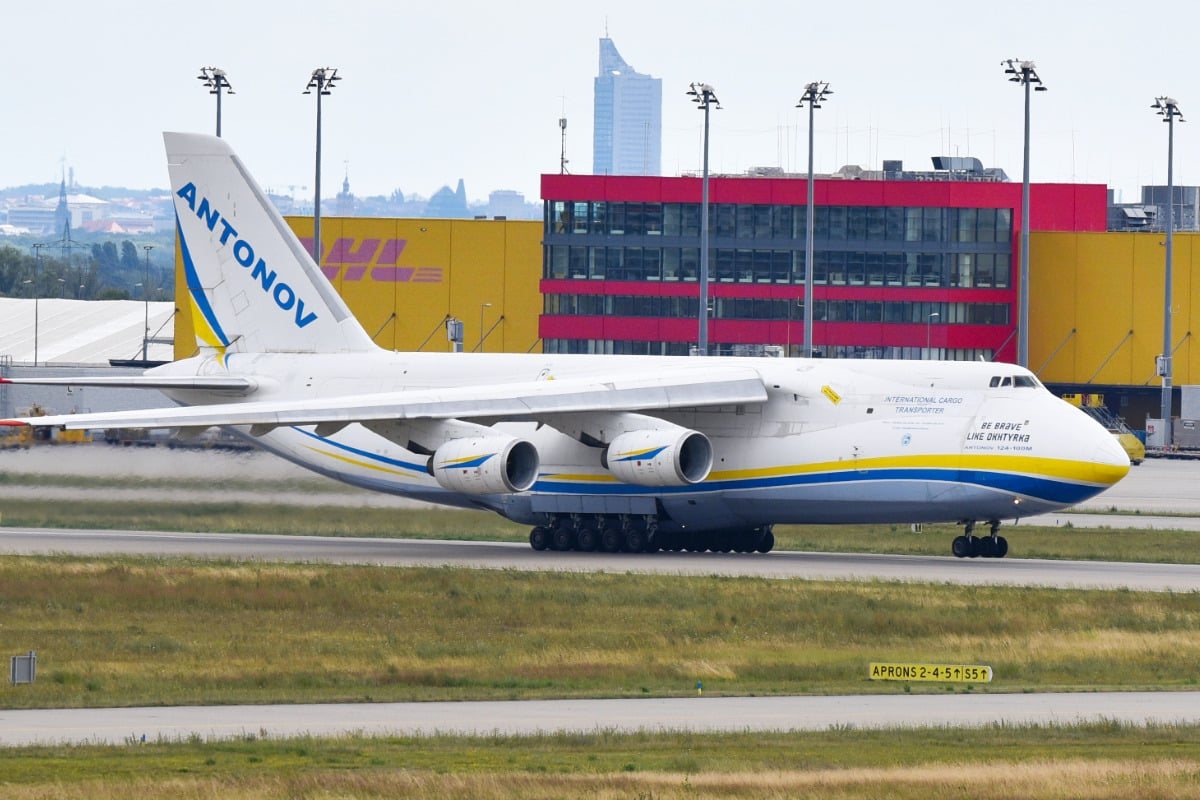
A small armed drone reached a Ukrainian heavy-lift aircraft at a major German airport. Whether or not Die Zeit’s reported wing strike is confirmed, the case tests how leaders turn counter-drone laws and budgets into real protection.
By George Kensington · 6 min read
The most consequential detail in the Leipzig/Halle drone incident may not be the device itself but the gap between policy and protection. Germany has spent the past year strengthening its counter-drone laws and institutions. Yet an explosive-equipped unmanned aircraft still reached a restricted area beside a Ukrainian Antonov An-124. Die Zeit now reports that surveillance footage may show it actually hitting the aircraft’s wing.
The confirmed facts are already serious. On the night of Aug. 4-5, a drone with an explosive device was found near the southern runway at Leipzig/Halle. A Ukrainian Antonov Airlines An-124 was parked nearby. Specialists made the device safe, no one was injured and operations resumed after temporary restrictions.
The new report adds a more alarming possibility. According to a reproduction of Die Zeit’s account, security cameras appear to show an object flying directly toward the An-124 around 7:30 p.m., striking a wing and falling to the ground. The explosive component may have separated in the collision and failed to detonate. German investigators have not publicly confirmed that full sequence.
For leaders responsible for critical infrastructure, that distinction is important but not comforting. Even if the reported impact is later revised, the drone penetrated a restricted environment with an explosive payload. Security leadership is measured not only by the ability to react after a device is found, but by whether the system can detect, classify and stop a threat before it reaches the target.
Leipzig/Halle makes the stakes unusually high. It is a major cargo hub and the principal German base for Antonov Airlines, which shifted operations after Russia’s full-scale invasion. Local reporting says six An-124s are based there. These aircraft carry outsized loads that ordinary freighters cannot easily replace, so a single damaged airframe can create operational consequences well beyond its own repair bill.
There is also a classic leadership challenge in the information environment. Early reporting claimed the Ukrainian aircraft carried ammunition. Germany’s Interior Ministry later told lawmakers that it did not. Social media widely calls the drone an FPV system, although reliable public sources have not established the control method. And Russia is frequently named as the presumed culprit, though German authorities have not issued a conclusive attribution.
Good decision-making requires resisting the temptation to fill every unknown immediately. Security executives and public officials have to act under uncertainty while still distinguishing evidence from inference. In this case, the correct posture is simultaneously aggressive about protection and cautious about attribution: raise defenses now, but let forensic and intelligence work determine who was responsible.
Germany’s government has already provided a framework. Changes to aviation-security law took effect in March 2026, while the Federal Police is gaining broader authority and capability to detect and counter drones. The policy direction is clear. The operational question is whether airports have the sensor coverage, command structure and response options to use those powers quickly enough.
That is harder than buying a counter-drone system. Airports are dense electromagnetic and physical environments. A defensive measure cannot casually disrupt navigation, communications or legitimate aircraft. Leaders need layered detection, clear thresholds for intervention, rehearsed coordination between private security and federal agencies, and a method for learning from every incursion.
The separate collision involving another unidentified object and a cargo aircraft underlines the complexity. That plane suffered minor damage and diverted to Hanover. Authorities have not linked the second object to the explosive drone. Yet from a risk-management perspective, the lesson is similar: low-altitude unmanned or unidentified objects can affect aviation safety before anyone establishes intent.
The cost equation is asymmetric. A small drone can be inexpensive; an An-124, a cargo schedule or an airport shutdown is not. That makes prevention an investment rather than a discretionary security expense. Leaders who assess counter-drone systems only against the price of the attacking device are using the wrong denominator. The relevant comparison is the cost of a damaged aircraft, a closed runway, interrupted supply chains and damaged public confidence.
If Die Zeit’s reported wing strike is confirmed, Leipzig will be remembered as a very narrow escape from a potentially destructive attack. If it is not, the management test remains. An explosive drone reached a place where a strategic aircraft was parked. The leadership question now is whether Germany’s new legal authorities can be turned into a security system that makes a repeat attempt materially harder.
57