Business 236
Tesla Blames Battery Supply for Flat Sales as Prices Keep Falling
In this issue
Business 236
Tesla Blames Battery Supply for Flat Sales as Prices Keep Falling
Culture 272
2021 BMW M3 with Six-Speed Manual and 6k Miles Heads to Auction
Economy 41
German Economists Set Income Threshold for the Upper Class
News 158
EU Loosens 2035 Emissions Targets in Move That Could Keep Petrol Cars Alive
Politics 115
Burnham launches crackdown on loud music on public transport
Sports 282
Ipswich Town to host Nottingham Forest in Premier League fixture
Technology 323
Porsche Adds Wireless Inductive Charging to Cayenne Electric
Tesla's energy generation and storage revenue dropped 16% year on year to $2.88 billion in the third quarter of 2026, despite a 10% rise in battery deployments, with the company blaming tariff-related customer refunds for part of the decline.
By George Kensington · 4 min read
Tesla's energy generation and storage business recorded a 16% fall in revenue in the third quarter of 2026, even as it deployed more battery capacity than in the same period a year earlier. Revenue fell to $2.88 billion, while storage deployments rose 10% to 13.7 GWh, according to the company's shareholder letter.
The letter attributes the decline «partially» to «tariff-related customer refunds». Tesla did not disclose the size of the refunds, which customers received them, or why the payments were recorded as a reduction in revenue rather than as a separate cost.
The figures point to a widening gap between the volume of Tesla's energy products and the money they bring in. Deployments of 13.7 GWh represent a record pace for the division, but the average revenue per unit of storage has fallen sharply. The refunds, tied to tariffs, suggest that some customers paid prices that were later adjusted, with the difference returned to them.
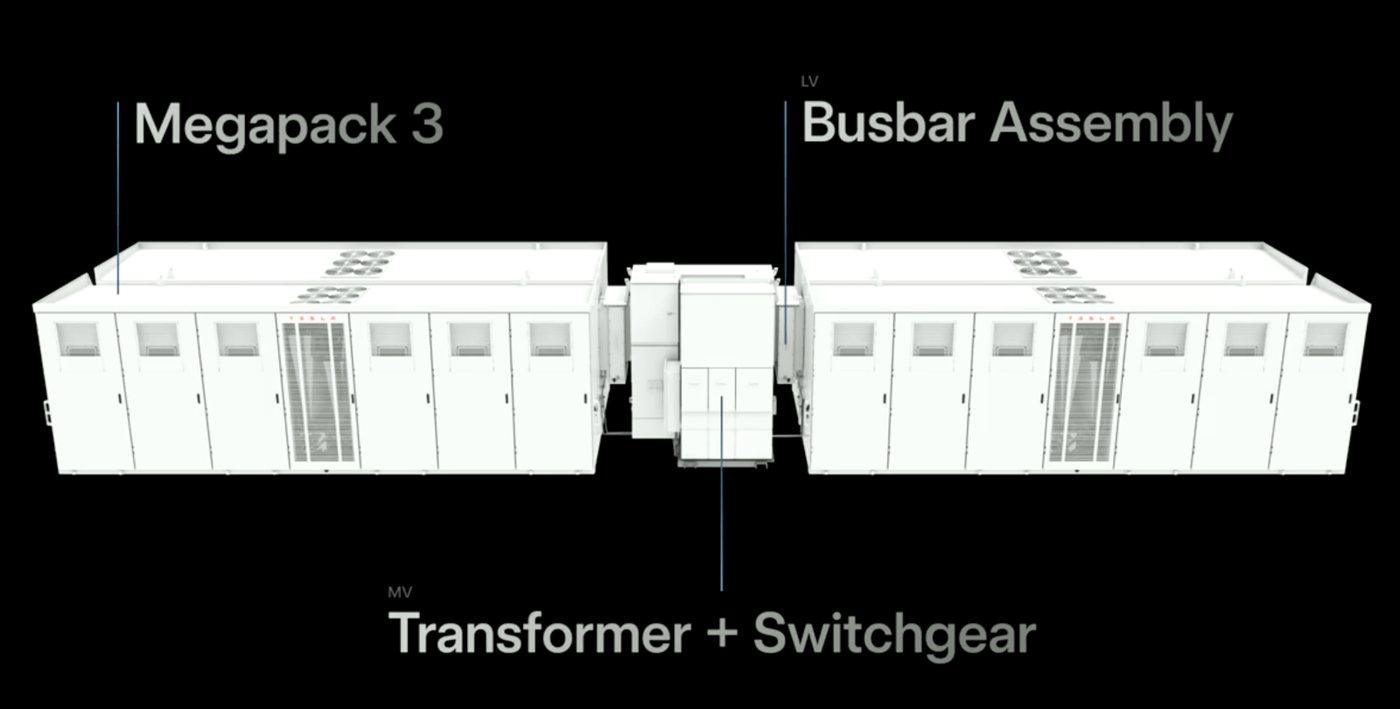
Tesla's energy division has become an increasingly important part of the company's results as growth in its core car business has slowed. The storage business, built around the Megapack utility-scale battery and the Powerwall home battery, has been one of the fastest-growing parts of the group in recent years. A revenue decline in that unit therefore carries weight beyond a single quarter's numbers.
The company's explanation leaves several questions unanswered. It is not clear whether the refunds relate to a specific group of customers, a particular market, or a single supply contract. Nor is it clear whether the payments will continue into future quarters or whether they represent a one-off adjustment. Tesla's shareholder letter offers no further detail on the accounting treatment.
Tariffs have become a significant factor for manufacturers that import components or finished goods into the United States and other markets. For Tesla, which assembles batteries and energy products across several countries, changes to duty rates can alter the final cost of equipment sold to utilities and homeowners. When those costs are passed on and later revised, customers may be owed money back.
Recording refunds as reduced revenue, rather than as an expense, lowers the reported top line and can affect margins depending on how the original sale was booked. Without a breakdown, investors are left to judge whether the 16% decline reflects weaker pricing, the refunds, or a combination of both.
The quarter's deployment growth suggests demand for Tesla's storage products remains firm. Utilities continue to commission large battery installations to support grids increasingly reliant on renewable generation, and home storage is being taken up in markets where electricity prices are volatile. That backdrop makes the revenue fall more notable, since it occurred against a rising volume of installed capacity.
Tesla has not said whether it expects further tariff-related adjustments in the coming quarters. The shareholder letter's brief reference to the refunds offers no guidance on their scale or timing, leaving the energy division's revenue trajectory uncertain heading into the end of the year.
7