

Business 140
BMW Chief Says China-Made iX3 Will Stay Profitable Despite Deep Price Cuts
In this issue
Business 140
BMW Chief Says China-Made iX3 Will Stay Profitable Despite Deep Price Cuts
Culture 149
Max Mara champions understated elegance at Milan Fashion Week
Economy 33
Bitcoin and Ethereum Surge to Levels Last Seen in January
News 131
Trump Tells UN Iran Faces Choice Between Deal and Annihilation
Politics 108
US Lawmakers Move to Permanently Ban Chinese Cars
Sports 245
MINI to Debut New Adventure SUV at Rebelle Rally
Technology 163
Chevrolet Builds Two Corvette Generations at Once for the First Time
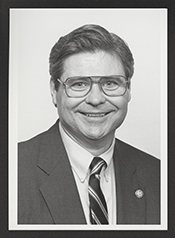
The Dukes of Hazzard actor built a career that moved from a defining television role to two terms in the United States Congress.
By Eleanor Ellington · 4 min read
Ben Jones’s life offered a version of reinvention that now feels familiar but was far less common when he attempted it: take a powerful public identity created by television and test it in the harder arena of elected office.
Jones, who played Cooter Davenport in The Dukes of Hazzard before serving two terms in the U.S. House, died on Sunday, August 9, aged 84. His wife said he suffered a heart attack at home in Washington, Virginia, while waiting to watch an Atlanta Braves game. The local sheriff confirmed his death.
His first enduring role was not glamorous. Cooter was the mechanic in fictional Hazzard County, the man who kept cars running and helped Bo and Luke Duke out of trouble. Jones played him for all seven seasons of the series between 1979 and 1985.
Yet a supporting character became a personal brand that lasted for decades. Jones embraced the association, eventually building Cooter’s stores and attractions around the show’s memorabilia and fan culture. In a media business full of actors eager to escape the parts that typecast them, he chose the opposite strategy: ownership of the identity.
That makes the political chapter more interesting. Jones was not simply a celebrity making a symbolic campaign. A Democrat in Georgia, he won election to the House in 1988 and served from January 1989 to January 1993. The official House record places him in the 101st and 102nd Congresses.
Redistricting helped end that tenure, but Jones remained willing to compete. In 1994 he challenged Newt Gingrich in Georgia’s 6th District. The official count gave Gingrich 119,432 votes and Jones 66,700. Gingrich’s victory came in the Republican wave that would take him to the speakership.
For anyone interested in leadership, Jones’s story is a useful reminder that recognition and authority are different assets. Television made him known. Winning a congressional district required a separate relationship with voters. Serving in the House required still another set of skills, constraints and compromises.
He also understood the durability of audience loyalty. After politics, he did not pretend his television past had become irrelevant. Cooter’s became a way to convert memory into a community, a business and an ongoing public role. Jones remained available to the people for whom The Dukes of Hazzard was not merely an old programme but part of their cultural vocabulary.
The show’s legacy became increasingly contested because the General Lee carried a Confederate battle flag. Jones defended the series and its Southern symbolism when the issue returned to public debate. That position ensured that his later cultural role was not purely nostalgic; he remained part of an argument about memory, regional identity and how popular entertainment ages.
There is no need to simplify that record to recognise its singularity. Jones was an actor, a federal lawmaker, a losing challenger to a future House speaker and, finally, a businessman and public ambassador for the fictional town that first made him famous.
His career therefore offers a broader lesson about public identity. A person can change arenas without fully discarding the identity that opened the first door. Jones carried Cooter into politics, and he carried the experience of Congress back into a life built around fans, history and American popular culture.
Image: Ben Jones during his congressional career. Image credit: Collection of the U.S. House of Representatives, Gift of the U.S. Association of Former Members of Congress.
70