Business 202
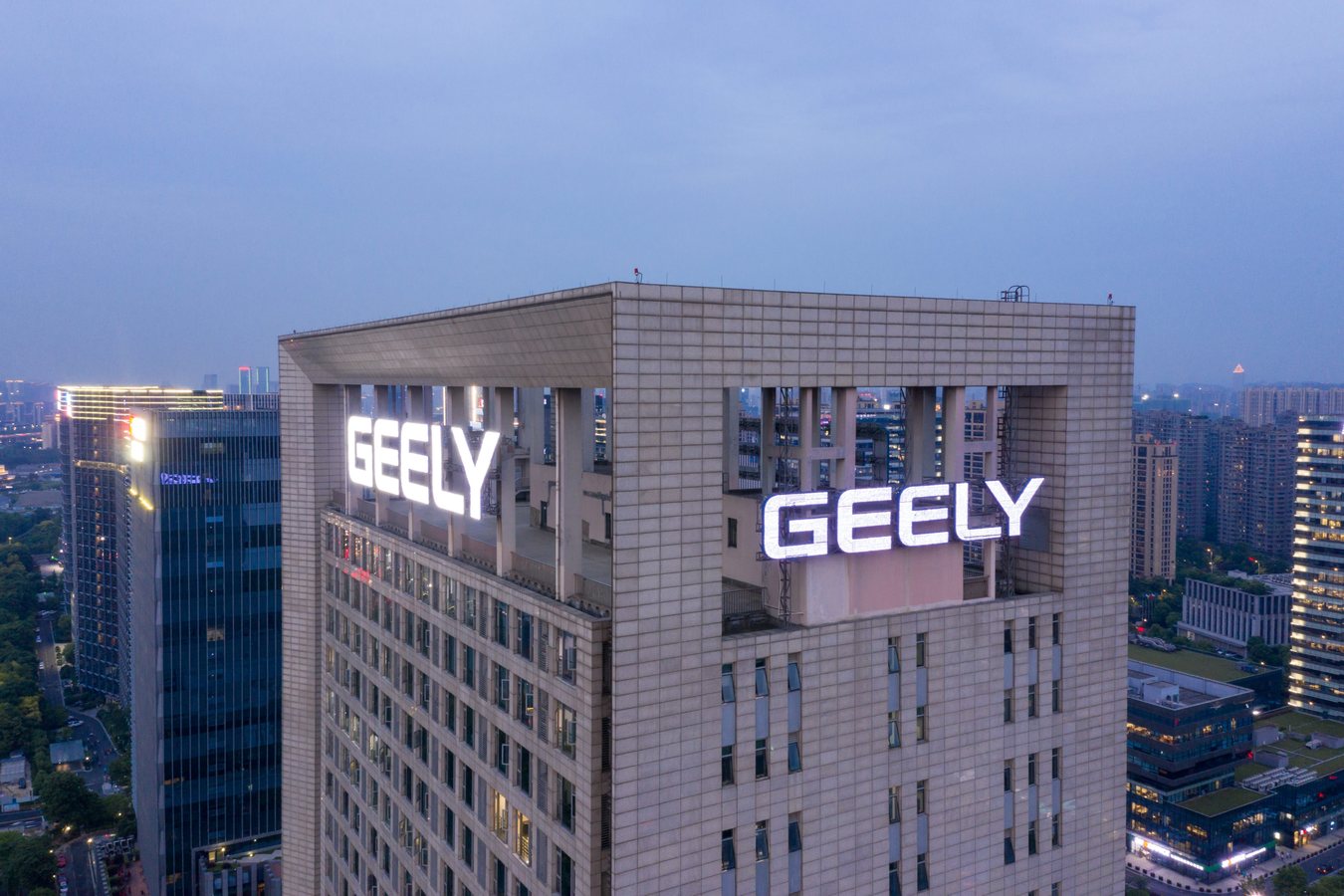
Geely Confirms Canadian Launch for 2027
In this issue
Business 202
Geely Confirms Canadian Launch for 2027
Culture 230
GT500E-Style 1967 Ford Mustang Fastback with 437 Stroker V8 Heads to Auction
Economy 37
Russia's EV Share Overtakes US as Fuel Shortages Bite
News 149
Weekly Exercise Linked to Slower Memory and Movement Decline in Parkinson's Patie…
Politics 111
Trump Names Katie Zacharia as White House Press Secretary
Sports 265
Southampton to Host Portsmouth in Scheduled Fixture on 11 October 2026
Technology 263
GAC Aion V Review: Odd Looks, Premium Cabin, £24,000 Price

The British actor will lead an eight-part television revival that brings Alex Murphy back into a world of corporate power and rapidly advancing technology.
By Eleanor Ellington · 5 min read
Dan Stevens is stepping into one of science fiction’s most unforgiving suits. The British actor will play Alex Murphy and RoboCop in Prime Video’s new television series, taking on a character whose appeal has always depended on a contradiction: he looks like the perfect machine, but the story only works if the man inside refuses to disappear.
Prime Video has ordered eight episodes. The official premise is clean and contemporary. A giant technology conglomerate persuades a city to put a powerful robot on its police force. The robot contains the consciousness of a beloved officer who has died. Stevens plays that officer, turning a corporate demonstration of hardware into a struggle over memory, identity and ownership.
It is an intriguing role for an actor whose career has rarely stayed in one lane. Stevens became famous as Matthew Crawley in Downton Abbey, then moved into far stranger territory with FX’s Legion, a series built around a protagonist who could not always trust his own mind. His film credits include Beauty and the Beast and Godzilla x Kong: The New Empire, while he is also set to appear in the second season of Dexter: Resurrection. RoboCop will require him to combine the authority of an action lead with the internal conflict of a man whose body has effectively become institutional property.
Peter Ocko is the writer, showrunner and an executive producer. James Wan, Michael Clear and Rob Hackett are executive producing through Blumhouse Atomic Monster. Michael Miner and Ed Neumeier, co-creators and co-writers of the original RoboCop, are also executive producers. Amazon MGM Studios is producing. Wan is therefore a significant creative and producing presence, but he has not been announced as the director of the series.
The original film, directed by Paul Verhoeven and released in 1987, starred Peter Weller as Murphy. It remains striking because its muscular action was inseparable from its satire. The film’s Detroit was a place where private business had ambitions to manage public institutions, where news became entertainment and where a dead employee could be rebuilt as a corporate asset. That mixture of brutality and intelligence made RoboCop a durable cultural object rather than a one-film gimmick.
The franchise continued with sequels, television shows, animation, comics and games. Weller returned for RoboCop 2, Robert Burke took over for RoboCop 3, and Joel Kinnaman led the 2014 film reboot. Every version has inherited the same challenge: the armour is iconic, but the iconography alone cannot carry the story.
That is why the timing of the Prime Video series matters. A technology company pitching a city on automated policing now sounds less like a cartoon of corporate ambition and more like a plausible meeting agenda. Artificial intelligence, surveillance tools, autonomous systems and privately controlled infrastructure have moved from speculative fiction into daily business and policy conversations. James Wan has said that the original film’s questions about technology, identity and who corporations actually serve have only become more urgent.
For a series, there is room to explore those questions at a slower pace. Eight episodes can examine the mechanics of Murphy’s return, the people who remember him before the transformation and the corporation that has its own definition of what RoboCop is for. It can also ask a leadership question buried inside the premise: if an institution can redesign a person to deliver a desired outcome, where does accountability sit when that person begins to resist?
Prime Video has not announced a premiere date. Stevens’ casting is nevertheless the moment when the revival stops being an abstract piece of intellectual property and becomes a performance to anticipate. The suit may sell the image, but the real test will be whether this RoboCop can make the human cost of efficiency feel as sharp as it did in 1987.
63