Business 216
Volkswagen Recalls Thousands of EVs Over Battery Risk
In this issue
Business 216
Volkswagen Recalls Thousands of EVs Over Battery Risk
Culture 261
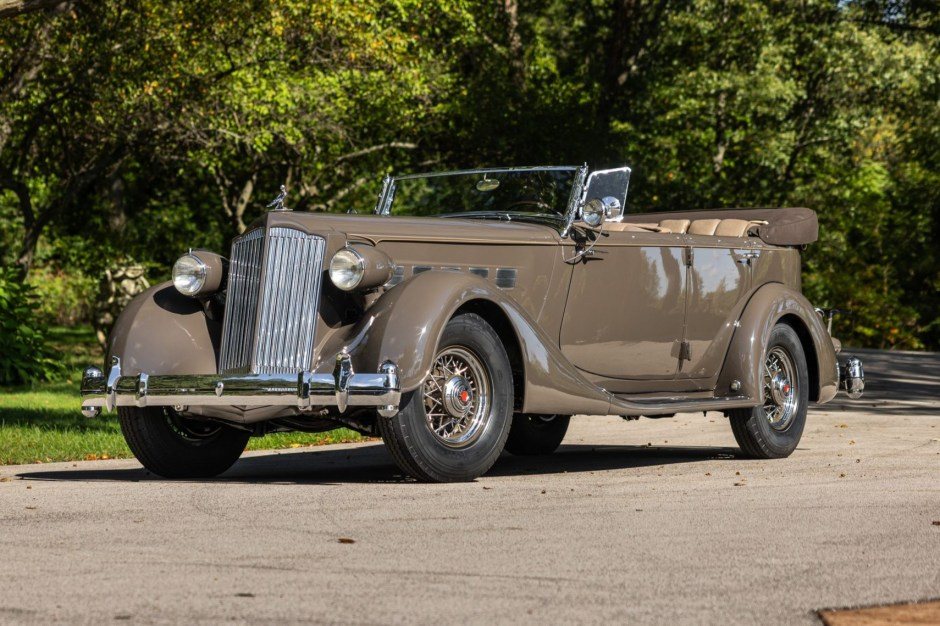
1936 Packard Super Eight Phaeton Heads to Auction in Indiana
Economy 40
US Petrol Prices Set Record for Longest Stretch Above $4 a Gallon
News 153
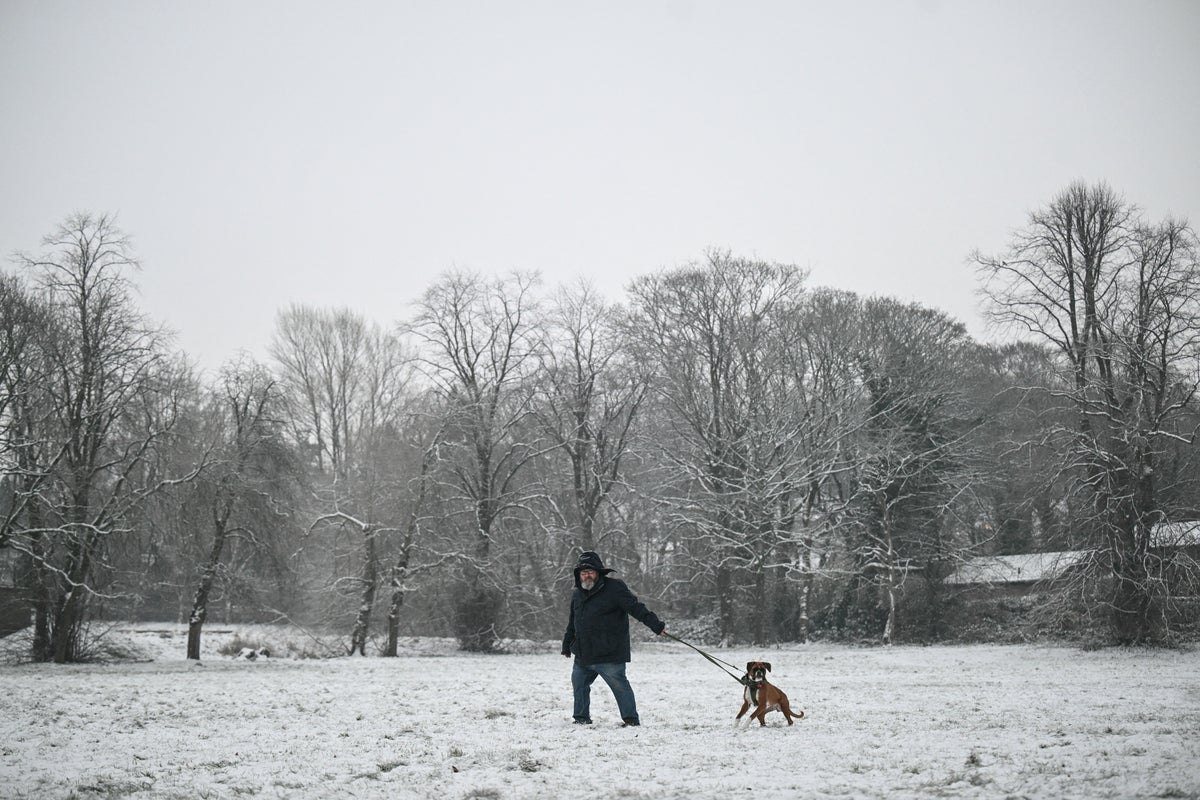
Forecasters Issue Winter Snow Verdict for the UK
Politics 113
Trump Appoints Barbera Thornhill to Lead US Anti-Trafficking Office
Sports 277
Burnley to Host Wolves in Friday Night Championship Clash
Technology 304
Porsche's Mission S Sets Design Template for Next 911
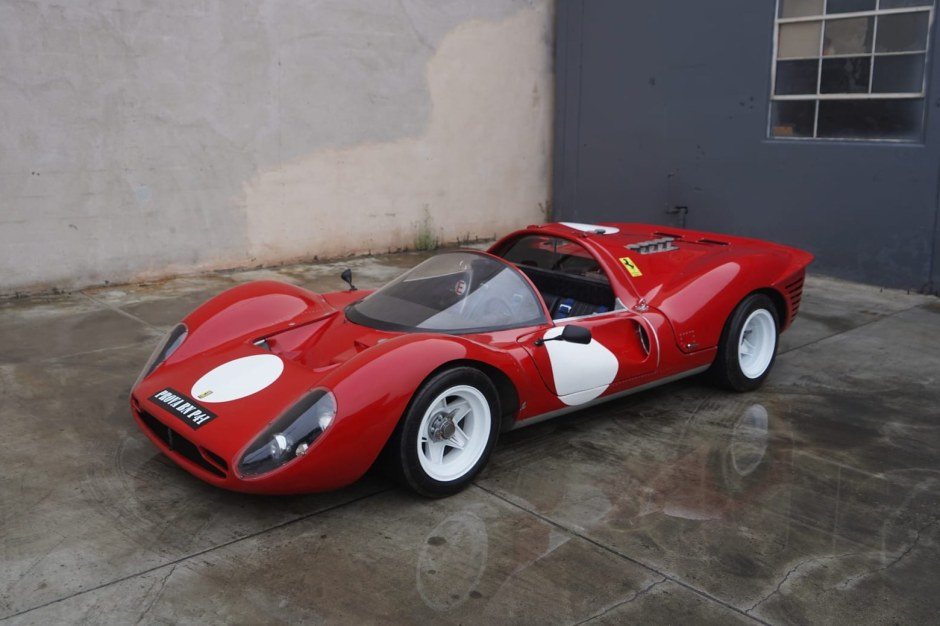
A one-off Ferrari 412P re-creation built by Texas specialist Bob Norwood in 1982, using a shortened 365 GT4 BB chassis and a 512 BB flat-12, is offered for sale in California with documented history and a Montana title.
By George Kensington · 4 min read
A Ferrari 412P re-creation built by the Texas restoration specialist Bob Norwood in 1982 has been offered for sale on dealer consignment in Costa Mesa, California. The car, which is said to be the first of Norwood's P3/4-platform recreations and the only one based on a genuine Ferrari chassis, carries a Montana title describing it as a 1979 Ferrari P4.
The build began with the shortened chassis of a wrecked Ferrari 365 GT4 BB, purchased by Norwood after it was brought to Texas from England by an American collector along with alloy P3 nose and tail sections. During the 1982 build the frame was shortened from 98.8 inches to 94.8 inches and fitted with a spaceframe structure. The alloy panels were reportedly used as bucks to shape widened fiberglass body panels to fit the BB frame's wider tracks, while the door skins, cowl and rear bulkhead are of alloy construction. Alloy fuel cells sit in the side pods, shielded by T-6 alloy belly pans.
Power comes from a 4.9-litre F102B flat-12 and five-speed manual transaxle taken from a Ferrari 512 BB, installed along with period Ferrari running gear. The engine features an aluminium block and cylinder heads, dual overhead camshafts on each bank, dry-sump lubrication and quad triple-barrel Weber carburetors. Service in September 2025 by Team CJ in Austin, Texas, is said to have included replacement of the timing belts, alternator belt and coolant hoses, cleaning of the fuel tank selector valve, fluid changes and a power-wash of the engine bay. The gearbox fluid was also changed.
Finished in red, the car shows various chips, cracks and scratches. It features faired-in headlights, a plexiglass wraparound windshield, dual side mirrors, intake scoops passing through the doors, a roll hoop, a rear spoiler and horizontal vents behind the rear wheels. White-painted 15-inch Campagnolo alloy wheels are secured by three-eared knock-offs and wrapped in Michelin TB5R tyres at the front and TB15 tyres at the rear. Stopping is handled by four-wheel ventilated disc brakes, with a pre-sale service said to have refreshed the calipers and master cylinder and replaced the hoses. Suspension uses unequal-length wishbones and coilover shock absorbers all round, with double coilovers at each rear wheel.
The cockpit houses fixed-back aluminium bucket seats trimmed in black upholstery, with colour-matched trim over the sills, centre tunnel and rear bulkhead. Black rubber floor mats, a gated shifter, blue Willans four-point harnesses and toggle-style switchgear on the centre console are included. A MOMO padded steering wheel sits ahead of a black crinkle-finished dashboard housing Veglia Borletti instrumentation, including an 8,000-rpm tachometer and gauges for oil pressure, amperage and coolant temperature. The car has no odometer and its mileage is unknown.
The 412P model was introduced in 1966 as a customer version of Ferrari's 330 P3 race cars, using carbureted induction in place of the fuel injection fitted to the works racers. Four examples were constructed, the final two built on unused P3 chassis in 1967 as the works team shifted to the P4 platform en route to winning the International Championship for Sports-Prototypes.
After completion, the re-creation appeared on the cover of a 1982 issue of Petersen's Sports Car Classics magazine and was subsequently sold to the founder of the Dallas Grand Prix, who displayed it in 1984. By 1990 it had reached the UK, where it spent time under the ownership of Lord Charles Brocket. After a decade under Belgian ownership it returned to the US and remained with its previous owner until his death in 2024. The sale includes historical documents, photographs of the car's construction by Norwood and photos taken in early 2025.
7