
Business 139
Stellantis Adds Flatbed Opel Vivaro with New 148hp Turbodiesel
In this issue
Business 139
Stellantis Adds Flatbed Opel Vivaro with New 148hp Turbodiesel
Culture 149
Max Mara champions understated elegance at Milan Fashion Week
Economy 33
Bitcoin and Ethereum Surge to Levels Last Seen in January
News 131
Trump Tells UN Iran Faces Choice Between Deal and Annihilation
Politics 107
Republican Judges Defy Supreme Court in Missouri Redistricting Fight
Sports 245
MINI to Debut New Adventure SUV at Rebelle Rally
Technology 163
Chevrolet Builds Two Corvette Generations at Once for the First Time
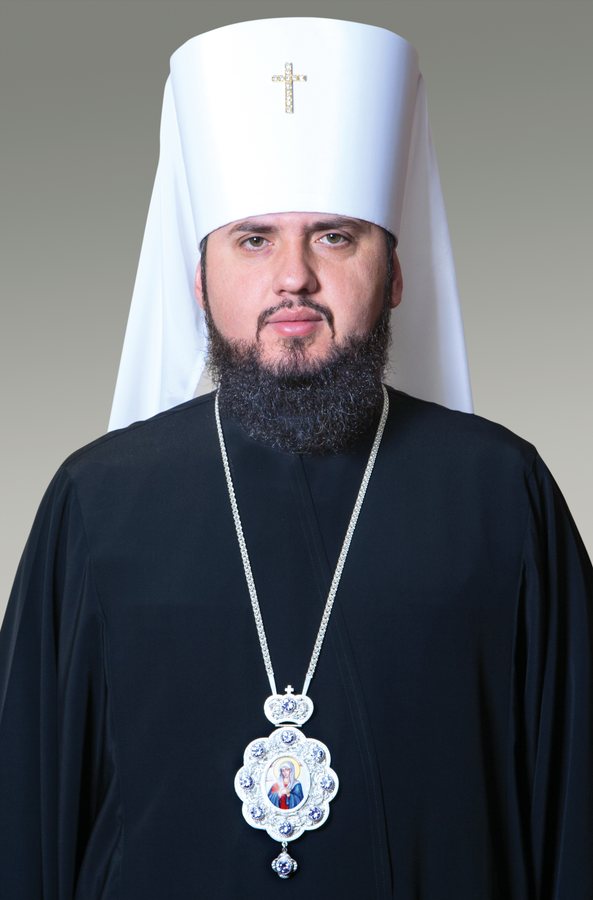
The Ukrainian Orthodox primate’s August message treats mature leadership as service to a standard beyond the leader: Christ, tested tradition and disciplined self-scrutiny.
By Eleanor Ellington · 6 min read
Metropolitan Epiphanius of Kyiv and All Ukraine used his sermon for the tenth Sunday after Pentecost to make a point about religious unity that also speaks to leadership. He urged believers to hold firmly to the unity of the Church in Christ, listen to its fathers and teachers, and avoid temptation. In 2026, the tenth Sunday after Pentecost fell on August 9.
The order of those ideas matters. Epiphanius begins with Christ, not with the leader. A bishop, priest or teacher may carry responsibility, but none becomes the ultimate center of the Church. That principle was stated plainly on June 29, when he reflected on the apostles Peter and Paul and said the Church is not Peter’s or Paul’s but Christ’s.
For anyone interested in leadership, that is a strong limit on ego. The leader matters precisely because the role points beyond the person. Authority can organize a community, set direction and make decisions, but its legitimacy weakens when the officeholder begins to treat loyalty to himself as the same thing as loyalty to the mission.
Peter and Paul provide an unusually useful example because they were not interchangeable personalities. Their biographies, temperaments and ministries differed. Yet their joint place in Christian memory does not require one to absorb the other. Unity is achieved by a common reference point rather than by forcing every person into the same mold.
The second part of Epiphanius’s sermon — listen to the fathers and teachers — adds the role of mentorship. A mature leader does not pretend to be self-created. In the Orthodox tradition, teachers stand in a chain of transmission. Their importance comes from their ability to hand on a received faith, not from inventing a personal system that ends with them.
Epiphanius reinforced that idea in March, when he emphasized true church teaching, apostolic continuity and sacramental life. The implication is that leadership is accountable to an inherited standard. Experience, memory and tested practice are not obstacles to initiative; they are the context that makes initiative intelligible.
That does not mean tradition should be confused with inertia. A living tradition is repeatedly interpreted in new circumstances. The discipline comes from knowing which parts are foundational and which are matters of form. Leaders who cannot distinguish the two either freeze an institution unnecessarily or change it so rapidly that continuity becomes impossible.
The third element — avoiding temptation — makes the sermon personal. Leadership failures often begin before any formal rule is broken. A person starts believing praise too easily, treats disagreement as disloyalty, chooses the flattering adviser over the honest one, or confuses the desire to win with the duty to be right. Christian language calls those moments temptations because they distort judgment before they become visible decisions.
Epiphanius spoke in April about the Church as a spiritual unity in which believers are connected to one another and to Christ and can grow personally in faith. That is a useful measure of leadership outcomes. A strong leader should not produce permanent dependence. The community should become more capable of responsibility, judgment and mutual support.
The institutional dimension is visible too. In July the Orthodox Church of Ukraine held an expanded Bishops’ Council under Epiphanius’s chairmanship. Councils distribute deliberation across a body of leaders and express the Orthodox idea of synodality. Yet formal shared governance succeeds only if participants have the character to use it honestly rather than as another arena for factional competition.
The sermon’s warning against temptation therefore belongs beside its appeal to unity. A team can have a shared mission on paper and still fail because members compete for recognition. A leader can speak about service while quietly building a personality cult. A tradition can be invoked selectively to protect status. The inward discipline of motive is what keeps outward principles from becoming slogans.
For a modern magazine audience, the attraction of Epiphanius’s framework is that it does not romanticize leadership. It assumes that authority is necessary and dangerous at the same time. It needs a center outside the leader, mentors and traditions that can correct the leader, and habits of self-examination that reveal when ambition has started to replace purpose.
Pentecost provides an appropriate symbolic backdrop. The feast is understood as the birth of the New Testament Church. Ten Sundays later, the question becomes one of endurance: how does a community survive once the first burst of energy is replaced by routine, disagreement and the ordinary pressures of institutional life?
Epiphanius’s answer is not a management technique, but its leadership logic is clear. Know what is larger than you. Learn from those who carried the responsibility before you. Treat your own impulses as something to examine rather than automatically obey. In religious terms, that means Christ, the fathers and discernment. In leadership terms, it means authority without ownership.
65