
Business 139
Stellantis Adds Flatbed Opel Vivaro with New 148hp Turbodiesel
In this issue
Business 139
Stellantis Adds Flatbed Opel Vivaro with New 148hp Turbodiesel
Culture 150
Max Mara champions understated elegance at Milan Fashion Week
Economy 32
Bitcoin and Ethereum Surge to Levels Last Seen in January
News 131
Trump Tells UN Iran Faces Choice Between Deal and Annihilation
Politics 107
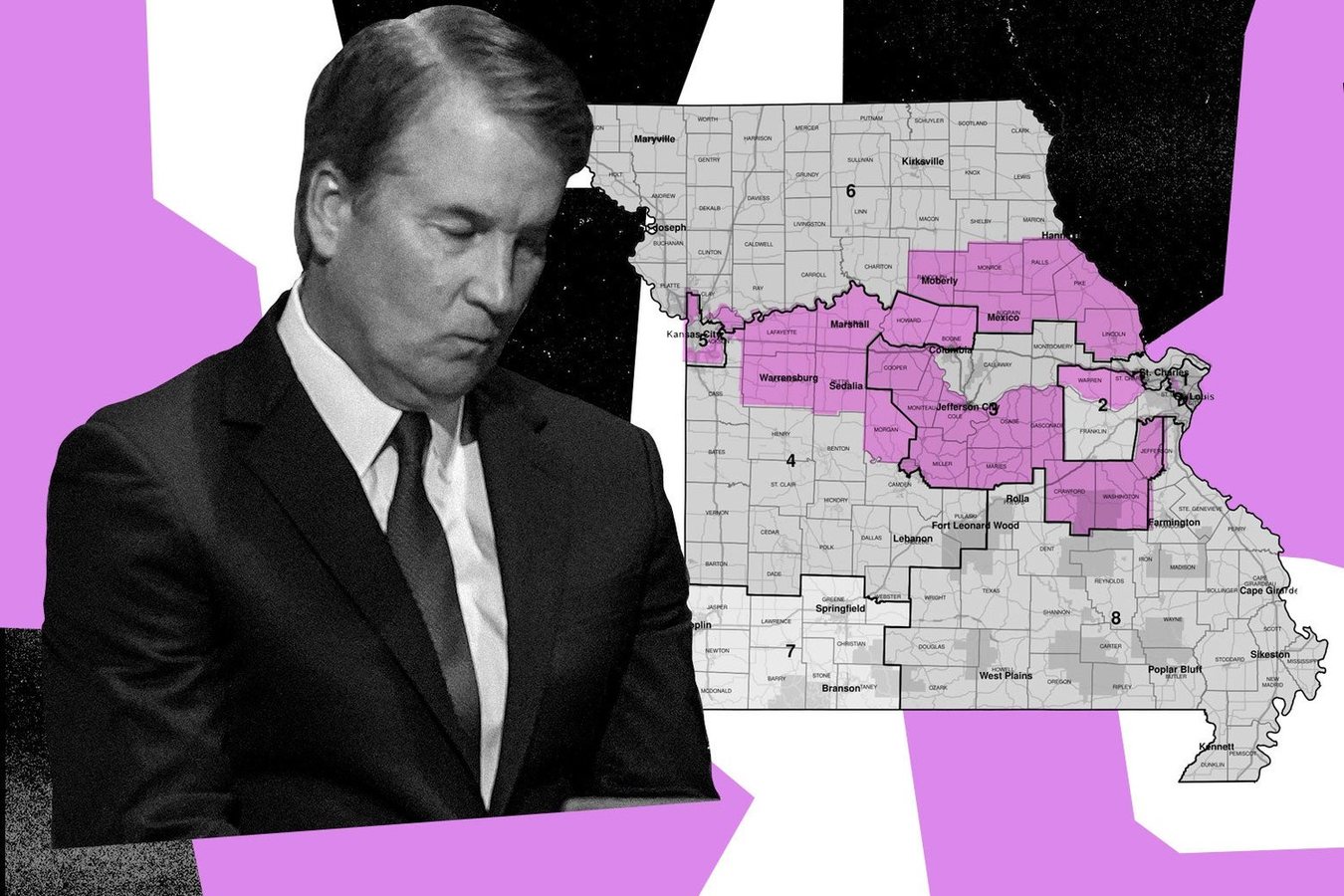
Republican Judges Defy Supreme Court in Missouri Redistricting Fight
Sports 245
MINI to Debut New Adventure SUV at Rebelle Rally
Technology 163
Chevrolet Builds Two Corvette Generations at Once for the First Time

Women’s 50.1% share of US payroll jobs challenges a long-standing male identity built around provision. The practical response is adaptation, not nostalgia for a labour market that no longer exists.
By Charlotte Redford · 5 min read
For much of modern working life, being a man and being the primary breadwinner were treated as overlapping identities. America’s latest employment data show why that link is becoming less reliable. Women accounted for 50.1% of nonfarm payroll jobs in July 2026. That is only a slight majority, but it caps a decades-long narrowing from a gap of nearly seven million jobs in men’s favour in the early 1990s.
The change is not a verdict on male usefulness. It is a verdict on the assumption that the labour market will always reward the occupations men traditionally dominate more strongly than the occupations women traditionally dominate. Indeed Hiring Lab argues that recent hiring has increasingly favoured health care, education, social assistance and other service sectors with high female representation.
Between February 2025 and February 2026, jobs held by men fell by roughly 142,000 while those held by women rose by about 298,000. In July, private education and health services added 25,000 jobs and health care and social assistance added 22,600. When the economy’s incremental demand comes from sectors like these, the gender balance shifts even without a sudden cultural revolution.
There is no reason to turn the trend into a story of industrial extinction. Construction added about 22,000 jobs in July and manufacturing added around 5,000. BLS expects manufacturing employment to be roughly flat over the decade to 2034, with gains and losses inside different industries. Technical, infrastructure and production careers remain important. What changes is the guarantee that they will provide the only obvious route to stable male employment.
That makes adaptability part of modern ambition. A man choosing a career in nursing, therapy, teaching or another care profession is not retreating from responsibility; he is responding rationally to labour demand. The same logic that encouraged women into engineering and finance should work in reverse. Status should follow competence and contribution, not the gender history of an occupation.
The issue reaches into relationships because earnings shape power, confidence and expectations. If a partner’s career is growing faster, she may become the higher earner. Fortune’s phrase “stay-at-home boyfriend” exaggerates the national statistics, but it resonates because it names a scenario that is more socially visible: men can temporarily earn less, step back or take more responsibility at home without the relationship automatically violating a social rule.
The data, however, show that the most common transformation is a two-earner family. Pew Research Center found that 52% of different-sex couples with children under 18 had two full-time working parents in 2025, up from 31% in 1975. The arrangement in which the father worked full time while the mother was not employed fell from 42% to 23%.
Nor has domestic work simply switched sides. Among couples with two full-time working parents, 52% say mothers do more day-to-day parenting and only 10% say fathers do more. For household chores, 43% say mothers do more and 17% say fathers do more. A woman’s stronger position in paid work can therefore coexist with a heavier unpaid workload.
Men face a choice in how to interpret that reality. One response is to defend a breadwinner status that the economy can no longer guarantee. Another is to separate responsibility from rank. Providing for a household can mean earning the larger income, but it can also mean retraining, maintaining employability, taking on care when a partner’s job is stronger, or making family decisions that maximise the household rather than the ego of one person.
NBER research on younger men has also shown that more attractive digital leisure, including video games, may have contributed to some decline in market work hours. It would be simplistic to blame gaming for the current gender shift, but the research underscores a broader point: labour-market outcomes reflect choices as well as job supply. Building skills and staying engaged matter when the economy changes.
The male breadwinner is not disappearing as a possible role. It is disappearing as an entitlement. In a labour market where women can hold a majority of payroll jobs and where care sectors are major sources of demand, status will increasingly follow adaptation. The more useful masculine ideal may be less about always earning the most and more about being the person who can adjust, contribute and carry responsibility when the old map of work no longer matches the terrain.
55