Business 199
Honda Elevate Facelift Brings Rugged Styling and Ventilated Seats to India
In this issue
Business 199
Honda Elevate Facelift Brings Rugged Styling and Ventilated Seats to India
Culture 216
Batmobile from Batman Returns heads to auction with $7m estimate
Economy 37
Russia's EV Share Overtakes US as Fuel Shortages Bite
News 147
California Grants Three-Day Return Right on Used Cars
Politics 110
Trump Urges Republicans to Vote by Mail After Years of Criticising the Practice
Sports 262
West Ham United to Host Queens Park Rangers in October 2026 Championship Fixture
Technology 249
BMW Builds One-Off M5 Touring Police Car With 717bhp Hybrid V8
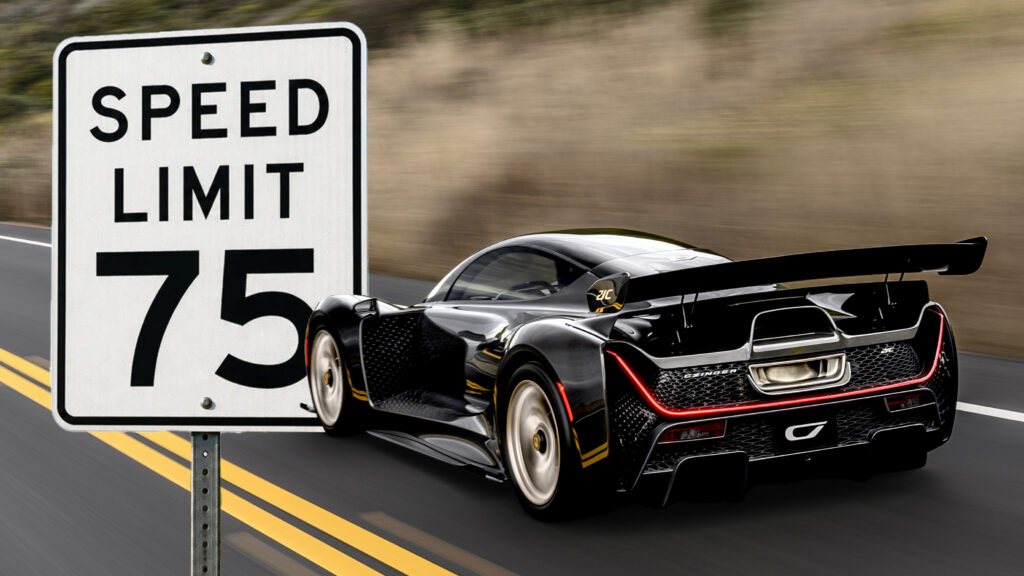
Missouri Governor Mike Kehoe has signed Senate Bill 1408, raising the maximum speed limit on rural interstates and freeways from 70 mph to 75 mph. The law takes effect on August 28, but drivers must continue obeying existing posted limits until the Missouri Department of Transportation completes road assessments and installs new signs.
By Eleanor Ellington · 3 min read
Missouri has officially authorised a higher speed limit on its rural interstates and freeways, but motorists will need to keep their foot off the accelerator for a while longer. Governor Mike Kehoe has signed off on Senate Bill 1408, which raises the maximum speed limit from 70 mph (113 km/h) to 75 mph (121 km/h) on selected rural highways. The legislation, sponsored by Republican State Senator Jamie Burger, takes effect on August 28, yet the state's drivers will not be able to legally reach the new speed until the Missouri Department of Transportation (MoDOT) completes a review of eligible roadways and erects fresh signage.
MoDOT has been tasked with determining which stretches of road will qualify for the higher limit. Potential candidates include rural sections of I-70 and I-49 around the Kansas City metro area, although no specific locations have been approved so far. The agency says it will evaluate each roadway individually, taking into account traffic volume, safety records, crash history, and terrain. MoDOT director Ed Hassinger emphasised the need for caution in the process. “There’s a balance to be struck here between efficient traffic movement and safety, so we’re taking careful consideration of any potential location, what the roadway is like there and how people use it,” he said.
Until the assessment is finished and new 75-mph signs are installed, the existing posted limits remain legally binding. Missouri State Highway Patrol sergeant Justin Ewing confirmed that officers will continue enforcing the current limits without exception. “For now, the posted speed limit, whatever sign you see on the roadway, is going to be the speed limit that we enforce,” he said. “We will continue to enforce those speed limits just like we always have.”
The delay has caused some frustration among residents who expected the change to be immediate. Speaking to local media, resident Cian Hine questioned why the law cannot be applied straight away. “I would say if the law is in effect, then make it in effect,” Hine said. “You know, just because the speed limit signs may not actually say that at the time, if the law is there, then uphold the law.”
The gap between the legislative change and its practical application stems from the fact that MoDOT needed the Governor's signature before it could allocate time and resources to analyse potential locations. The agency says it has a responsibility to set limits that are “reasonably safe” for each roadway, and it is now evaluating eligible locations individually. Officials have not provided a timeline for when the new signs will be installed, meaning drivers should expect the 70-mph limit to remain in force on most rural highways for the foreseeable future.
58