
Business 153
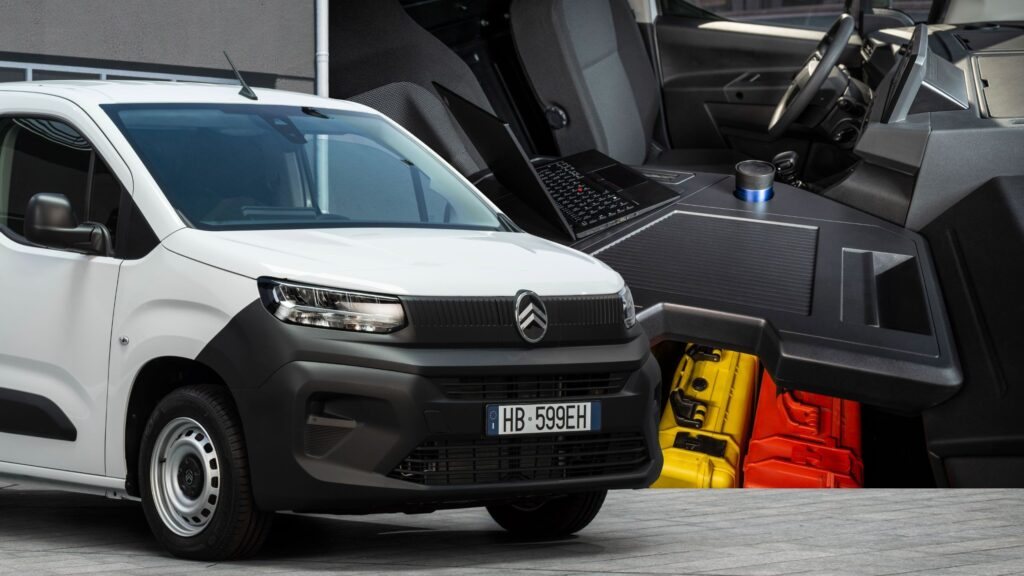
Stellantis Adds Budget Trims and Mobile Office to Citroen Berlingo and Opel Combo…
In this issue
Business 153
Stellantis Adds Budget Trims and Mobile Office to Citroen Berlingo and Opel Combo…
Culture 169
1996 Porsche 911 Carrera Coupe in Grand Prix White Heads to Auction
Economy 33
Bitcoin and Ethereum Surge to Levels Last Seen in January
News 132
Sarandon and Einbinder arrested at anti-Netanyahu protest in New York
Politics 107
US Lawmakers Move to Permanently Ban Chinese Cars
Sports 248
Dumont and Perez settle bitter rivalry at UFC Vegas 121
Technology 175
Family Sues Tesla Over Model X Sudden Acceleration Claim

Warsaw is balancing Ukraine’s urgent need against its own readiness, with NATO guarantees and U.S. production determining how much risk it can take.
By Edward Beaumont · 4 min read
Leadership in an alliance is often measured in decisions made with incomplete comfort. Poland’s debate over another transfer of Patriot missiles to Ukraine is one of those decisions. Prime Minister Donald Tusk said on 30 July that Warsaw would consider further aid, including Patriots, after previously saying that Poland did not have enough stock to plan another release.
The reversal did not come in a vacuum. A Russian mass strike on Ukraine spilled into Polish airspace, and an armed missile fell in the Lublin region. The incident made the strategic trade-off unusually concrete. Poland needs Patriot interceptors because it lives beside the war, yet helping Ukraine destroy Russian missiles farther east can itself reduce the danger reaching Polish territory.
Warsaw has already taken that risk once. Poland transferred a small number of PAC-3 missiles after consultations involving NATO leadership and U.S. military command in Europe. Defence Minister Wladyslaw Kosiniak-Kamysz said the quantity stayed within a margin that did not damage national air-defence capability.
The more revealing detail was the assurance behind the transfer. Deputy Defence Minister Cezary Tomczyk said Poland had an understanding with NATO Secretary General Mark Rutte and the United States that it would receive rapid reinforcement if a serious threat emerged. That commitment allows a government to think about its stockpile as part of an alliance network rather than as an isolated national reserve.
But confidence only works if the replacement system is real. Patriot missiles remain scarce, and factory schedules do not move at the pace of air raids. Ukraine has asked around 40 partners to hand over missiles from existing inventories and replenish them later. That request turns every donation into a judgement about how much uncertainty a government is willing to carry.
Poland is trying to reduce that uncertainty through industry. Deputy Defence Minister Magdalena Sobkowiak-Czarnecka proposed trilateral Patriot missile production with the United States and Ukraine, positioning Poland as a secure manufacturing location. Warsaw has also announced arrangements for servicing PAC-3 missiles in Europe. Both measures aim to shorten the distance between demand and replenishment.
There is also a broader question of technological control. Ukrainian President Volodymyr Zelenskyy said in late July that President Donald Trump had agreed to provide a license for Patriot missile production in Ukraine. The White House had not publicly confirmed that statement at the time. Whatever the final arrangement, access to U.S. technology will determine how quickly European capacity can expand.
For policymakers, the numbers matter, but the sequence matters more. Tusk said in mid-July that there would be no further transfer because Poland’s stock was small. Two weeks later, after the Russian missile incident, he reopened the possibility. The inventory did not suddenly become abundant; the perceived cost of inaction rose.
That is why the next Polish decision will carry significance beyond the missiles involved. If Warsaw releases another batch, it will signal that it trusts NATO’s backfill promises and believes supporting Ukrainian interception is worth drawing down a limited reserve. If it holds back, the reason will likely be the same strategic discipline: no alliance promise can substitute for an interceptor that is not physically available when the radar warning arrives.
65