
Business 140
BMW Chief Says China-Made iX3 Will Stay Profitable Despite Deep Price Cuts
In this issue
Business 140
BMW Chief Says China-Made iX3 Will Stay Profitable Despite Deep Price Cuts
Culture 150
Max Mara champions understated elegance at Milan Fashion Week
Economy 33
Bitcoin and Ethereum Surge to Levels Last Seen in January
News 131
Trump Tells UN Iran Faces Choice Between Deal and Annihilation
Politics 107
US Lawmakers Move to Permanently Ban Chinese Cars
Sports 245
MINI to Debut New Adventure SUV at Rebelle Rally
Technology 163
Chevrolet Builds Two Corvette Generations at Once for the First Time
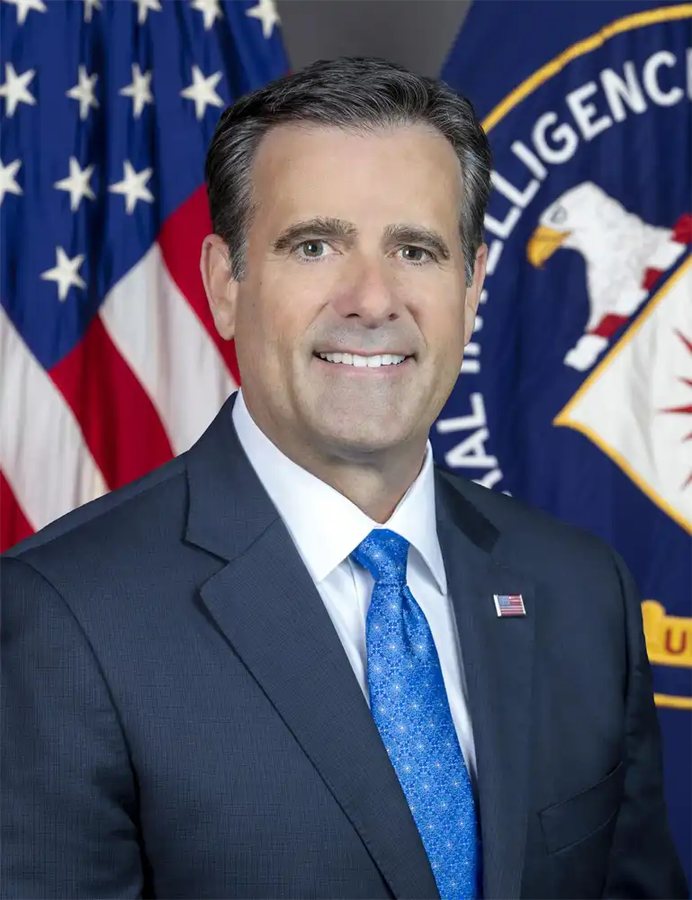
The Atlantic says CIA Director John Ratcliffe has helped preserve free U.S. targeting intelligence for Ukraine. The story is a case study in how personal influence, hard battlefield metrics and hidden capabilities shape policy.
By Edward Beaumont · 6 min read
Leadership in Washington is often measured through budgets, speeches and signed directives. Intelligence policy is different: some of the most important decisions become visible only through their effects or through later reporting. The Atlantic’s account of continuing U.S. targeting support for Ukraine is a case in point.
The magazine reports that the United States still provides Ukraine with intelligence free of charge, including targeting packages for strikes on Russian military positions and energy infrastructure inside Russia. It attributes a significant share of the policy’s survival to CIA Director John Ratcliffe, who took office in January 2025 after previously serving as director of national intelligence.
The core policy is not based on The Atlantic alone. Reuters reported in October 2025 that two U.S. officials confirmed a decision to provide Ukraine with intelligence on long-range energy targets in Russia. In February 2026, Republican Sen. Jerry Moran said publicly that Washington had expanded intelligence sharing the previous autumn to help Ukraine target energy infrastructure deep inside Russia. Those points establish a credible policy trail even though operational details remain classified.
What The Atlantic adds is an account of personal persuasion. According to its sources, Ratcliffe has shown President Donald Trump stark data on Russian battlefield losses and used those numbers to reinforce the idea that Ukraine is not simply consuming Western support but imposing heavy costs on Moscow. The article’s most memorable detail — that Ratcliffe has impressed Trump with those figures on the golf course — is impossible to verify independently and should be understood as sourced colour about private interactions.
The numbers themselves also deserve disciplined reading. Ukraine’s General Staff estimated Russian personnel losses at 42,860 in July. That total includes killed, wounded, missing and captured troops. It was the first month of 2026 above 40,000; the average through the year was about 34,000 per month. The figure may still be strategically significant, but it is not synonymous with deaths and it is not an independently audited Russian total.
Why would those metrics matter politically? Trump has frequently approached alliances and security commitments through visible cost, leverage and performance. A briefing that presents Ukraine as imposing a high attritional price on Russia fits a results-oriented framework better than an argument based only on solidarity. The Atlantic’s narrative suggests Ratcliffe has understood that political language and used it to protect an area of cooperation that costs Ukraine no direct payment but carries considerable strategic value.
That value is evident in long-range targeting. Ukraine now has an expanding ability to strike Russian infrastructure with its own systems. The Associated Press reported this week that Ukrainian forces hit refineries in Bashkortostan and Yaroslavl. In such a campaign, better intelligence can turn range into effect by identifying which assets matter, when they are operating and how they connect to the military effort.
There is, however, a limit to the leadership lesson. Efficiency is not the same as legality. The International Committee of the Red Cross says energy infrastructure is civilian in principle and may be attacked only if a specific facility contributes effectively to military action and its attack offers a definite military advantage. A desire to damage the Russian economy or gain negotiating leverage does not, on its own, turn a civilian refinery or power facility into a lawful target.
The responsibility becomes greater, not smaller, when intelligence is good. Accurate information can help distinguish a genuinely military or dual-use node from a civilian one and can help estimate downstream harm. It should support proportionality and precautions rather than merely make an economic-pressure campaign more efficient.
The consequences of infrastructure warfare are already familiar. A U.N. report in June described how Russian attacks on Ukraine’s energy system during the 2025-26 winter disrupted electricity, heating, water, health care and schools. It also documented Ukrainian strikes on power and heating systems in Belgorod. The legal and human stakes therefore run in both directions.
Ratcliffe’s reported role is ultimately a story about how influence works in a transactional administration. The public record supports the broader intelligence policy; The Atlantic supplies the private narrative explaining why it may have endured. If that narrative is accurate, the CIA director’s leverage has come from translating a complex war into a set of performance indicators the president finds persuasive — while preserving a form of support whose true value is measured not in headlines, but in the quality of decisions made before a weapon is launched.
62