Business 139
Stellantis Adds Flatbed Opel Vivaro with New 148hp Turbodiesel
In this issue
Business 139
Stellantis Adds Flatbed Opel Vivaro with New 148hp Turbodiesel
Culture 150
Max Mara champions understated elegance at Milan Fashion Week
Economy 33
Bitcoin and Ethereum Surge to Levels Last Seen in January
News 131
Trump Tells UN Iran Faces Choice Between Deal and Annihilation
Politics 106
Republican Judges Defy Supreme Court in Missouri Redistricting Fight
Sports 245
MINI to Debut New Adventure SUV at Rebelle Rally
Technology 163
Chevrolet Builds Two Corvette Generations at Once for the First Time
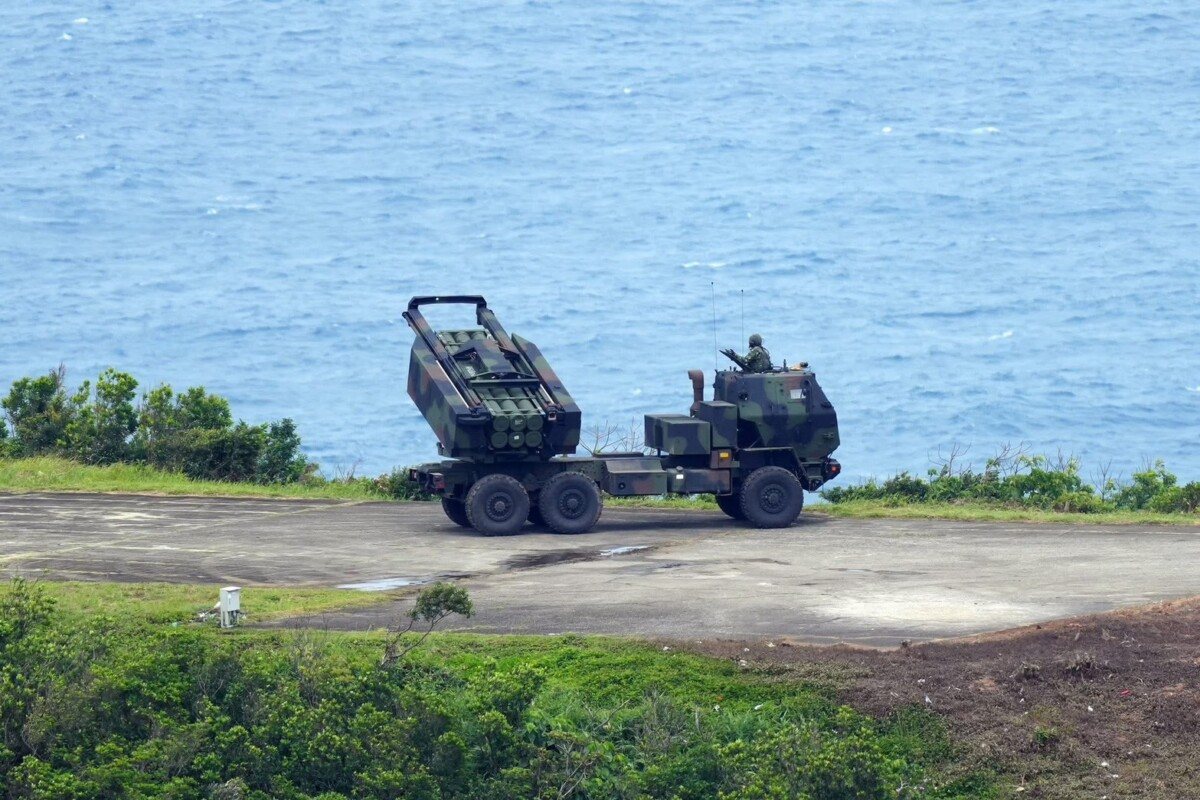
The proposed 16% increase signals political resolve, but its value will depend on priorities, procurement execution and the ability to sustain modernization for years.
By Edward Beaumont · 6 min read
Taiwan’s proposed 2027 defense budget is a statement of intent, but the larger test will be whether the island can turn money into disciplined strategy. Reuters reported that the Cabinet plans to increase the broad NATO-style measure of defense-related spending by about 16%, pushing it above NT$1.1 trillion for the first time. The full proposal is expected on Aug. 20.
The number is deliberately broad. It includes Coast Guard spending, veterans’ retirement payments and special projects alongside the core military budget. In 2026, Taiwan says the NATO-standard total is NT$949.5 billion, or 3.32% of GDP, while the Ministry of National Defense itself has NT$806 billion. The distinction prevents an easy but misleading assumption that the entire increase will buy new weapons.
What the figure does reveal is political direction. Taiwan’s defense ministry says it wants spending to remain at no less than 3% of GDP and to grow steadily. That is a leadership choice with consequences. It commits future governments to a larger security bill and asks taxpayers to accept that deterrence is not a short-term project. It also raises the standard by which the government should be judged: larger budgets require better prioritization, not merely more procurement.
Taiwan’s threat assessment is clear. The MND says increasingly varied military activity by the People’s Republic of China has compressed warning times. Beijing, meanwhile, states that Taiwan is part of China and rejects actions it defines as separatism. These opposing positions create a security environment in which both sides watch not only military movements but the political signals embedded in budgets, exercises and procurement decisions.
Taipei’s answer increasingly favors asymmetric capability and resilience. A special MND program for 2026 through 2033 included precision artillery, long-range missiles, air and missile defense, anti-armor weapons, drones and counter-drone systems. It also listed sustainment, AI-enabled systems and C5ISR. This is a portfolio designed to make military operations against the island more complicated, slower and less predictable.
Yet strategic discipline means resisting the temptation to equate prestige with value. Taiwan’s indigenous submarine program, for example, is a major long-term commitment. Seven follow-on boats are planned after the Hai Kun prototype, with a total program budget of NT$284.0808 billion through 2038. Submarines can add significant undersea uncertainty for an adversary, but the program will be judged by reliability, delivery schedules and integration with the wider force rather than by symbolism alone.
The same applies to foreign procurement. Taiwan’s legislature approved a special framework in May capped at NT$780 billion for U.S. military equipment. The MND argued that the resulting law omitted some direct commercial and domestically commissioned projects from its broader original concept. The dispute was not evidence that Taiwan had abandoned stronger defense; it was evidence that political institutions still disagree over the best mix of capabilities and spending methods.
That is healthy only if the debate remains tied to operational priorities. A credible defense budget should answer practical questions: Can units move and communicate after infrastructure is damaged? Are there enough interceptors and munitions? Can drones be replaced quickly? Are repair networks distributed? Are commanders trained to operate when central systems fail? Those answers matter more than the size of any one platform fleet.
The Aug. 20 proposal will therefore be worth reading as a management document. How much money is dedicated to personnel, maintenance and stocks? Which procurement programs receive multi-year certainty? How much supports local production? And does the government clearly explain the connection between each major expenditure and the military problem it is intended to solve?
For a country facing persistent pressure, spending more can be rational. Spending well is harder. Taiwan’s budget will demonstrate resolve to partners and potential adversaries, but resolve becomes deterrence only when institutions execute consistently over time. The NT$1.1 trillion threshold is a milestone. Strategic credibility will depend on what happens after the headline fades.
Leadership also means accepting opportunity costs. Every long-term defense commitment narrows the room for future governments to spend elsewhere, which makes honest prioritization essential. A program should survive because it solves a serious operational problem, not because it has political prestige or institutional momentum. As the overall envelope grows, the discipline to cancel, redesign or delay weak projects becomes more important rather than less.
The most useful benchmark for 2027 may therefore be institutional behavior. Does the government publish clear priorities? Does the legislature scrutinize them without turning every procurement dispute into paralysis? Do the armed forces absorb equipment on schedule? A mature defense strategy is visible in those routines. If Taiwan can pair higher spending with stronger decision-making, the new budget will represent more than resolve; it will show the organizational capacity required to sustain deterrence under pressure.
56