
Business 203
Seven Cars With Lease Deals Under £300 a Month
In this issue
Business 203
Seven Cars With Lease Deals Under £300 a Month
Culture 235
Golden Era Honda Collection Heads to Auction
Economy 38
Diesel at Nearly £11 a Gallon Prompts Calls for VAT Cut at the Pumps
News 149
Weekly Exercise Linked to Slower Memory and Movement Decline in Parkinson's Patie…
Politics 110
Trump Names Katie Zacharia as White House Press Secretary
Sports 266
Arsenal to Host Leeds United in Premier League Clash
Technology 268
Citroën Revives the 2CV as an Electric Car for 2028
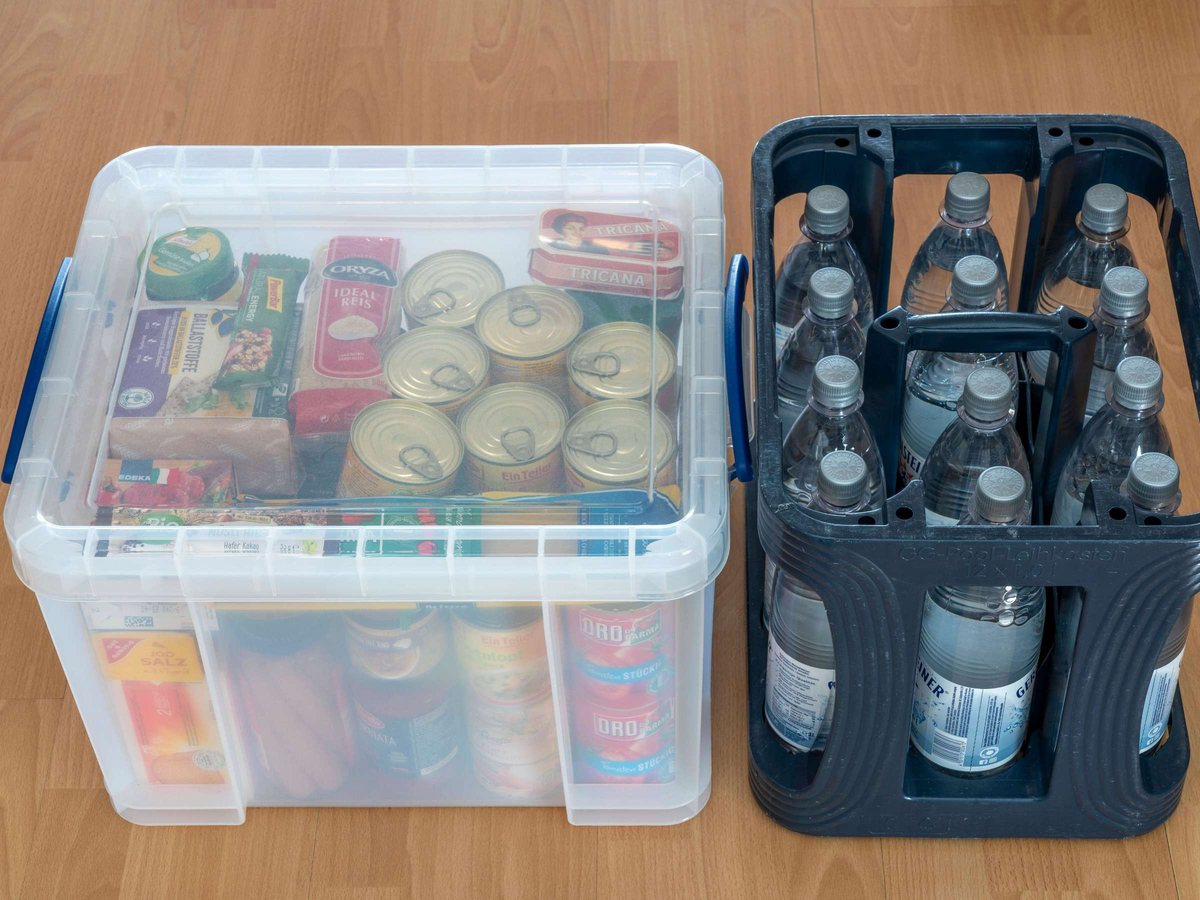
Britain’s household emergency advice looks ordinary: water, food, batteries and medicine. Its significance is less ordinary, because the country is again planning for the possibility that a major international conflict could disrupt life at home.
By Edward Beaumont · 5 min read
There is nothing glamorous about a national emergency kit. It is bottled water, food that can be opened without a cooker, spare batteries, medicine, a torch and a radio. Yet the return of that list to the centre of British public policy says something important about the country’s changing assumptions about security.
The government’s Prepare guidance asks households to think about emergencies lasting a few days. It recommends non-perishable, ready-to-eat food such as tinned meat, fruit or vegetables and bottled water. The guidance uses 2.5 to 3 litres of drinking water per person per day as a bare survival benchmark and says about 10 litres gives more scope for cooking and hygiene.
Those recommendations are useful in mundane emergencies as much as dramatic ones. A storm can bring down power lines. A water outage can make cooking and washing difficult. A cyberattack can turn a digital problem into a physical one. England is also experiencing widespread drought this summer, a reminder that resilience policy is not simply another name for defence policy.
But Britain is no longer treating home preparedness as a purely domestic matter. The government’s latest resilience programme explicitly links it to Home Defence, a system designed to coordinate military and civilian effort if international hostilities affect the UK. Departments are updating the old “War Books” that set out how government would operate during conflict, and a national home-defence exercise is planned for 2027.
That connection has become clearer since the 2025 National Security Strategy stated that Britain must prepare for the possibility of the homeland coming under direct threat, potentially in a wartime scenario. The Strategic Defence Review called the restoration of credible preparations for war, home defence and industrial mobilisation a priority.
The language is striking because it reverses a long post-Cold War habit. For many Britons, war planning became something conducted by armed forces, diplomats and intelligence agencies while ordinary life continued at a distance. The war in Ukraine, cyber sabotage and threats to critical infrastructure have forced governments across Europe to reconsider how quickly a conflict can reach electricity, communications, transport and supply chains.
Britain’s own National Risk Register gives a concrete example. In a severe cyberattack on the electricity system, the country could face a nationwide loss of power and disruption to mobile networks, water, sewage, fuel and gas. Even without conventional military attack, the household experience of such a crisis would be immediate: no lights, unreliable phones, limited payments, interrupted water and uncertainty over how long services would take to return.
That is why the advice to keep tins and water should not be dismissed as either panic or theatre. It is basic insurance against the first hours and days of a disruption, when emergency services need to prioritise vulnerable people and critical sites.
It is equally important not to exaggerate the message. The government has not announced that a global war is expected, and the guidance does not instruct families to build bunkers or hoard months of supplies. The official model is broad enough to cover weather, infrastructure failure, public-health emergencies and hostile-state action.
The deeper change is cultural. Britain is beginning to tell citizens that resilience is not something the state can deliver entirely on their behalf. In an era of possible confrontation between major powers, preparedness starts with national plans and military capability, but it also reaches the kitchen cupboard.
The country’s renewed interest in water, tins and a wind-up radio is therefore best understood as a small sign of a larger shift: the possibility of serious conflict is once again being included in how governments think about normal civilian life, even while they hope deterrence ensures those plans are never needed.
61