Business 394
Theon Design Launches Online Configurator and North American Concierge Service
In this issue
Business 394
Theon Design Launches Online Configurator and North American Concierge Service
Culture 414
Writer tests Audi SQ5 on 1,000-mile family trip to France with baby
Economy 54
European Electric Car Sales Jump 49 Percent in Battery-Electric Growth Surge
News 171
Britons stock up on tinned food and bottled water after Be Ready campaign
Politics 127
Trump turns to Maga's radical wing after midterm defeat
Sports 305
Gill Bowls First as Rain Cuts Hamilton ODI to 40 Overs
Technology 371
Renault Scenic battery keeps a family's fridges running through a 30-hour blackout
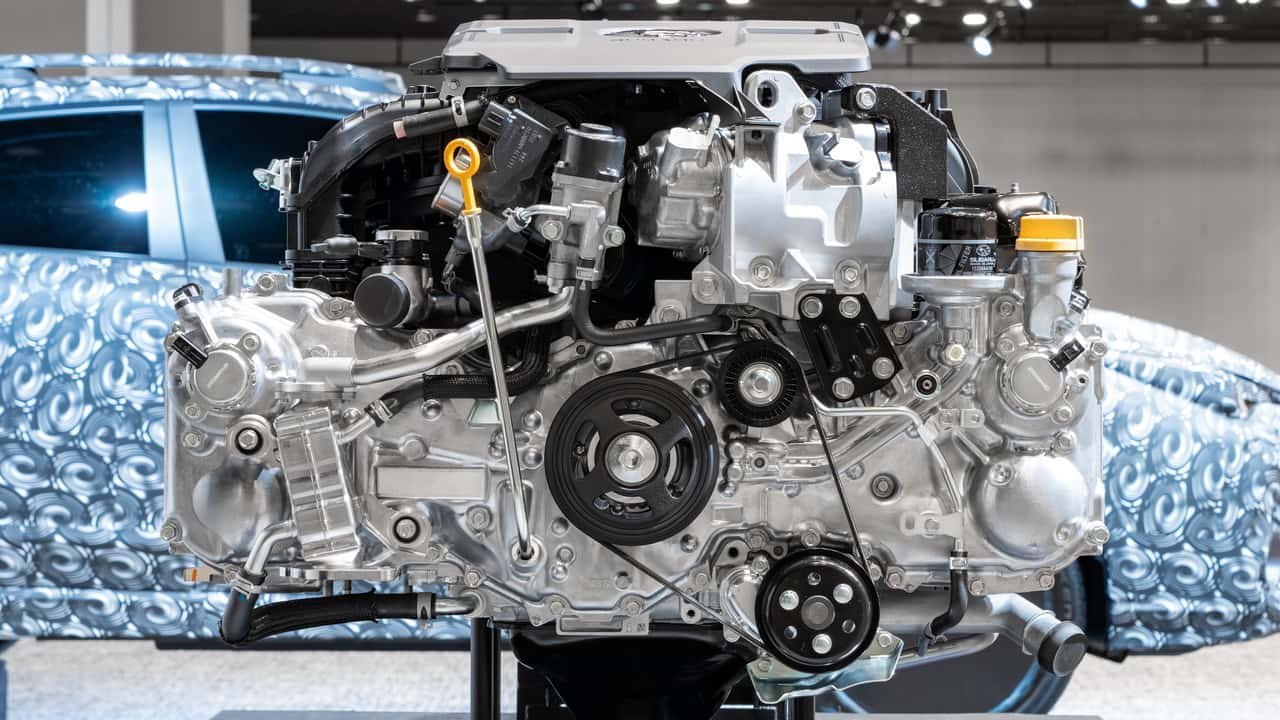
Subaru is working on the next generation of its flat four-cylinder engine, aiming for 50 percent thermal efficiency to extend the life of gasoline powertrains under pressure from electrification and tightening emissions standards.
By Charlotte Redford · 3 min read
Subaru is developing a new next-generation flat four-cylinder engine, and the main goal of the project is to make gasoline engines noticeably more efficient. The Japanese manufacturer has tasked its engineers with achieving a thermal efficiency of 50 percent, which would be a significant step forward for the traditional powertrain.
The concept is directly tied to pressure from electrification and emissions regulations. Automakers around the world are shifting toward hybrid and electric models, yet gasoline engines still account for a substantial share of sales in many segments. Improving the efficiency of internal combustion allows Subaru to count on extending the life of its own gasoline engines, which without such an upgrade risk losing competitiveness amid the rapid development of alternatives.
The engine in question has a so-called boxer layout, in which horizontally opposed cylinders operate with pistons moving toward each other. This configuration has long been associated with the Subaru brand and is known for its low center of gravity and smooth operation. It is on the basis of this architecture that the company expects to achieve higher efficiency while preserving the distinctive feature of its engines.
The horizontally opposed boxer design has historically been used in Subaru vehicles, and the shift in priorities toward efficiency reflects the industry's general logic: engineers are having to find reserves in established solutions while electrified models have not yet fully displaced classic powertrains. For a manufacturer that builds its identity around all-wheel-drive and practical vehicles, preserving and refining its recognizable engine is of particular importance.
Details about the new engine's design and the timeline for its appearance in production vehicles have not yet been disclosed. There is also no information on which models it may be used in, nor on its displacement and other technical specifications. The sources contain no quotes from company management and no independent assessments of the project, so the picture currently rests only on the stated goal.
It remains unclear whether Subaru will ultimately achieve the stated 50 percent thermal efficiency. For a gasoline engine, such a level would be a notable accomplishment, but the sources contain no confirmation that this goal is feasible and do not explain which technical solutions would make it possible. Until additional data becomes available, it is premature to evaluate the project's prospects.
Source: motor1.com
14