
Business 140
BMW Chief Says China-Made iX3 Will Stay Profitable Despite Deep Price Cuts
In this issue
Business 140
BMW Chief Says China-Made iX3 Will Stay Profitable Despite Deep Price Cuts
Culture 150
Max Mara champions understated elegance at Milan Fashion Week
Economy 33
Bitcoin and Ethereum Surge to Levels Last Seen in January
News 131
Trump Tells UN Iran Faces Choice Between Deal and Annihilation
Politics 108
US Lawmakers Move to Permanently Ban Chinese Cars
Sports 245
MINI to Debut New Adventure SUV at Rebelle Rally
Technology 162
Chevrolet Builds Two Corvette Generations at Once for the First Time
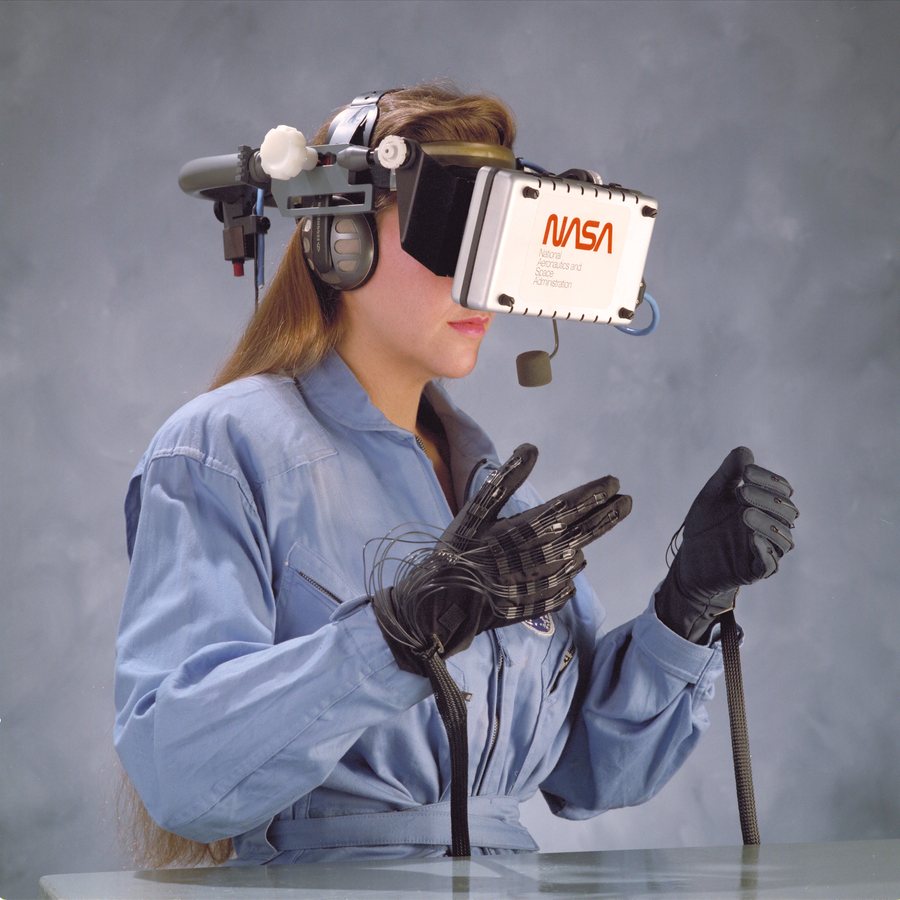
From experimental rigs to Vision Pro, the industry's biggest VR breakthroughs have improved what users see. The stubborn problem is what users still feel: weight, friction, social separation and the need for a reason strong enough to put the device on again tomorrow.
By Eleanor Ellington · 5 min read
The futuristic part of virtual reality was solved surprisingly early. In 1968, Ivan Sutherland described a head-mounted three-dimensional display that changed perspective as the wearer moved his head. By the late 1980s, NASA Ames was experimenting with a wide-angle stereoscopic environment controlled through position, voice and gesture.
Nearly sixty years after Sutherland's paper, a modern headset can do things those systems barely suggested. It can map a room, track hands and eyes, render high-resolution virtual displays and make a digital object appear fixed in physical space. Yet one brutally low-tech question still defines the category: do you actually want to wear it?
Consumer history keeps returning to that question. Nintendo's Virtual Boy arrived in 1995 and disappeared quickly after sales of roughly 770,000 units. Google later made VR almost absurdly accessible with Cardboard and reached five million users by early 2016, then tried to move the experience upscale with Daydream. The platform is now unsupported.
Oculus restarted the cycle at a higher level of seriousness. Facebook bought it for about $2 billion, the Rift helped establish modern consumer VR and Meta later built strong standalone Quest products. The company even changed its name in 2021 around the idea that the metaverse could become the next social platform.
The bill is historic. Reality Labs operating losses from 2020 through the first half of 2026 add up to about $92.2 billion. That figure, and the longer chronology, are documented in Science Official's investigation “Why Virtual Reality Keeps Missing the Mass Market.”
It would be lazy to call all $92.2 billion “money burned on the metaverse.” Reality Labs also includes AR, wearables, software and foundational technologies. But the number is still useful because it shows how much capital can be deployed against a human-interface problem without guaranteeing a new daily habit.
Apple Vision Pro is the ultimate example. The current model is a formidable piece of engineering and starts at $3,499. It weighs roughly 750 to 800 grams, depending on configuration, plus a 353-gram external battery. Apple introduced a Dual Knit Band with a counterweight to improve balance. That detail is more revealing than it sounds: even the company famous for making complex hardware feel simple must negotiate with the neck, face and skull.
Research backs up the intuition. Studies of head-mounted displays continue to find cybersickness as a meaningful issue, while a 2025 ergonomics experiment with 88 participants found that both weight and centre of mass affect comfort over prolonged use. A separate systematic review of VR adoption found that ease of use, enjoyment, social influence and previous experience all matter.
None of this makes VR a failure as a technology. The mistake is expecting every valuable technology to become universal. A racing simulator benefits from immersion. Training can benefit from spatial rehearsal. Designers can inspect scale in ways a flat screen cannot provide. Games can create a kind of presence no television matches.
The harder challenge is ordinary computing. A man answering a message does not need presence; he needs speed. A traveller checking a map does not want to stop and enter a session. A colleague at a meeting may prefer eye contact with a human face to a beautifully rendered digital workspace.
That is why the latest market shift is worth watching. IDC expects about 13.6 million display-less smart glasses to ship in 2026, compared with roughly 3.2 million mixed-reality devices. The market is moving toward wearables that can stay on because they interfere less.
For decades, the industry tried to make the virtual world convincing enough that people would choose to enter it. The next great interface may win by doing the opposite: giving people useful computing while letting them stay exactly where they are.
58