
Business 148
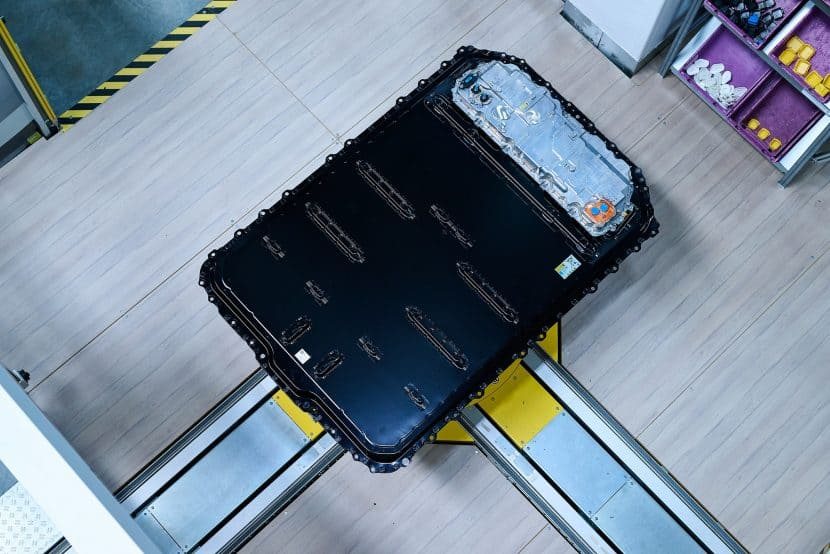
Tesla begins volume production of Semi electric truck at Nevada plant
In this issue
Business 148
Tesla begins volume production of Semi electric truck at Nevada plant
Culture 153
2021 Toyota Land Cruiser Heritage Edition Heads to Auction
Economy 33
Bitcoin and Ethereum Surge to Levels Last Seen in January
News 132
Sarandon and Einbinder arrested at anti-Netanyahu protest in New York
Politics 108
US Lawmakers Move to Permanently Ban Chinese Cars
Sports 246
Alonso Buys Most Expensive Bugatti Veyron Ever Built
Technology 170
LexisNexis and IMS Bring Driving Scores to Insurer Apps Without Dongles
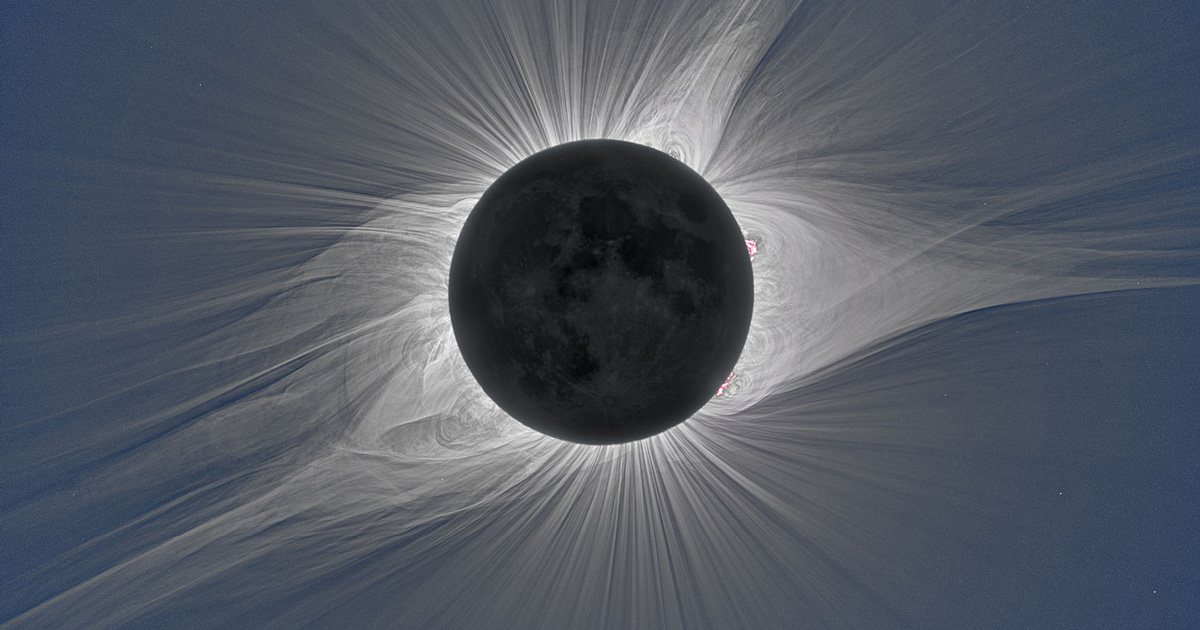
UPSA’s Eclipse Almanac turns 100 years of celestial mechanics into an interactive player, with city switching, close-up views and the numbers behind every frame.
By Eleanor Ellington · 4 min read
Most eclipse websites tell you where the shadow goes. Ukrainian Private Space Agency’s Eclipse Almanac is more ambitious: it lets you treat the shadow like a timeline, move an observer to another city and watch the geometry change under your control.
The service launched ahead of the Aug. 12 total solar eclipse and was first examined in depth by Science Official. Its catalog runs from 2026 to 2126 and contains 457 solar and lunar eclipses, with visibility calculations for 284 cities.
The most immediately satisfying feature is the player. Markers identify the major eclipse phases, the time can be dragged forward or backward, and playback runs from real time up to 3,600 times faster. During an actual eclipse, a current-time control can line up the digital model with the sky.
There are three perspectives. The wide view is the cinematic one: a reconstructed sky with the Sun, Moon, bright stars and planets. The close view is where the visual drama lives — the overlapping disks, the moments around Baily’s beads and the diamond-ring effect, and a rendered corona. The third view is for anyone who distrusts pretty pictures: angular measurements, altitude, azimuth, coordinates and contact times.
The project says those views are driven by the same calculation. Astronomy Engine computes the positions in the browser, so changing the time or city is not like choosing a different clip. The model changes. WebGL then renders the output on the GPU.
That makes the software unusually good at illustrating how location controls experience. On Aug. 12, Reykjavik and several Spanish cities in the catalog are in totality. Move the virtual observer away from that narrow corridor and the same alignment becomes partial. Move it to Ukraine and sunset begins to dominate the story.
The Almanac calculates about 47% solar obscuration from Uzhhorod and 43% from Lviv before the Sun disappears. Kyiv receives only a small partial phase at the horizon. The country’s longer-term result is even more striking: after testing 515 points, the project finds no observable total solar eclipse anywhere in Ukraine through 2126.
Globally, totality is still scarce. Only 70 of the 284 cities in the catalog get at least one total solar eclipse in the century. Reykjavik receives exactly one, according to the project — tomorrow’s.
The developers also resist pretending the simulation knows more than it does. Clouds are visual scenery, not a weather forecast. The corona is typical, not an exact future forecast. Those caveats make the tool more credible because the deterministic orbital geometry is kept separate from atmospheric and solar details that cannot be known years in advance.
If you use the real sky rather than the player, proper eclipse protection is mandatory during partial phases. Ordinary sunglasses are not enough, and cameras or binoculars need appropriate filters.
As a piece of technology, Eclipse Almanac lands somewhere between a planetarium, a data dashboard and an exceptionally nerdy media player. That combination is precisely what makes it fun: you can enjoy the spectacle first, then switch views and see the mathematics that made it possible.
53