
Business 109
Dacia CEO Urges EU to Freeze Small Car Rules to Cut Prices
In this issue
Business 109
Dacia CEO Urges EU to Freeze Small Car Rules to Cut Prices
Culture 89
1988 Porsche 911 Carrera Targa G50 with Rebuilt Engine Heads to Auction
Economy 30
HMRC is writing to low earners about pension top-ups averaging about £70
News 124
Aftermarket Trackers Recover 99% of Stolen Cars as Factory Systems Fail
Politics 104
Met police open inquiry into alleged foreign donations to Reform UK
Sports 231
AMG GT Black Series Spied With Radical Aero Ahead of Nürburgring Record Attempt
Technology 116
Waymo Expands Driverless Ride-Hailing to Las Vegas
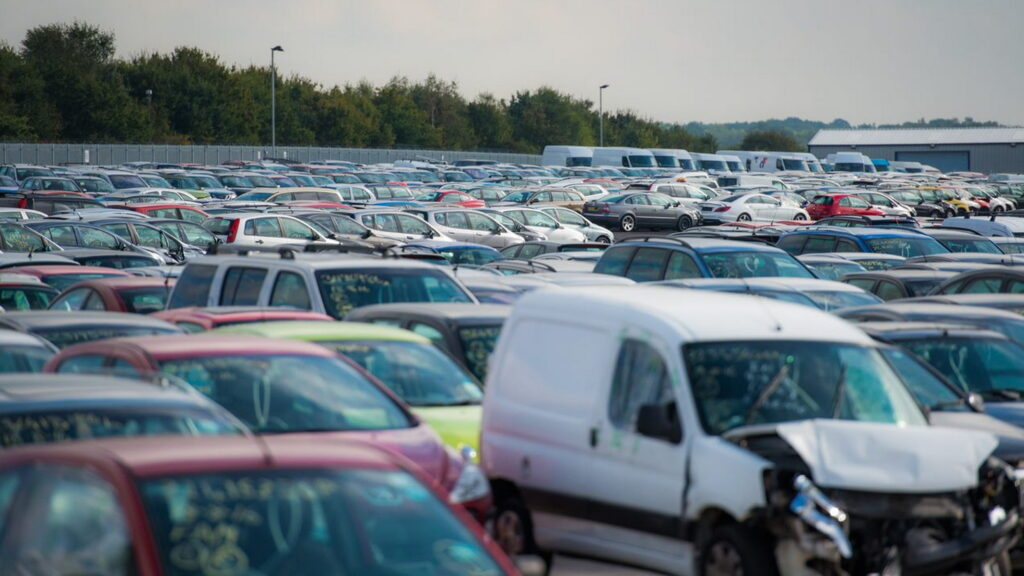
Copart is buying digital wholesale marketplace ACV Auctions for $1.9 billion in cash, extending its reach from salvage auctions into the dealer trade-in pipeline and the data that decides where a used car is sold.
By Charlotte Redford · 4 min read
Copart has agreed to acquire ACV Auctions in an all-cash deal valued at $1.9 billion, a purchase that takes the salvage-auction specialist into the wholesale end of the used-car market before a vehicle is written off.
The move gives Copart access to dealer trade-ins and wholesale inventory through ACV's digital dealer-to-dealer marketplace. Copart is best known for selling vehicles that insurers have declared a total loss — cars linked to flood damage, theft recovery and catastrophic crashes — but the acquisition positions it earlier in the ownership chain, where vehicles are still saleable and simply no longer suit a retail forecourt.
ACV says it moves more than 800,000 vehicles a year, works with over 22,000 active buyers and handled roughly $10 billion in gross merchandise value during 2025. That scale brings Copart relationships with franchise dealers and higher-end trade-ins that its existing wholesale operations have struggled to reach, according to company executives.
The logic behind the deal is a channel-selection strategy. A trade-in that is retail-ready stays on the dealer's lot. One that is not can pass through ACV's wholesale channel. A lower-end but drivable car may find an export buyer. An economic total loss can still be routed through Copart's established insurance-auction network. Copart already sells non-insurance vehicles and runs dedicated wholesale facilities, but executives said ACV supplies the dealer relationships and condition-reporting tools needed to serve franchise dealers and more valuable trades.
The combined business would bring together ACV's inspections, valuation software, financing and transportation services with Copart's physical yards, logistics network and international buyer base. The companies believe that combination could better determine which sales channel produces the best return for a particular vehicle, then capture a fee whether the car is wholesaled, exported or sold as salvage.
Data may prove to be the most valuable asset. Condition reports, valuations and transaction histories from both platforms would give the enlarged group a clearer view of where demand sits and how much a vehicle is worth in each channel. That intelligence is central to the deal's long-term case, even if it does not show up immediately in revenue.
There are caveats. ACV's second-quarter revenue rose 10 per cent to $214 million, but marketplace unit volume and gross merchandise value were essentially flat, and the company posted an $8 million GAAP loss. Copart expects the acquisition to be earnings-neutral in its first full year and accretive from fiscal 2028, indicating that this is not a short-term revenue grab but a long-term bet on controlling the used-car pipeline.
For Copart, the prize is a position at every stage of a vehicle's later life: trade-in, wholesale, export and salvage. The company is spending heavily to become the business that handles a used car from the moment a dealer decides it no longer belongs on the lot to the moment an insurer decides it is a total loss.