Business 274
Tesla begins hiring in Vietnam to challenge VinFast
In this issue
Business 274
Tesla begins hiring in Vietnam to challenge VinFast
Culture 310
1988 Ferrari Testarossa with 28,000 miles listed on Bring a Trailer
Economy 46
Government extends 5p fuel duty cut until July 2027
News 161
Private parking firms face pressure as UK motorists call for fairer rules
Politics 120
Burnham and Farage clash as UK and EU officials open freedom of movement talks
Sports 287
Alexia Putellas wins third Ballon d'Or four years after her last
Technology 341
Tesla’s rocket-shaped Robotaxi zone in Houston includes areas it won’t serve
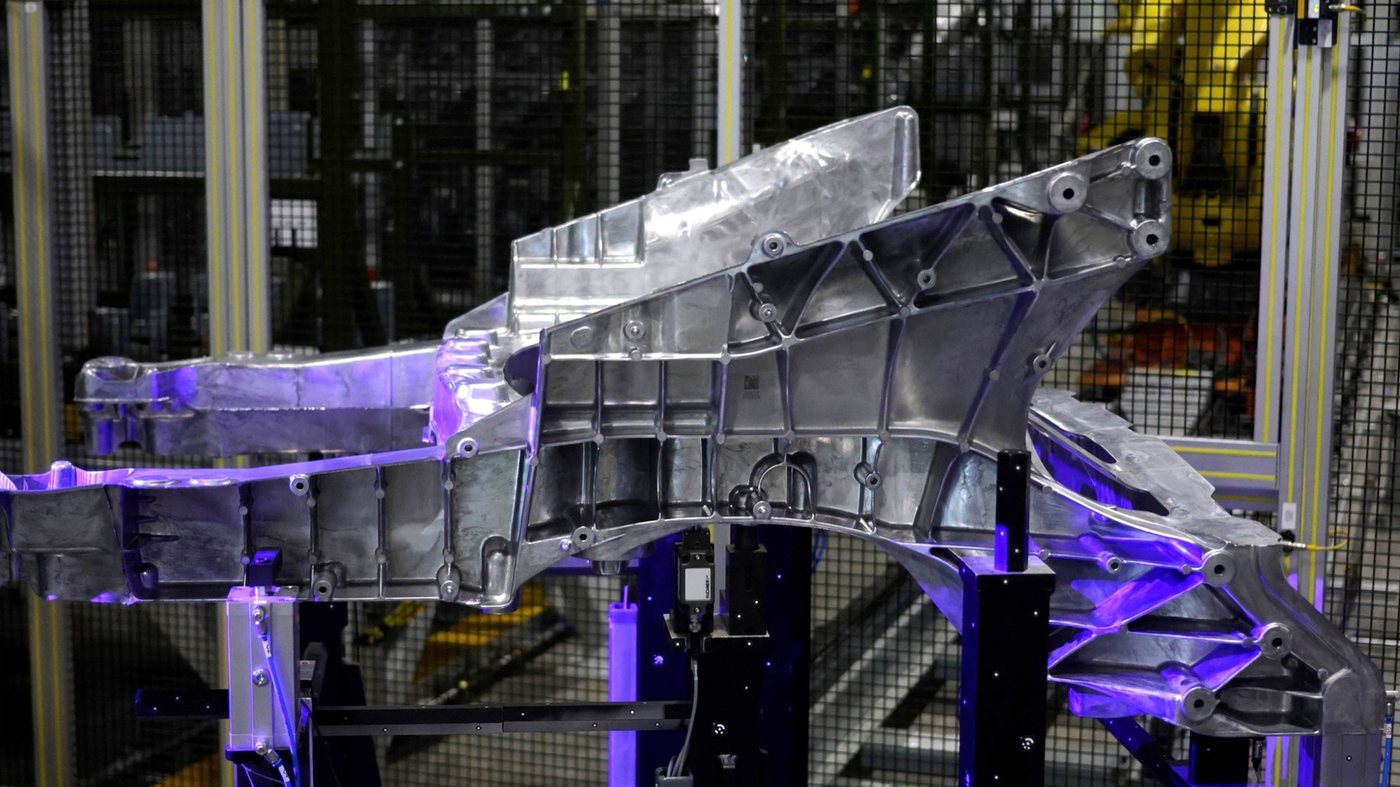
Ford is using large single-piece aluminium castings to replace 146 frame parts with two in its upcoming $28,350 Fathom electric pickup, borrowing a method Tesla popularised.
By Edward Beaumont · 2 min read
Ford is borrowing a manufacturing method pioneered by Tesla to make its upcoming electric pickup faster and cheaper to build. The Fathom, a midsize electric truck priced at around $28,350, will rely on large aluminium castings that fuse dozens of frame components into a small number of pieces.
According to reporting on the programme, Ford has now produced more than 5,000 of these large aluminium «unicastings» for the Fathom as it fine-tunes the process ahead of a 2027 launch. Each truck uses two of them, one at the front and one at the rear, which together replace 146 individual parts. The approach reduces the number of components that must be stamped, welded and assembled, which is the central gain the company is pursuing.
The technique is closely associated with Tesla's Giga Press, a large die-casting machine the company introduced around six years ago to produce big structural sections of its vehicles in a single operation. Ford's move shows that the method is now being adopted by a legacy automaker seeking to cut production costs in the electric vehicle market, where price competition has intensified.
For Ford, the Fathom is a test of whether consolidated casting can deliver the lower-cost electric vehicles the company has said it wants to sell. Fewer parts typically mean simpler assembly lines, less welding and fewer points of potential failure, though the savings depend on how cleanly the process runs at scale. The fact that Ford is already producing thousands of castings before the truck reaches showrooms suggests the company considers the method ready for production, ahead of the 2027 launch date.
The shift also reflects a broader change in how carmakers approach body and chassis construction. Large castings can reduce the number of joints and fasteners in a vehicle structure, and they can be more straightforward to integrate into an electric platform where the battery and drivetrain layout shapes the frame design. Whether Ford can match the cost and quality results that Tesla has claimed will become clearer once the Fathom enters full production.
11