Business 176
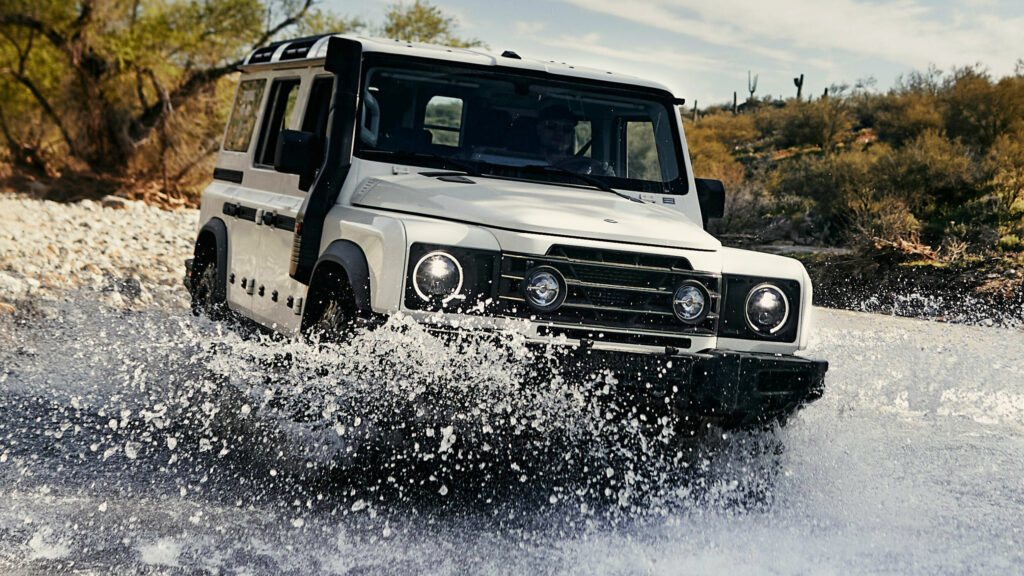
Costco Executive Members Offered £1,600 Saving on Ineos Grenadier
In this issue
Business 176
Costco Executive Members Offered £1,600 Saving on Ineos Grenadier
Culture 204
Robert Eggers to Direct New Romeo and Juliet Adaptation
Economy 36
G7 Agrees to Release 100 Million Barrels of Diesel and Crude Oil to Ease Price Su…
News 144
Four Arrested and Race Car Seized After Illegal Drag Race on Long Island
Politics 109
Mahmood Opens New Legal Refugee Routes in Labour Conference Speech
Sports 259
Chiefs, 49ers and Vikings stay unbeaten as NFL Week 4 delivers 14-game slate
Technology 228
Moline to Deactivate Flock Cameras Despite Police Praise
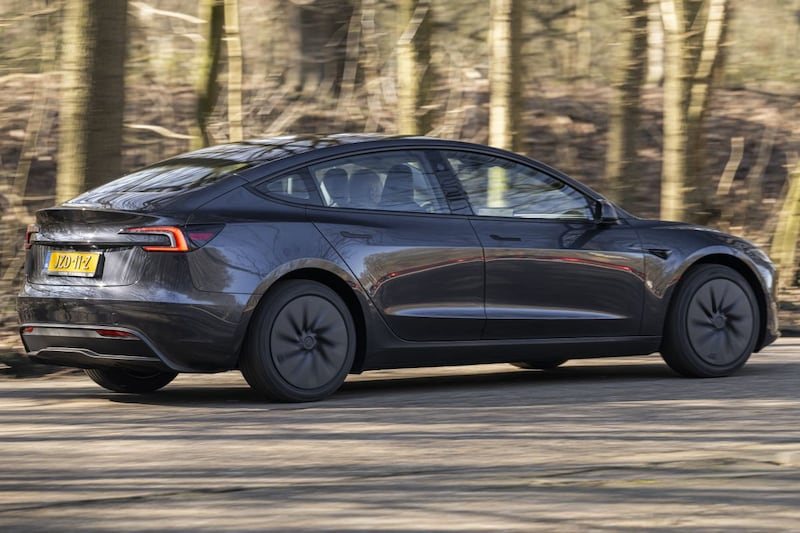
Tesla delivered 486,532 vehicles in the third quarter, with the Model 3 and Model Y making up 478,237 of them, as the company's lineup remains overwhelmingly dependent on its two mass-market models.
By Charlotte Redford · 4 min read
Tesla's global deliveries reached 486,532 vehicles in the third quarter of this year, a 2.1 percent decline from the same period a year earlier but a 1.3 percent increase on the second quarter. The figures, which exceeded analyst expectations, underline a persistent feature of the electric carmaker's business: its fortunes rest almost entirely on two models.
Of the 486,532 cars delivered between July and September, 478,237 were either a Model 3 or a Model Y. That represents more than 98 percent of the quarter's volume. The remaining 8,295 vehicles were Cybertrucks or, in theory, Cybercab or Robotaxi units, though meaningful deliveries of those last two have yet to begin. Across the first three quarters of the year, Tesla handed over 1,224,684 vehicles worldwide, a gain of just over half a percent compared with the same period last year.
The concentration is not new, but it is becoming more pronounced as Tesla's other planned products remain in development or early production. The Cybertruck, launched with considerable fanfare, has not yet become a volume seller, while the Robotaxi and Cybercab programmes are still at a stage where they contribute little to the delivery tally. For a company that has spent years presenting itself as a broader technology and energy business, the quarterly numbers continue to tell a simpler story: the Model 3 and Model Y are the business.
That reliance carries both advantages and risks. The two models share a platform and many components, which helps Tesla keep manufacturing costs down and allows it to adjust production between them according to demand. But it also means the company has little cushion if demand for either model weakens, whether because of competition, changes to electric vehicle subsidies, or shifts in consumer taste. Rivals in Europe, China and the United States have been expanding their own electric line-ups, often targeting the same mid-size saloon and crossover segments that the Model 3 and Model Y dominate.
In the Netherlands, the Model 3 starts at €36,990, while the Model Y begins at €40,990. A more spacious variant, the Model Y L, is expected to reach the Dutch market in due course. For buyers unwilling to pay new prices, the used market offers a Model 3 from around €17,500 and a Model Y from roughly €24,000. Those figures illustrate how quickly Tesla's vehicles have moved from premium novelties to relatively accessible second-hand purchases, a shift that supports volume but can weigh on residual values and brand positioning.
The third-quarter delivery total was a slight year-on-year decline, yet it still beat what analysts had forecast. That combination — falling annual comparisons but better-than-expected results — suggests that Tesla's demand picture is stabilising rather than collapsing, even as its product range remains narrow. The company has periodically cut prices to sustain volumes, a strategy that supports deliveries but compresses margins.
For now, the arithmetic is straightforward. More than nine in ten Teslas sold this year have been a Model 3 or Model Y. Until the Cybertruck scales up or the Robotaxi programme moves from concept to commercial reality, the company's quarterly performance will continue to be judged almost entirely on the appeal of those two vehicles. The next test will be whether Tesla can maintain or grow that base without a significant new model to broaden its reach.
4